How to Lay Out a Nursery
Where everything goes in a nursery, and the clearances that decide it before taste gets a vote. Designed for a baby, used by an exhausted adult at 3am. Design for the adult.
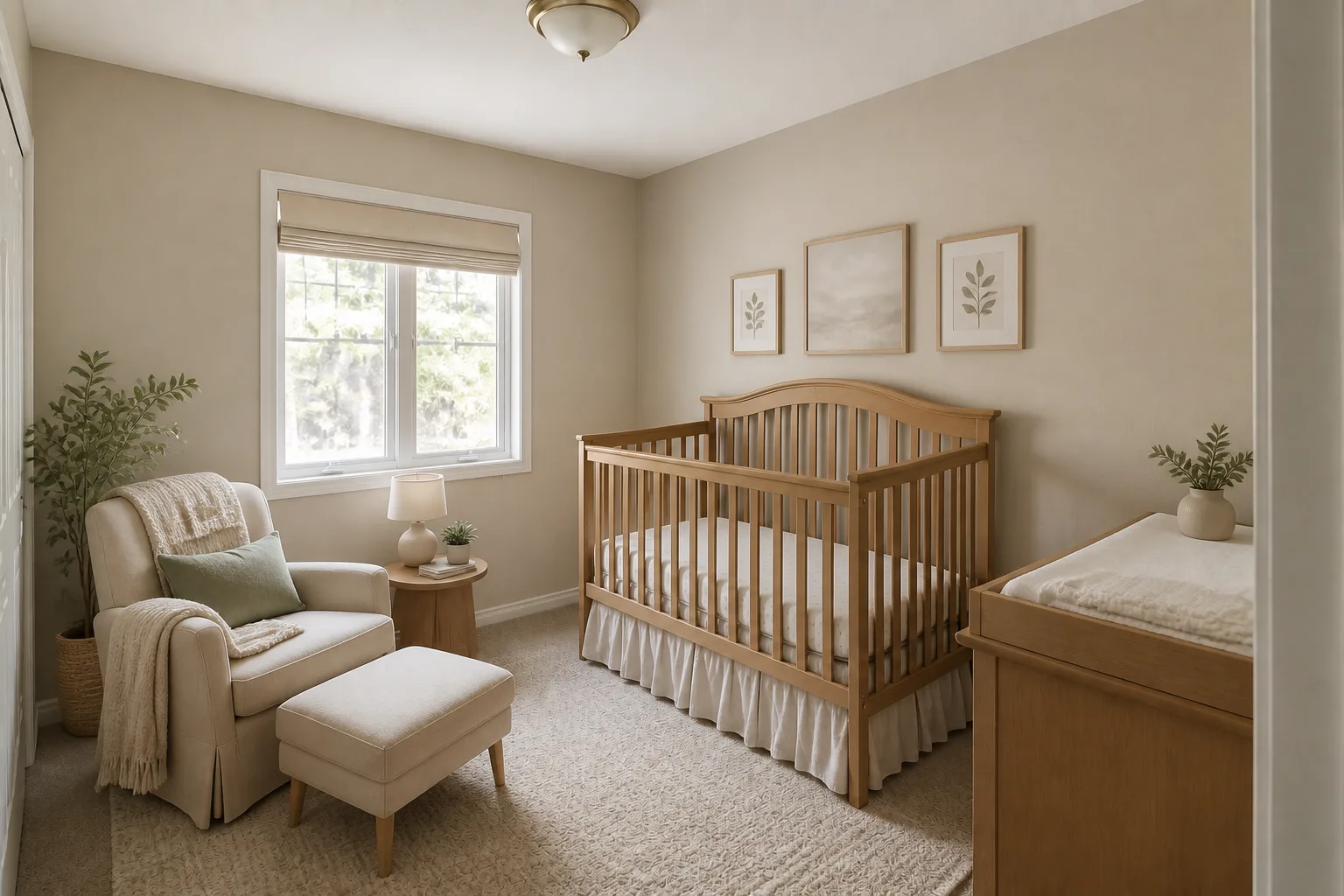 BeforeAfter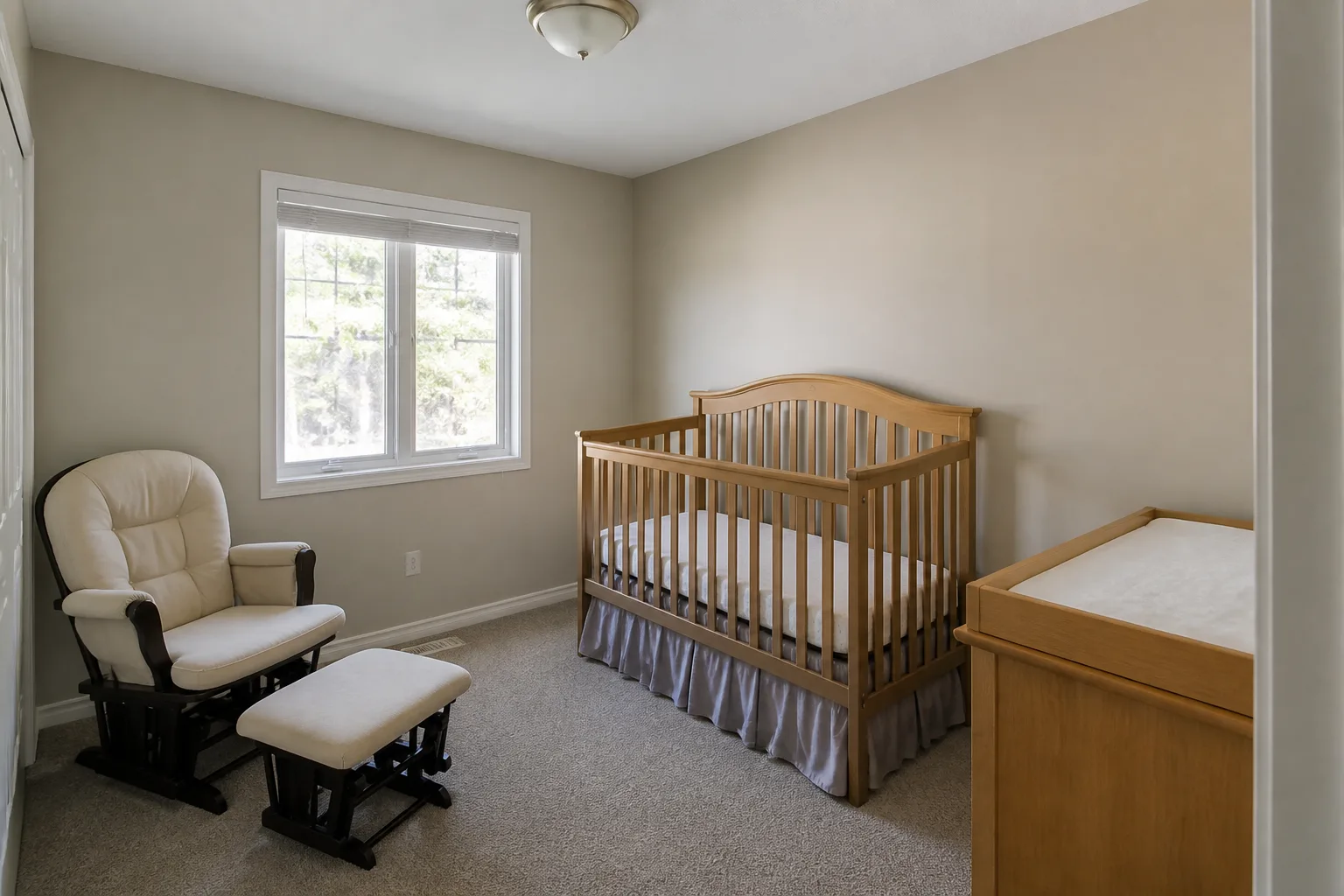
- 1
Start from the job, not the furniture
The nursery’s real user is a sleep-deprived parent holding seven kilos in the dark, and every layout decision should be tested against that user: cot reachable without obstacles, changing supplies at one-hand height, a feeding chair with everything in arm’s reach, a light that comes on at 5% not 100%. The baby, for their part, needs safe sleep clearances and darkness. The Instagram nursery optimises a third user — the camera — and the camera does not do night feeds.
- 2
The clearances that are not negotiable
The cot stays clear of windows, blind cords, radiators and anything climbable-adjacent; 50cm from the radiator minimum. Changing surface at 85–95cm with supplies reachable by one hand while the other never leaves the baby. The feeding chair needs 75cm to rock or recline, a side table at elbow height, and a footstool. A clear 60cm path door-to-cot, walkable in near-darkness, no rug edges en route.
- 3
Place the anchors in order
The pieces that earn their floor in a nursery: a cot placed by safety rules first; a genuinely comfortable feeding chair — the most-used seat in the house for a year; a changing station with one-hand storage; blackout that means it; a dresser that outlives the nursery. Position the first before the second exists — each anchor constrains the next, and reversing the order is how rooms end up designed around their least important piece.
- 4
Then check it against the failure list
Open shelves of tiny objects above the cot — earthquake logic applies even where earthquakes do not. A decorative chair that fails its first 40-minute feed. Theme-first spending on a room the occupant will renovate by preference at age three. Blind cords, reachable from the cot, still the classic inspection failure.
Questions
- What matters most in a nursery?
- The nursery’s real user is a sleep-deprived parent holding seven kilos in the dark, and every layout decision should be tested against that user: cot reachable without obstacles, changing supplies at one-hand height, a feeding chair with everything in arm’s reach, a light that comes on at 5% not 100%. The baby, for their part, needs safe sleep clearances and darkness. The Instagram nursery optimises a third user — the camera — and the camera does not do night feeds.
- Which numbers should I check before buying anything?
- The cot stays clear of windows, blind cords, radiators and anything climbable-adjacent; 50cm from the radiator minimum.
- Can I preview this on my own nursery?
- Upload a photo in the Studio and run the ideas on the real room. New accounts start with 4 credits and a Standard render costs 4, so the first experiment is free.