Refreshing a Home Office Without Moving Walls
The changes that transform a home office inside its existing shell — surfaces, anchors, light and edit. A commute of four metres and a door that has to mean something.
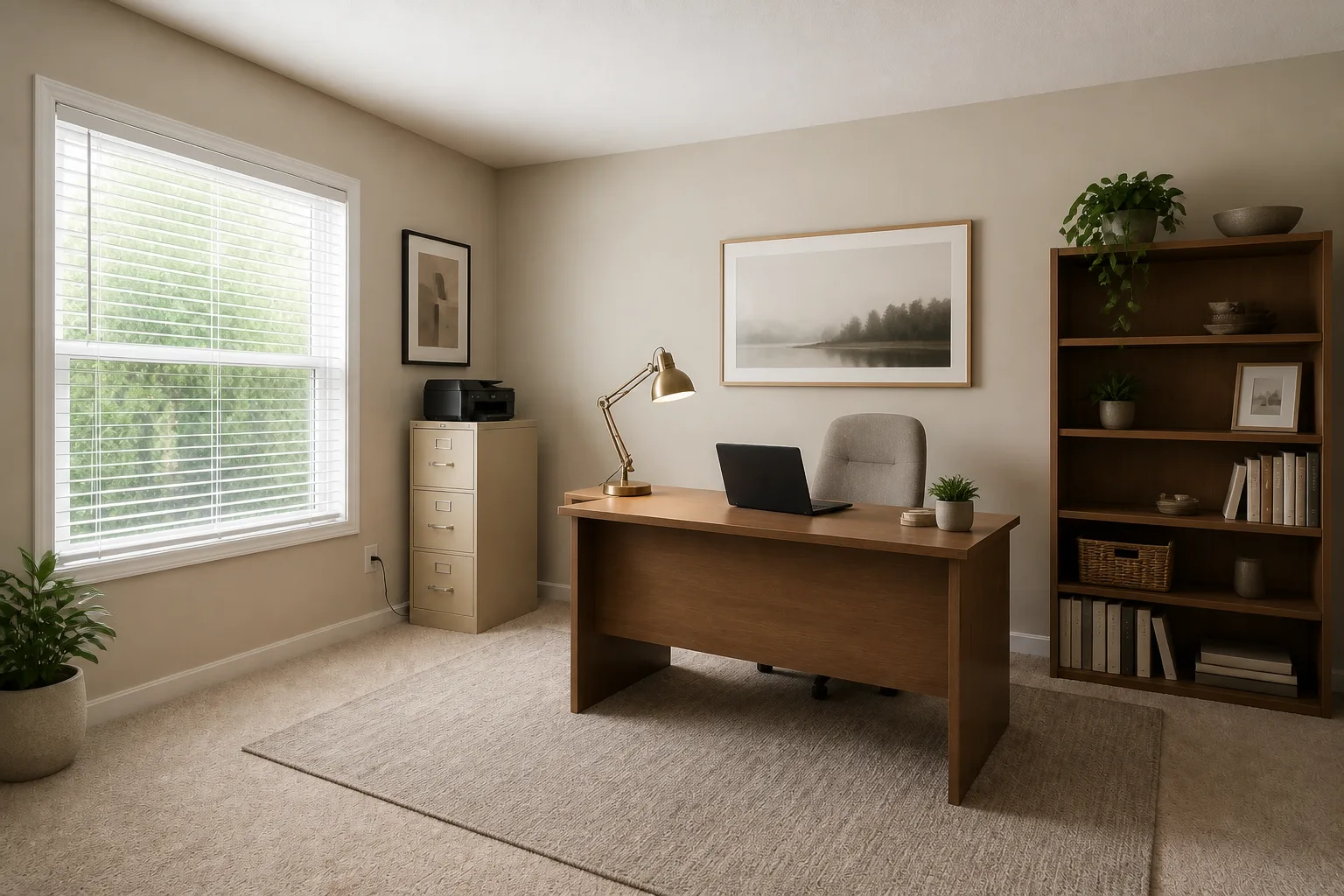 BeforeAfter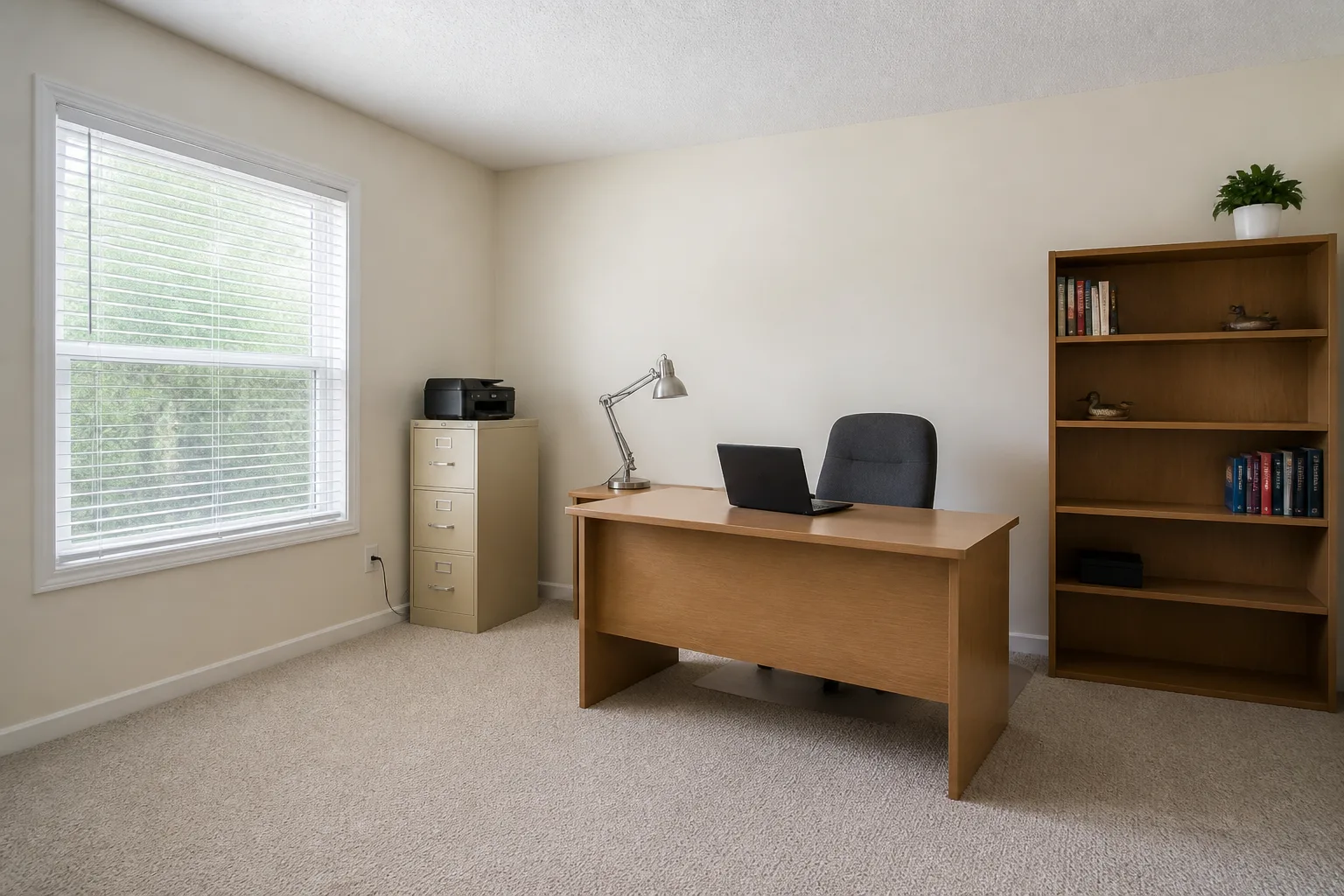
- 1
What a no-construction refresh can reach
Everything that decides how a home office feels is on the changeable layer: the surfaces, the anchor pieces, the lighting and the edit. The structure — walls, openings, ceiling — sets the stage but rarely the mood.
- 2
Spend the effort where this room shows it
The anchors carry a home office: a desk at real dimensions, not a console pretending; the best chair the budget carries — it is the room’s mattress; a shelf or cabinet wall that is the call backdrop. Renewing one anchor changes the room more than five accessories, and the room will tell you which anchor is tired.
- 3
Light is the cheapest transformation
Task light for the desk, a 4000K-ish daytime fill that keeps winter afternoons honest, one warm lamp for the last hour, and the call test: light your face from the front at screen height (a small LED panel or a window, never the ceiling), and check yourself on camera once at 9am and once at 4pm.
- 4
And when it is small
A small office is fine — the desk is the room. Wall-mount the shelving, float the desk if the window demands it, and spend the saved floor on the chair. Under 5 square metres, skip the guest-chair fiction; the room hosts one professional and their focus.
Questions
- What matters most in a home office?
- A home office is hired for focus and video presence, in that order. Focus is a layout problem: desk positioned so the door is visible but the traffic is not, window light arriving from the side, and the room’s other temptations — bed, sofa, laundry — out of the working sightline. Presence is the reverse angle: whatever sits behind the chair is your professional wallpaper, so it gets designed on purpose. The third job is the hardest: the room must switch off at day’s end, or the house has no end of day.
- Which numbers should I check before buying anything?
- Desk: 120×60cm minimum for screen work; 140×70cm once papers exist.
- Can I preview this on my own home office?
- Upload a photo in the Studio and run the ideas on the real room. New accounts start with 4 credits and a Standard render costs 4, so the first experiment is free.