Basement rooms
Below grade, above expectations: the room where every failure is really a light or damp failure.
What the condition actually does
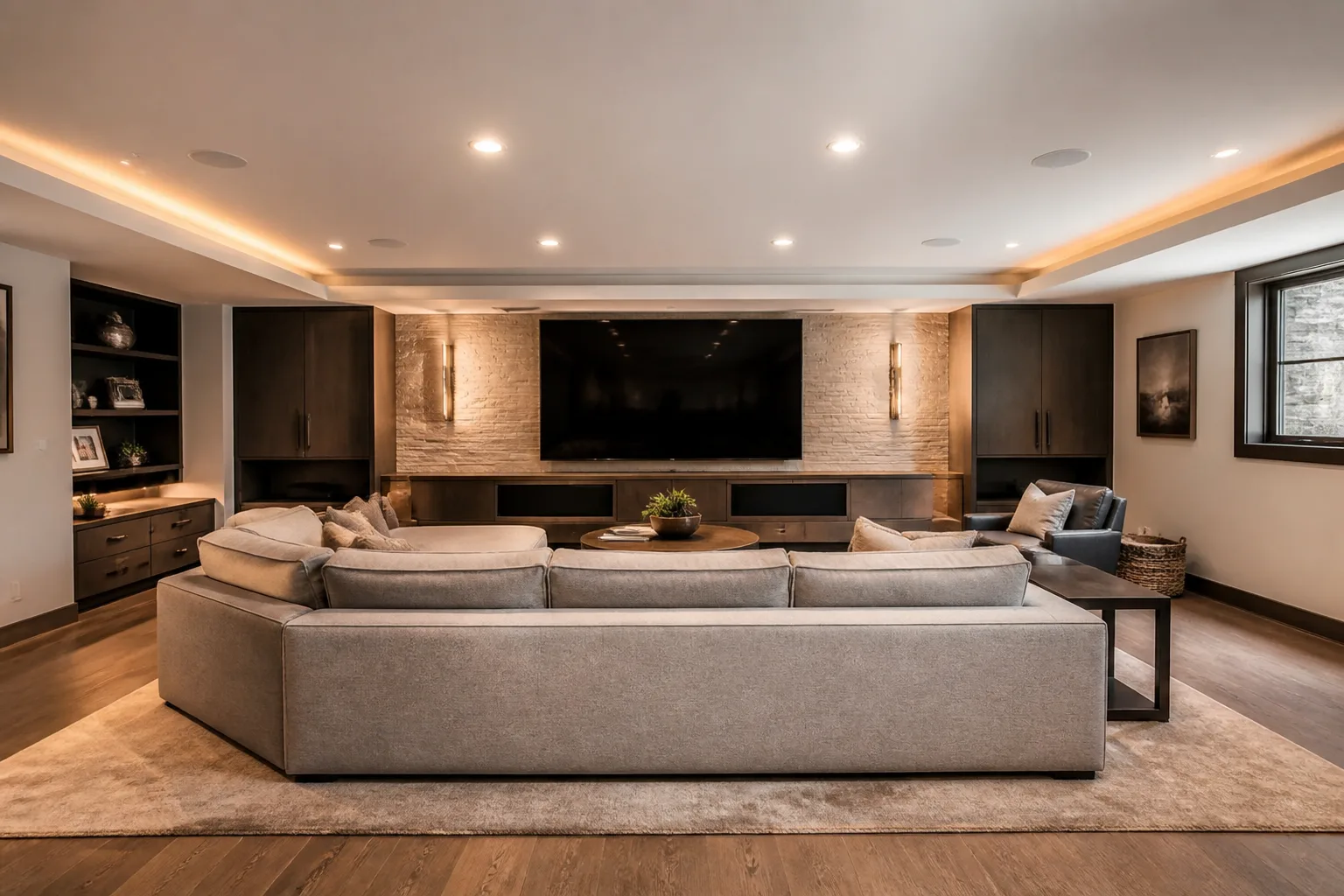
A below-grade room compounds three constraints — little or no daylight, lower ceilings, and an atmosphere that tips damp-cold without help. It is also the house’s best isolation: no neighbours below, distance from the household above, which is why cinemas, gyms, studios and dens migrate down. Design order matters: air and moisture first (a damp basement rejects every finish), light second (layered, warm, generous), looks third. Basements decorated in reverse order get redecorated.
The first move
Run a humidity check for a week before spending on finishes — a €15 hygrometer settles whether the room needs a dehumidifier before it needs a designer. Every basement that skipped this step smells like it did.
Light under this condition
Fake a time of day: bright neutral layer for morning uses, warm low layer for evening ones, both on dimmers. A basement with one static light level feels like 3am at every hour.
What fights it
- Pretending it is a ground-floor room: pale schemes relying on daylight that never comes
- Storing damp-vulnerable things (books, textiles, instruments) as "temporary" furniture
- One ceiling grid of downlights, which makes a car park of a den
Basement rooms, room by room
27 rooms- Basement living room
- Basement family room
- Basement den
- Basement media room
- Basement playroom
- Basement game room
- Basement bedroom
- Basement main bedroom
- Basement guest bedroom
- Basement kids’ bedroom
- Basement teen bedroom
- Basement dorm room
- Basement home office
- Basement study
- Basement craft room
- Basement home library
- Basement home gym
- Basement kitchen
- Basement kitchen-diner
- Basement dining room
- Basement bathroom
- Basement ensuite
- Basement laundry room
- Basement mudroom
- Basement walk-in closet
- Basement entryway
- Basement hallway
See your own room designed around it
Upload a photo and the Studio applies the basement playbook to the room you actually have.
Open the Studio