How to Lay Out a Home Gym
Where everything goes in a home gym, and the clearances that decide it before taste gets a vote. Clearances are safety equipment here. Plan the movement, then place the machines.
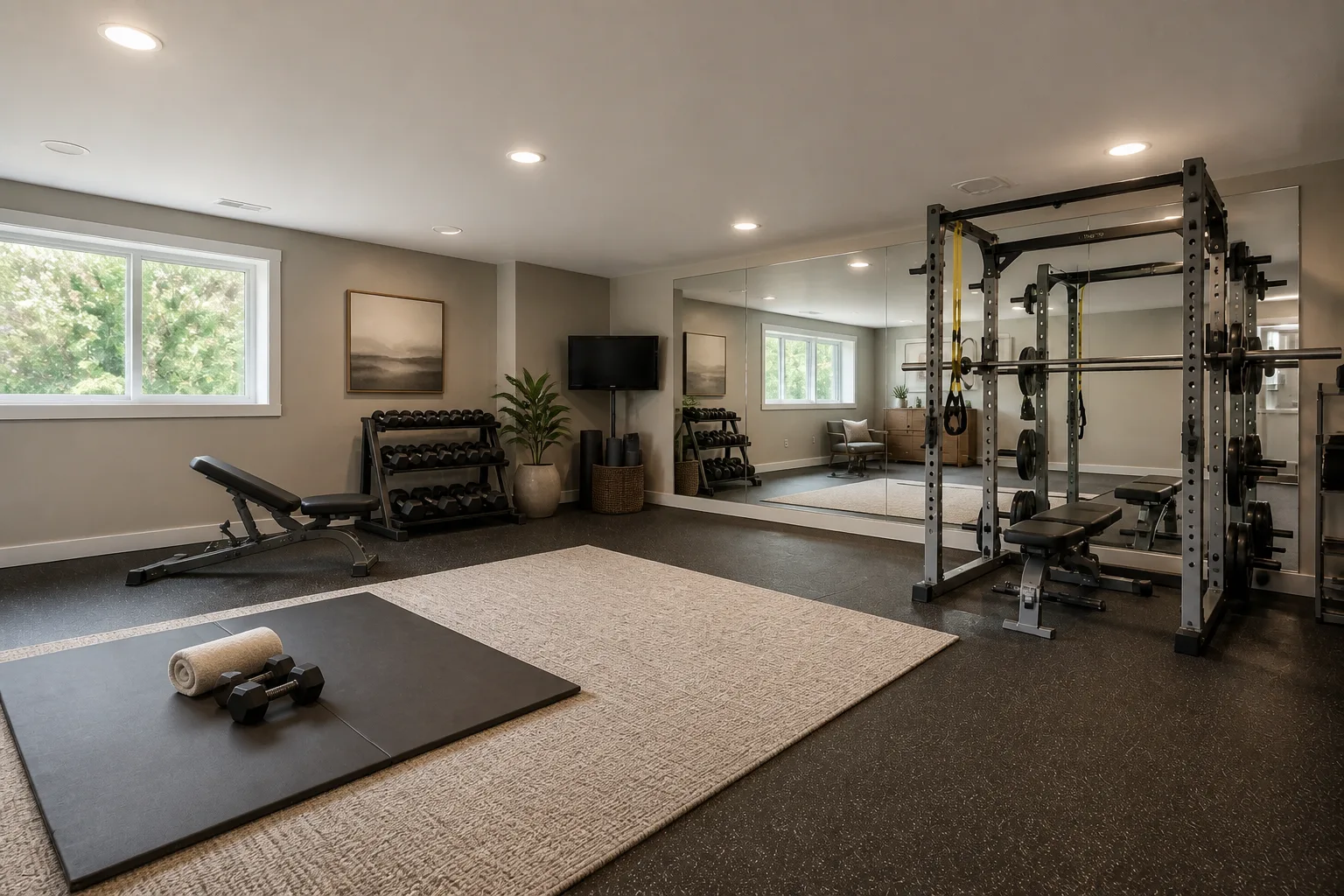 BeforeAfter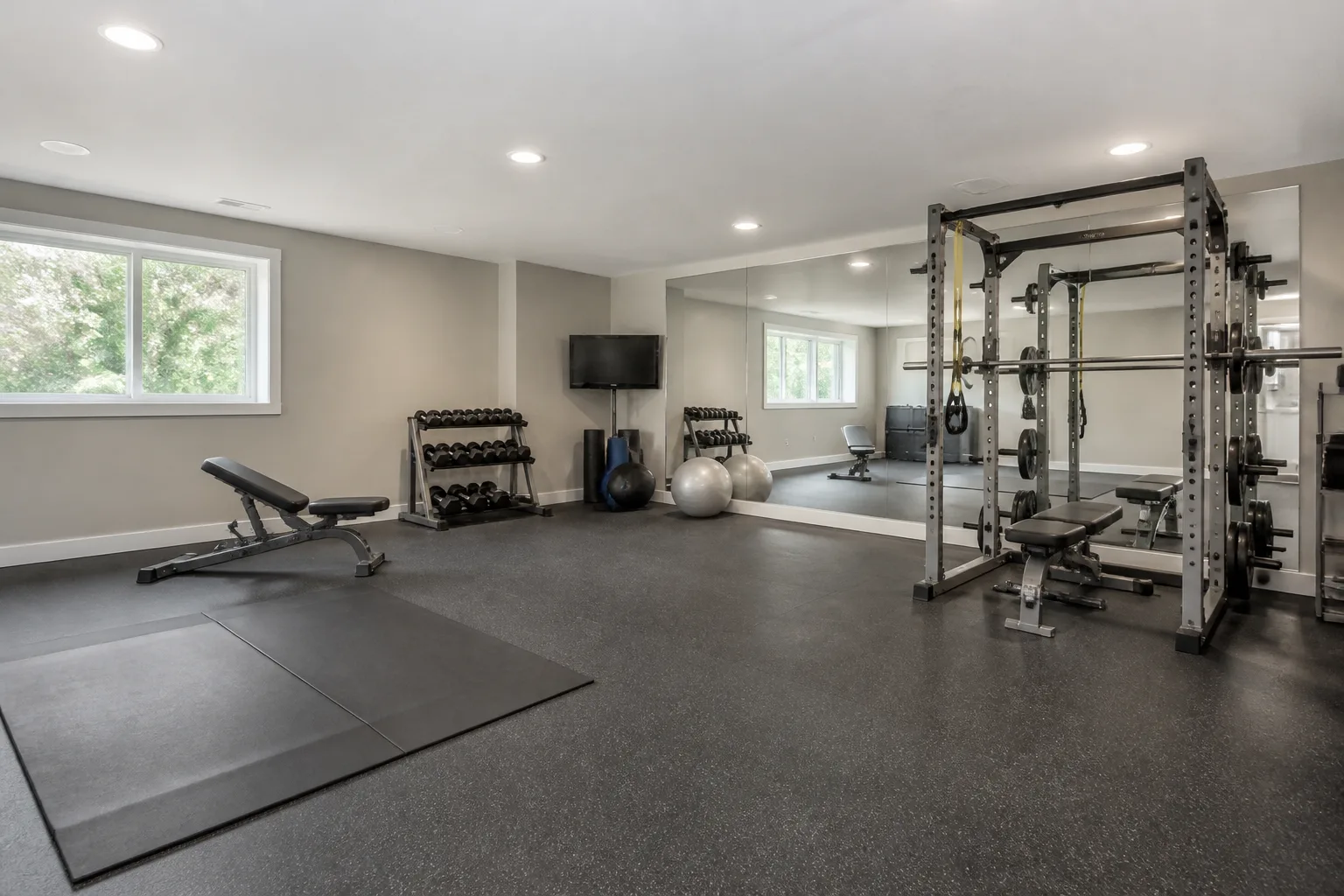
- 1
Start from the job, not the furniture
A home gym is hired for movement, and movement is the thing rooms are worst at accommodating: a swung kettlebell, a full push-up span, a treadmill’s run-off zone are all bigger than the equipment’s footprint. Plan the movement envelopes first — standing reach, floor work rectangle, machine service zones — then let equipment fill what remains. The other design load is motivational: this is the room the household negotiates with at 6am, and light, air and a not-depressing view win more workouts than any machine.
- 2
The clearances that are not negotiable
Overhead: 30cm above standing reach for anything with arms up; 2.2m ceilings rule out jumping work. Floor work: a 2×2m mat rectangle, permanently clear, is the gym — machines are accessories to it. Treadmill: 50cm each side, 1m of run-off behind. Non-negotiable; this is the fall zone. Weights: a 1.5m radius of swing clearance from the lifter’s centre, mirrors OUTSIDE that arc.
- 3
Place the anchors in order
The pieces that earn their floor in a home gym: rubber or foam flooring over the whole zone; a mirror wall for form (and the sense of space); one cardio machine maximum per 8 square metres; a rack or shelf that stores every loose weight off the floor; a fan and an openable window ranked above any additional machine. Position the first before the second exists — each anchor constrains the next, and reversing the order is how rooms end up designed around their least important piece.
- 4
Then check it against the failure list
Equipment-first shopping: a room that stores machines it has no clearance to use. Mirrors inside the swing arc, an accident with a delivery date. The gym in the airless windowless corner with the worst light in the house — then wondering why nobody goes. Carpet under a treadmill, wearing a grey path into the pile.
Questions
- What matters most in a home gym?
- A home gym is hired for movement, and movement is the thing rooms are worst at accommodating: a swung kettlebell, a full push-up span, a treadmill’s run-off zone are all bigger than the equipment’s footprint. Plan the movement envelopes first — standing reach, floor work rectangle, machine service zones — then let equipment fill what remains. The other design load is motivational: this is the room the household negotiates with at 6am, and light, air and a not-depressing view win more workouts than any machine.
- Which numbers should I check before buying anything?
- Overhead: 30cm above standing reach for anything with arms up; 2.2m ceilings rule out jumping work.
- Can I preview this on my own home gym?
- Upload a photo in the Studio and run the ideas on the real room. New accounts start with 4 credits and a Standard render costs 4, so the first experiment is free.