How to Light a Dining Room
A working lighting plan for a dining room — layers, heights and switches, not just a brighter bulb. One table, its orbit, and the best lighting brief in the house.
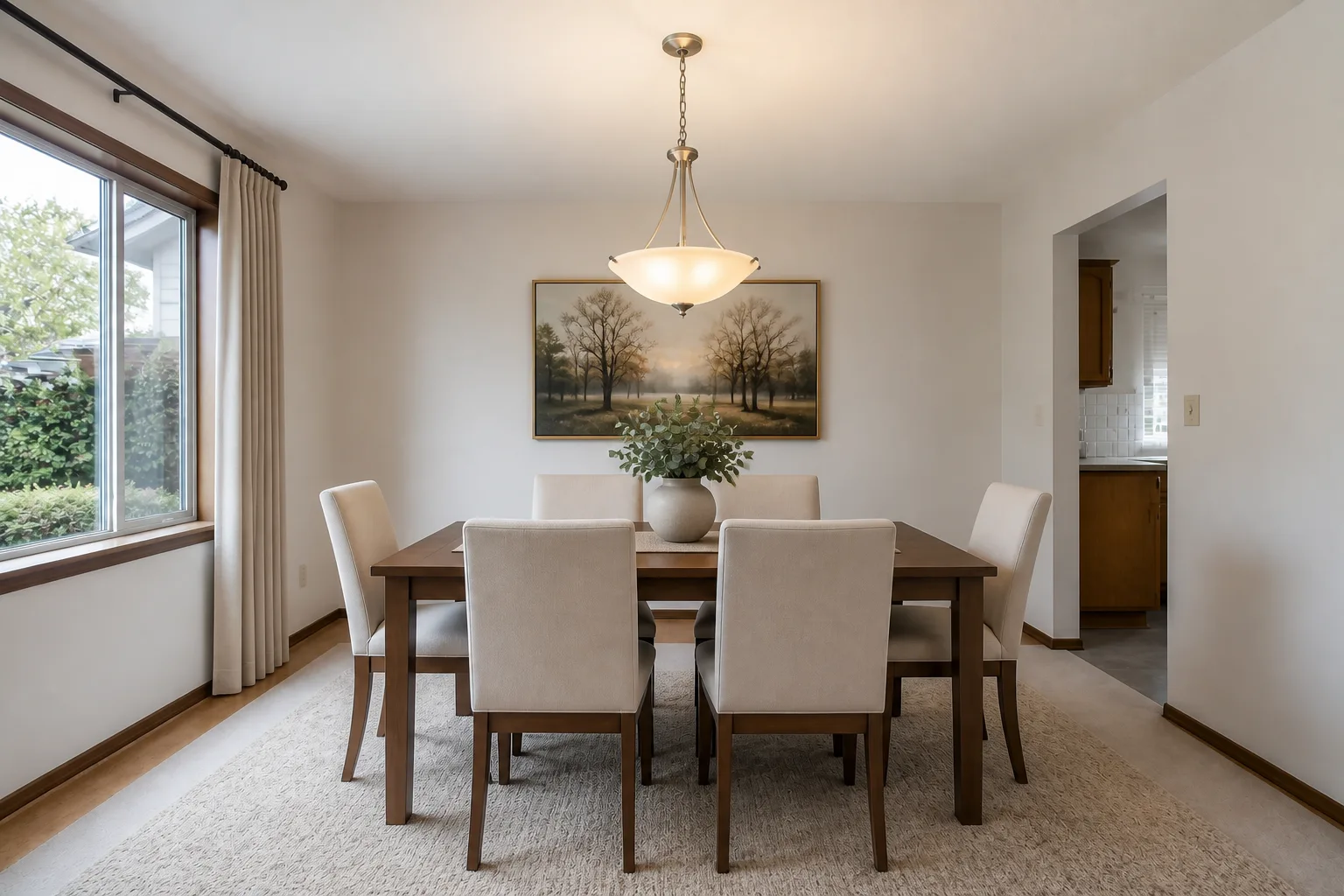 BeforeAfter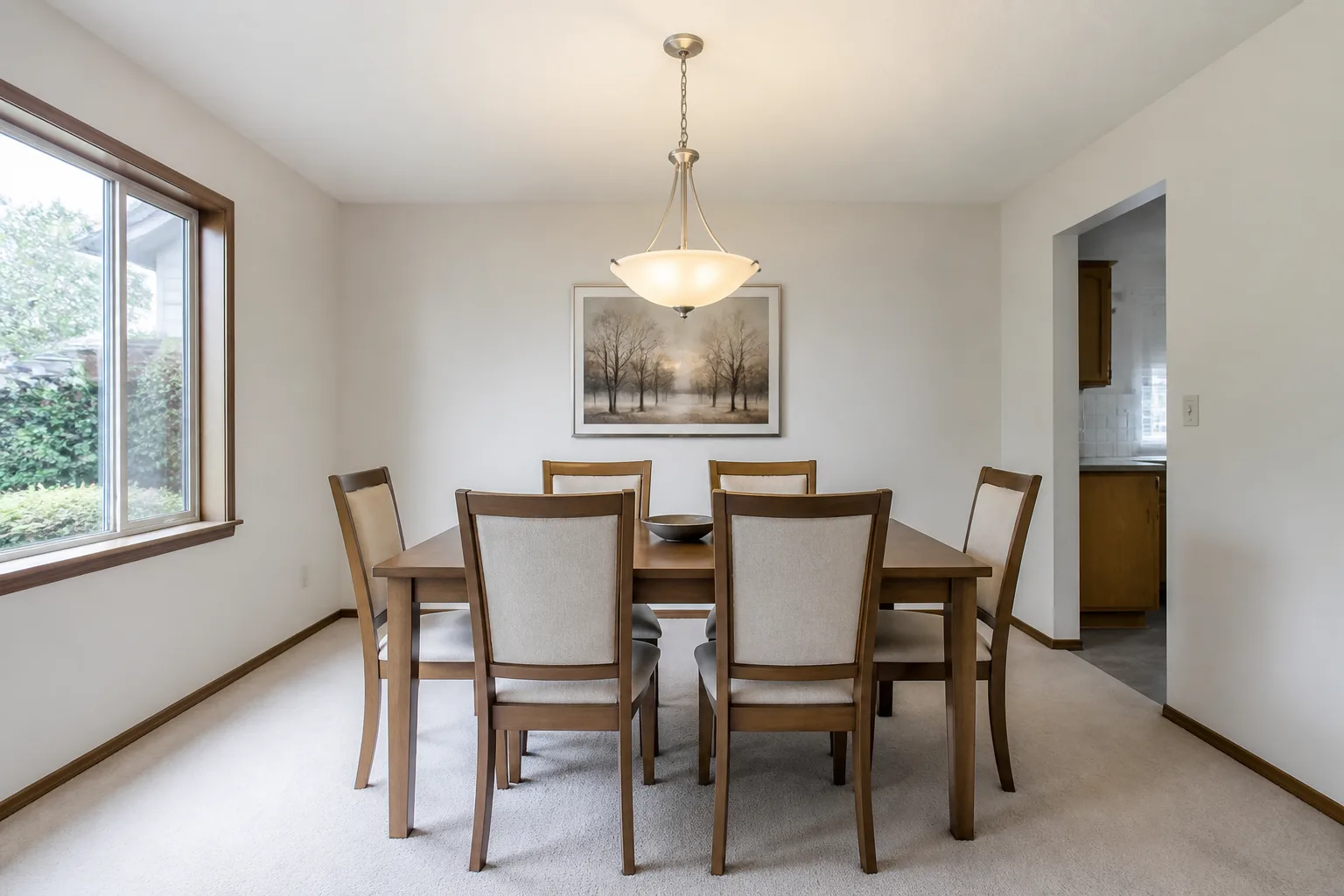
- 1
The plan
The pendant does the theatre; a pair of lamps or sconces at the sideboard stop the corners dying; everything dims. The test is faces: light that lands on the table lights the people around it from below-centre, which is the most flattering light there is — as candles have always known.
- 2
Why the single ceiling light keeps failing
One central source flattens a dining room into an evenly lit box: no depth, no zones, and a shadow wherever you stand. Every working scheme for this room is plural — sources at more than one height, switched in more than one group, so the room can change register through the day.
- 3
Match the light to the room’s hours
A dining room is hired for the table, and the table’s geometry writes the room: 60cm of width per diner, 75cm from table edge to anything behind a chair, and a light source centred on the surface rather than the ceiling rose the builder happened to leave. Because it is used in the evening more than any other room, the dining room is the house’s one legitimate theatre — the place where dark walls, real candles and a slightly-too-good chandelier all pay their way. The lighting follows those hours: bright and even when the room is working, warm and low when it is winding down — and the switch layout is what lets one room do both.
- 4
The mistakes to skip
Treating it as sacred space used four times a year, rather than lighting it well enough to use weekly. And in every room: bulbs of mixed colour temperature in one view, which reads as a fault even when nobody can say why.
Questions
- What matters most in a dining room?
- A dining room is hired for the table, and the table’s geometry writes the room: 60cm of width per diner, 75cm from table edge to anything behind a chair, and a light source centred on the surface rather than the ceiling rose the builder happened to leave. Because it is used in the evening more than any other room, the dining room is the house’s one legitimate theatre — the place where dark walls, real candles and a slightly-too-good chandelier all pay their way.
- Which numbers should I check before buying anything?
- Place settings: 60cm width per person, 40cm depth to the centreline.
- Can I preview this on my own dining room?
- Upload a photo in the Studio and run the ideas on the real room. New accounts start with 4 credits and a Standard render costs 4, so the first experiment is free.