Refreshing a Mudroom Without Moving Walls
The changes that transform a mudroom inside its existing shell — surfaces, anchors, light and edit. An airlock for the household: everything wet, muddy or dropped stops here.
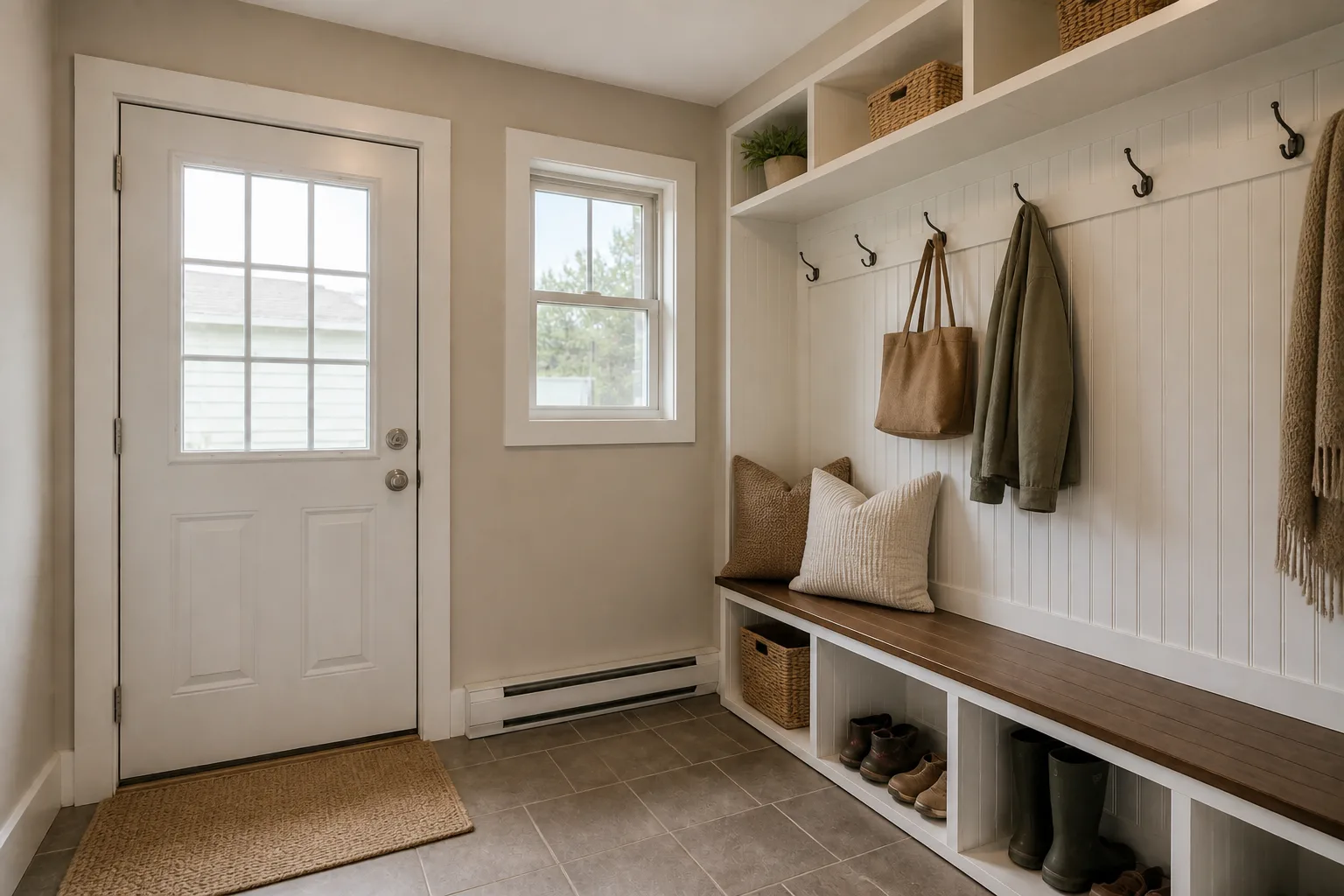 BeforeAfter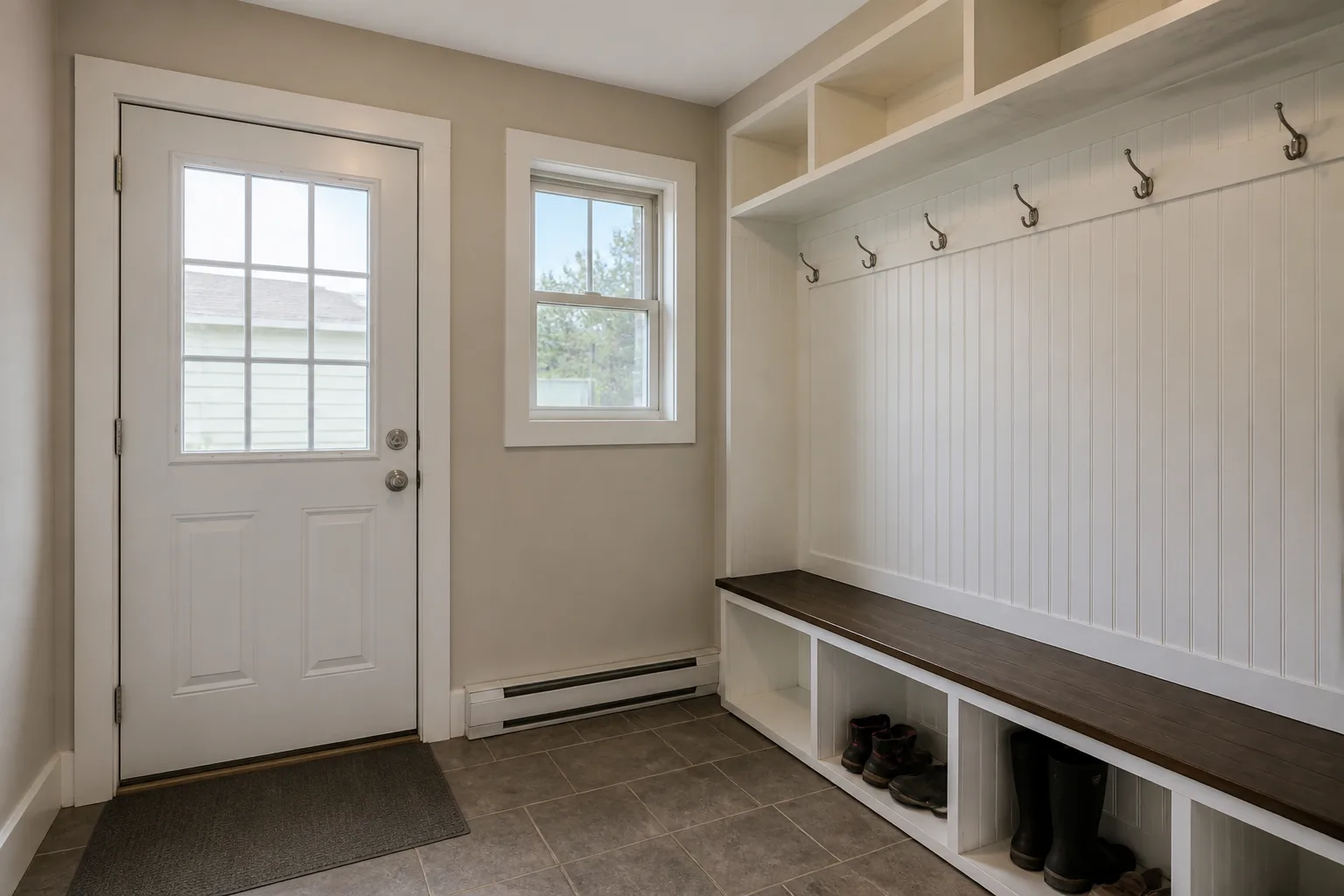
- 1
What a no-construction refresh can reach
Everything that decides how a mudroom feels is on the changeable layer: the surfaces, the anchor pieces, the lighting and the edit. The structure — walls, openings, ceiling — sets the stage but rarely the mood.
- 2
Spend the effort where this room shows it
The anchors carry a mudroom: a bench with boot storage beneath; hook rails at two heights, one per person; closed cabinet or locker per member for the ugly stuff. Renewing one anchor changes the room more than five accessories, and the room will tell you which anchor is tired.
- 3
Light is the cheapest transformation
One bright switched-at-both-doors layer — this is a pass-through — plus daylight if any wall can give it. The mudroom is the house’s least romantic room and its light can say so honestly.
- 4
And when it is small
A small mudroom is a wall, not a room: bench, hooks above, baskets below, 120cm of corridor-side wall total. It still beats no mudroom — the design is the habit it enforces, not the floor area.
Questions
- What matters most in a mudroom?
- The mudroom is hired to absorb arrival — boots, coats, bags, the dog, the parcel — so the house behind it stays clean. It is a throughput room designed per person: a hook zone, a boot zone and a drop zone for each member, at their height, because shared bins become floor piles by Tuesday. The materials brief is the garden’s: floors that take grit and water, seats that take wet weight, nothing precious below a metre.
- Which numbers should I check before buying anything?
- The route through stays 90cm wide with every hook loaded — coats count as wall thickness in here.
- Can I preview this on my own mudroom?
- Upload a photo in the Studio and run the ideas on the real room. New accounts start with 4 credits and a Standard render costs 4, so the first experiment is free.