Refreshing a Playroom Without Moving Walls
The changes that transform a playroom inside its existing shell — surfaces, anchors, light and edit. Floor is the furniture. Storage is the architecture. Everything else is negotiable.
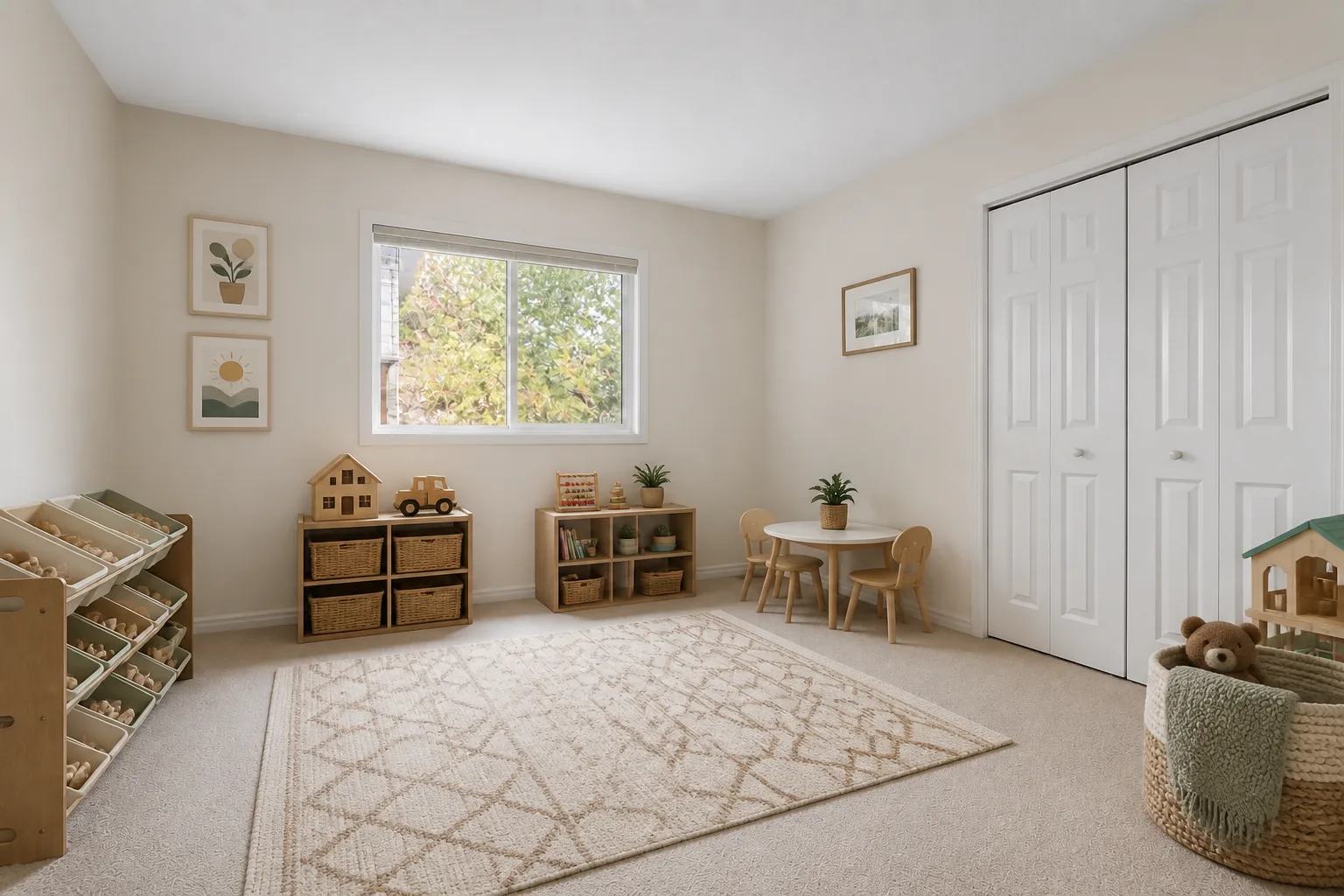 BeforeAfter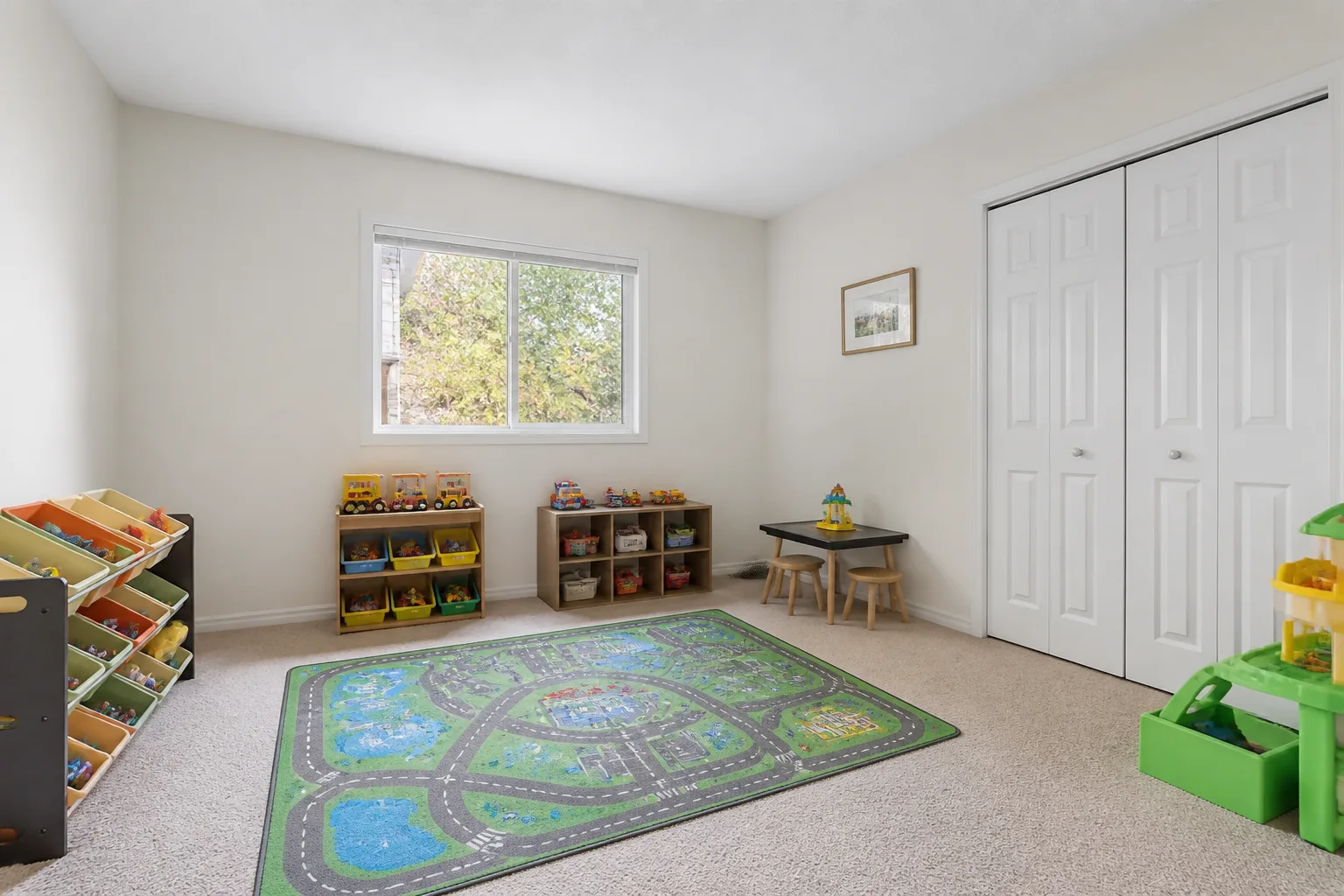
- 1
What a no-construction refresh can reach
Everything that decides how a playroom feels is on the changeable layer: the surfaces, the anchor pieces, the lighting and the edit. The structure — walls, openings, ceiling — sets the stage but rarely the mood.
- 2
Spend the effort where this room shows it
The anchors carry a playroom: a big soft rug rated for sitting; a wall of cubby storage with labelled bins; a child-height table and chairs. Renewing one anchor changes the room more than five accessories, and the room will tell you which anchor is tired.
- 3
Light is the cheapest transformation
Bright, even and shadow-free for play — the one room where a strong ceiling layer leads — plus a softer lamp near the reading corner. Skip floor lamps entirely; they are toddler-height masts with cables.
- 4
And when it is small
A small playroom goes vertical and rotational: cubbies to the ceiling with only the current cast of toys below 1m, the rest cycled monthly from the top shelves. Fewer toys out means more play, in less room — the small playroom is secretly the best-behaved one.
Questions
- What matters most in a playroom?
- A playroom is hired to hold play AND the aftermath of play, and the second job is the one that decides the design. Open floor in the middle, activity zones at the edges, and a reset system a child can actually run: open bins below 1m with picture labels, a place for every category, and closing storage above for the rotation stock. Rooms that skip the reset system become floor-level archaeology within a month.
- Which numbers should I check before buying anything?
- The central floor stays open: 2×2m minimum of continuous rug, no furniture islands.
- Can I preview this on my own playroom?
- Upload a photo in the Studio and run the ideas on the real room. New accounts start with 4 credits and a Standard render costs 4, so the first experiment is free.