How to Lay Out a Laundry Room
Where everything goes in a laundry room, and the clearances that decide it before taste gets a vote. A process room: sort, wash, dry, fold, leave. Design the verbs in order.
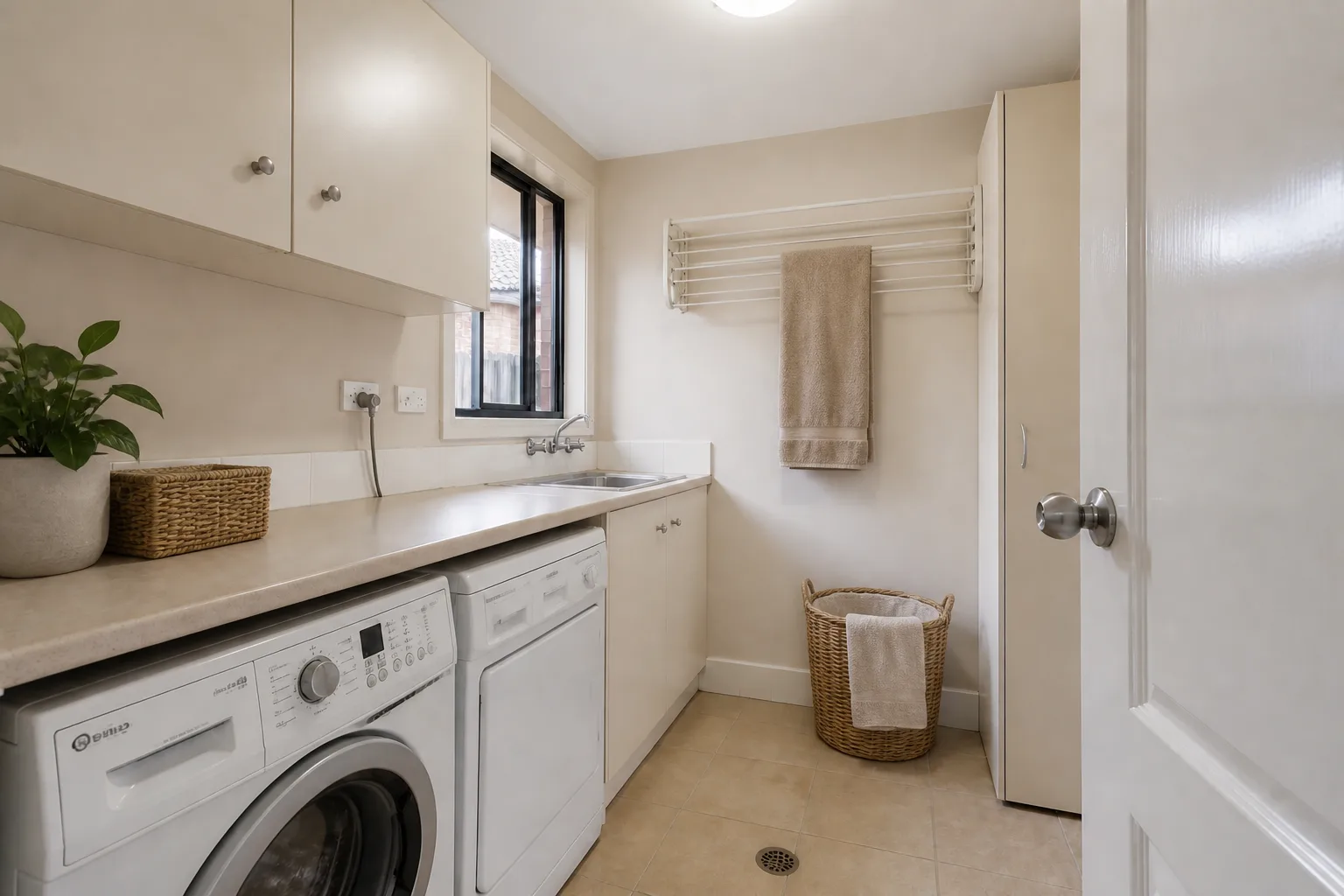 BeforeAfter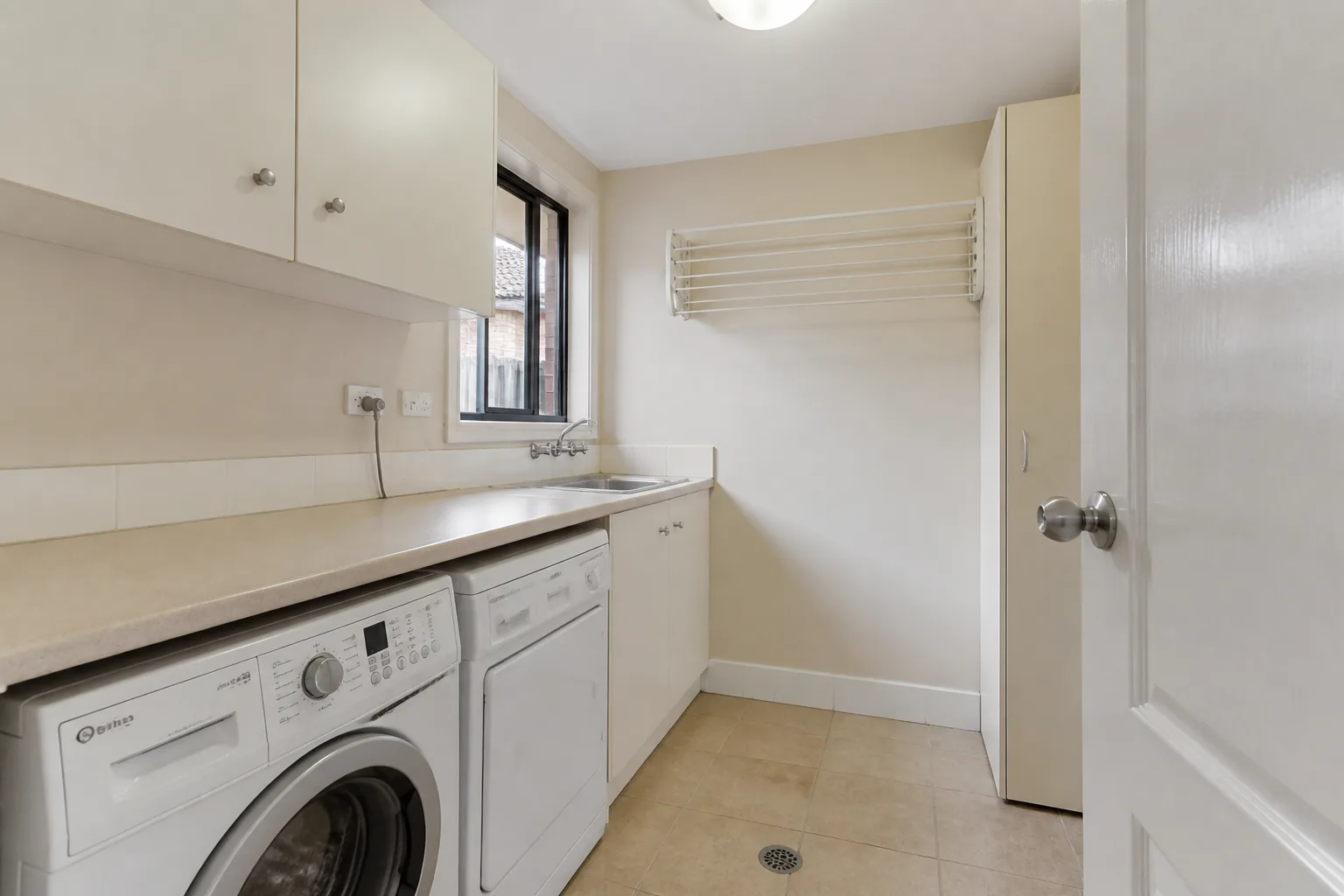
- 1
Start from the job, not the furniture
Laundry is a pipeline, and the room works when its geography matches the sequence: dirty arrives and sorts, machines wash, wet things dry (the stage every small laundry forgets), dry things fold on a real surface, and folded things leave. Each verb needs its station, in order, without crossing. The room is also the house’s wettest after the bathroom — ventilation and a floor that forgives are infrastructure, not finish.
- 2
The clearances that are not negotiable
In front of machines: 110cm to load a front-loader and stand, 120cm if the door opens toward an aisle. Folding surface: 60cm deep and 90cm wide minimum, at 90cm height, or folding migrates to the bed. Drying: 90cm of hanging rail and/or a wall-mounted rack over the machines’ heat. Stacked machines put the upper door at 90–140cm — check the reach of the household’s shortest launderer.
- 3
Place the anchors in order
The pieces that earn their floor in a laundry room: machines stacked or side-by-side under a counter; the counter itself — folding is the room’s real work; a triple sorting hamper, ending floor-sorting forever; a hanging rail where drip-dry lives; a floor drain or waterproof floor, because hoses fail. Position the first before the second exists — each anchor constrains the next, and reversing the order is how rooms end up designed around their least important piece.
- 4
Then check it against the failure list
No drying station, so wet clothes tour the radiators of the entire house. Machines under a counter too shallow to fold on — the room’s one surface, wasted. Detergent stored above child height but below adult convenience, satisfying no one. Treating it as a cupboard: no light, no air, and mildew as the finish schedule.
Questions
- What matters most in a laundry room?
- Laundry is a pipeline, and the room works when its geography matches the sequence: dirty arrives and sorts, machines wash, wet things dry (the stage every small laundry forgets), dry things fold on a real surface, and folded things leave. Each verb needs its station, in order, without crossing. The room is also the house’s wettest after the bathroom — ventilation and a floor that forgives are infrastructure, not finish.
- Which numbers should I check before buying anything?
- In front of machines: 110cm to load a front-loader and stand, 120cm if the door opens toward an aisle.
- Can I preview this on my own laundry room?
- Upload a photo in the Studio and run the ideas on the real room. New accounts start with 4 credits and a Standard render costs 4, so the first experiment is free.