Refreshing a Den Without Moving Walls
The changes that transform a den inside its existing shell — surfaces, anchors, light and edit. The small dark room the house is lucky to have. Lean in; do not brighten it out.
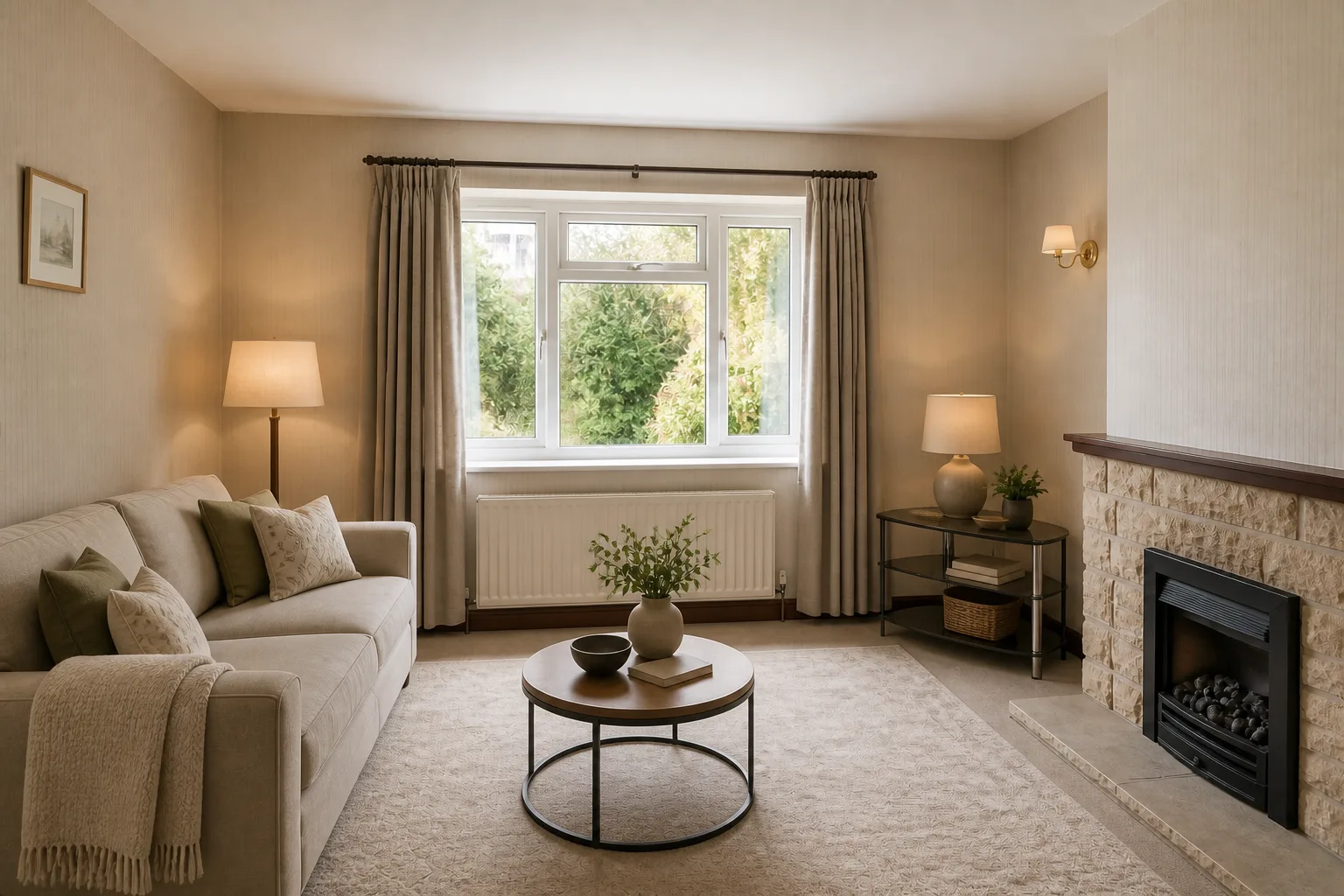 BeforeAfter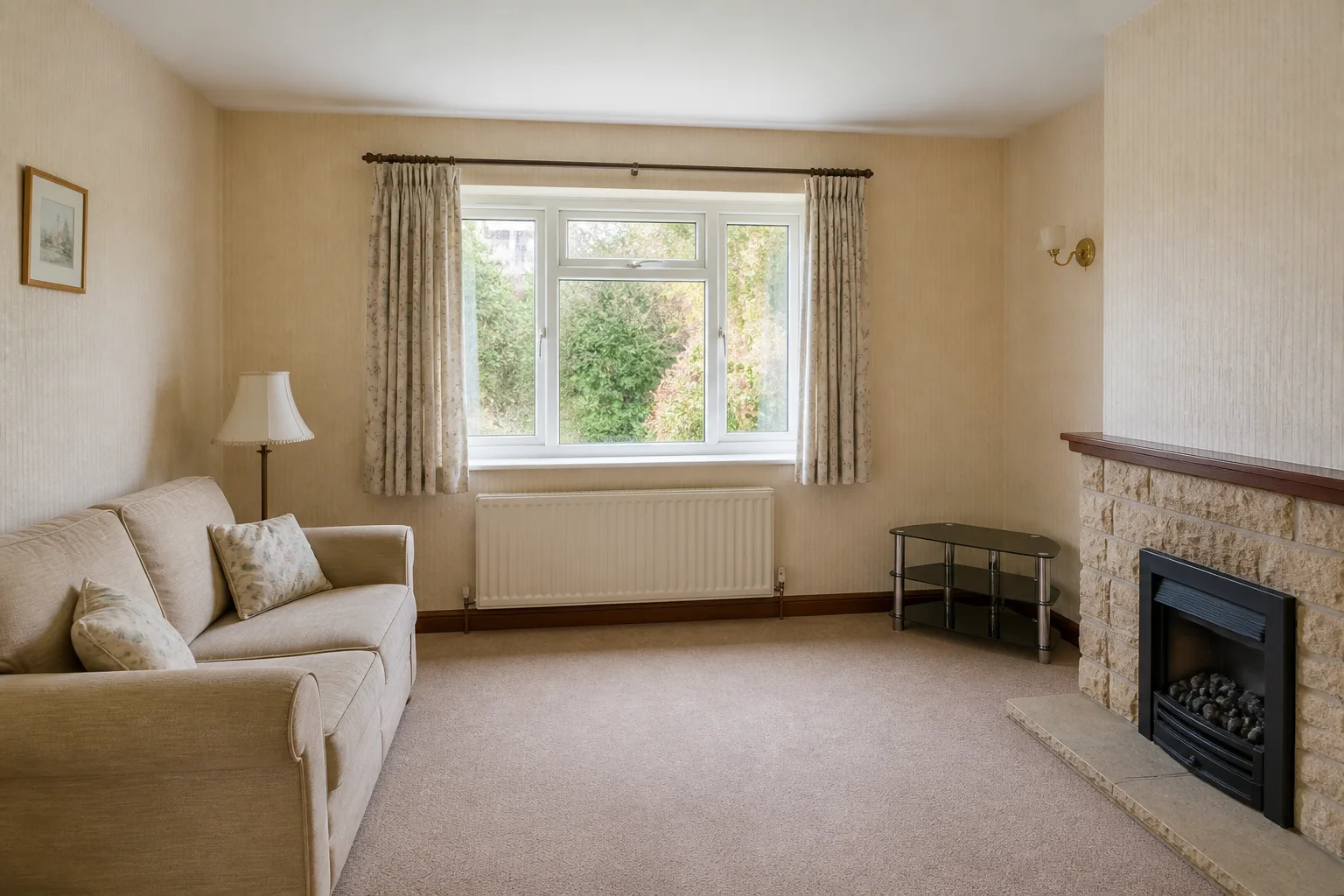
- 1
What a no-construction refresh can reach
Everything that decides how a den feels is on the changeable layer: the surfaces, the anchor pieces, the lighting and the edit. The structure — walls, openings, ceiling — sets the stage but rarely the mood.
- 2
Spend the effort where this room shows it
The anchors carry a den: one deep, committed armchair or small fat sofa; a wall of books or records; a heavy curtain, even on an internal door. Renewing one anchor changes the room more than five accessories, and the room will tell you which anchor is tired.
- 3
Light is the cheapest transformation
No ceiling light at all if you can get away with it: two or three warm pools at and below head height, one aimed at the shelves. The darkness between pools is the point — it is what makes the room a den and not a small lounge.
- 4
And when it is small
Small is the den’s natural state; the correction runs the other way. If the den is nearly big, pull everything inward anyway — the chair off the wall, shelves crowding close — because a den that feels spacious has failed at its one job.
Questions
- What matters most in a den?
- A den is hired for retreat — one or two people, low light, a door that closes. It is the room where the dark-and-cosy instinct is finally correct: deep colour, soft everything, lamplight only. The design failure unique to dens is aspiration — trying to make the snug little room behave like a bright living room, which spends its one asset (enclosure) and buys nothing.
- Which numbers should I check before buying anything?
- A den seat wants 55–65cm depth and something under every foot — ottoman, pouffe, the dog.
- Can I preview this on my own den?
- Upload a photo in the Studio and run the ideas on the real room. New accounts start with 4 credits and a Standard render costs 4, so the first experiment is free.