Refreshing a Kids’ Bedroom Without Moving Walls
The changes that transform a kids’ bedroom inside its existing shell — surfaces, anchors, light and edit. Sleep, play and growing out of things — a room on a three-year design cycle.
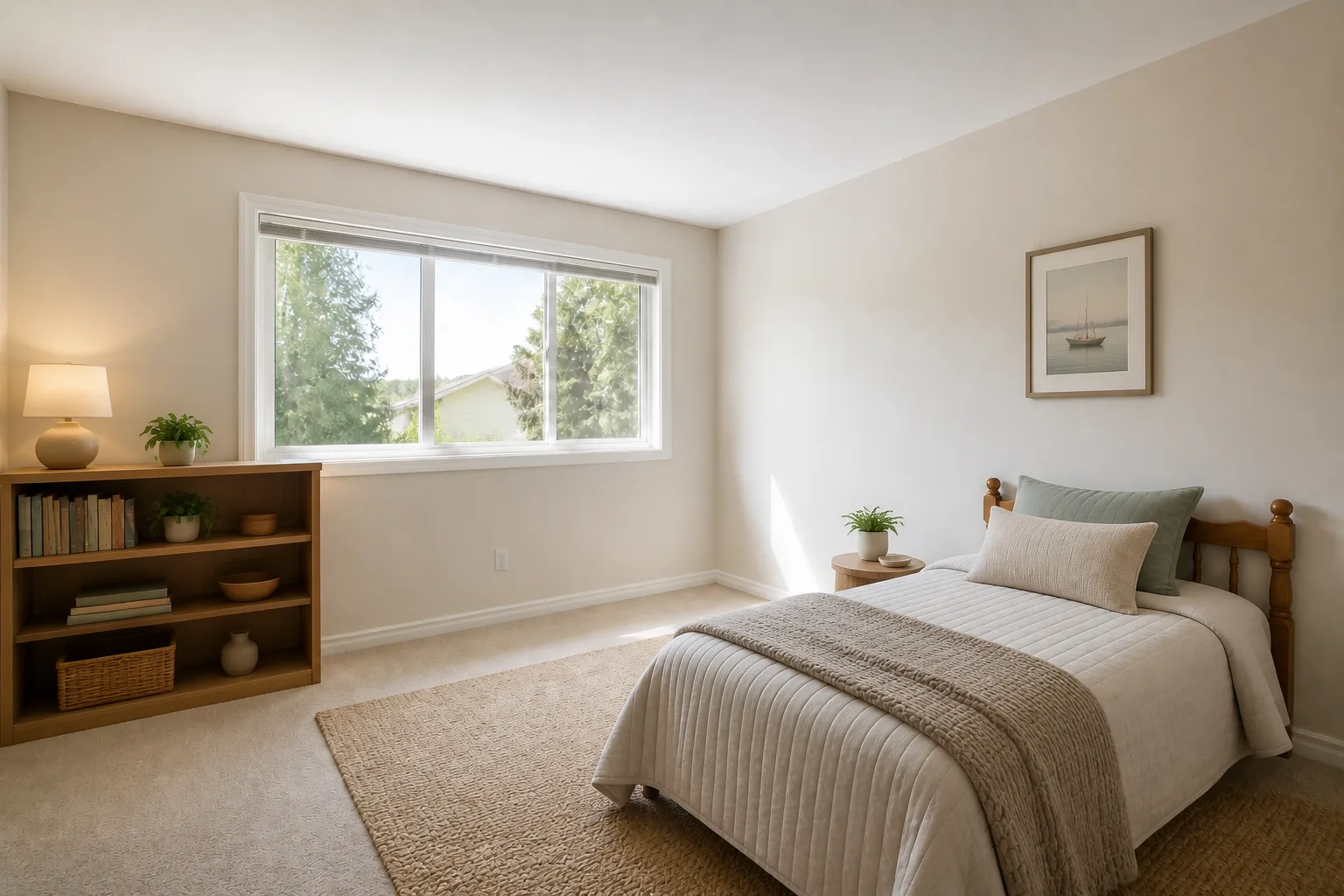 BeforeAfter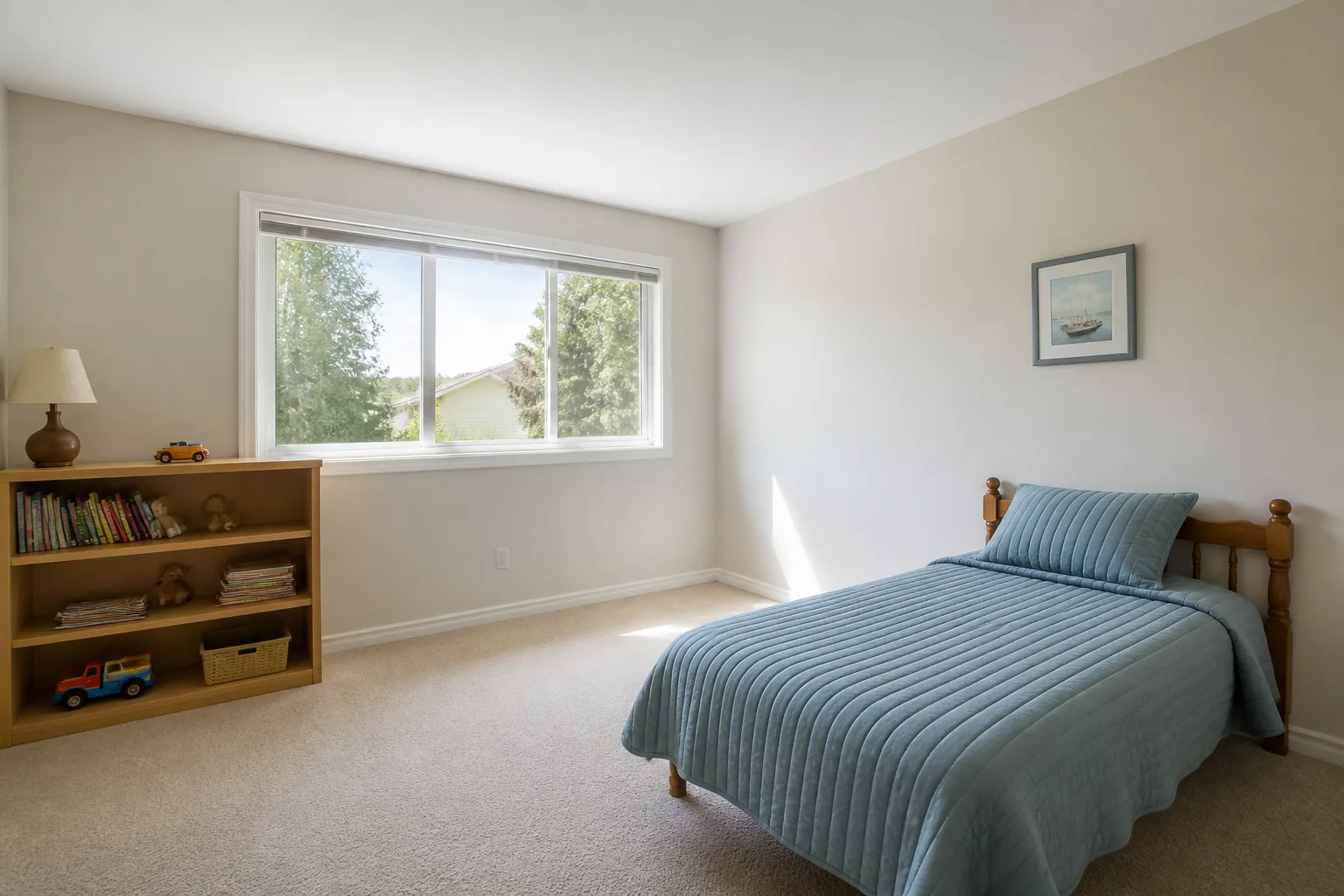
- 1
What a no-construction refresh can reach
Everything that decides how a kids’ bedroom feels is on the changeable layer: the surfaces, the anchor pieces, the lighting and the edit. The structure — walls, openings, ceiling — sets the stage but rarely the mood.
- 2
Spend the effort where this room shows it
The anchors carry a kids’ bedroom: a bed that will fit the twelve-year-old, not just the four-year-old; a low open bookcase, front-facing if they are pre-readers; a rail or wardrobe with a child-height section. Renewing one anchor changes the room more than five accessories, and the room will tell you which anchor is tired.
- 3
Light is the cheapest transformation
Three levels: bright for play and tidying, a warm lamp for wind-down, and a nightlight below knee height that does not wash the ceiling. The wind-down light does bedtime; the big light going off is the treaty signature.
- 4
And when it is small
In a small kids’ room, the bed goes lofted or against the wall and the freed floor is the play zone — a child values 2 square metres of open rug over any piece of furniture you could put there. Storage climbs the walls; only the current toys stay reachable.
Questions
- What matters most in a kids’ bedroom?
- A child’s room is three rooms on a rotation: sleep space now, play space daily, and a different room entirely in three years. The layout holds if the expensive fixed layer stays age-neutral — walls, flooring, wardrobe, bed position by the rules of any bedroom — while the identity lives in swappable goods: bedding, posters, a lampshade, one paint colour with a weekend’s repaint cost. Rooms themed to the current obsession bill the redesign to the fixed layer, three times before secondary school.
- Which numbers should I check before buying anything?
- The same open-floor rule as the playroom: a continuous 1.5×1.5m patch minimum, defended from furniture.
- Can I preview this on my own kids’ bedroom?
- Upload a photo in the Studio and run the ideas on the real room. New accounts start with 4 credits and a Standard render costs 4, so the first experiment is free.