rental entryway
Not your walls, not your floor, not forever. Design what moves and borrow what doesn’t. Here is how that plays out in a entryway: the layout that survives it, the furniture worth keeping, the lighting plan, and a way to preview it all on a photo of your own room.
What a rental entryway is really dealing with
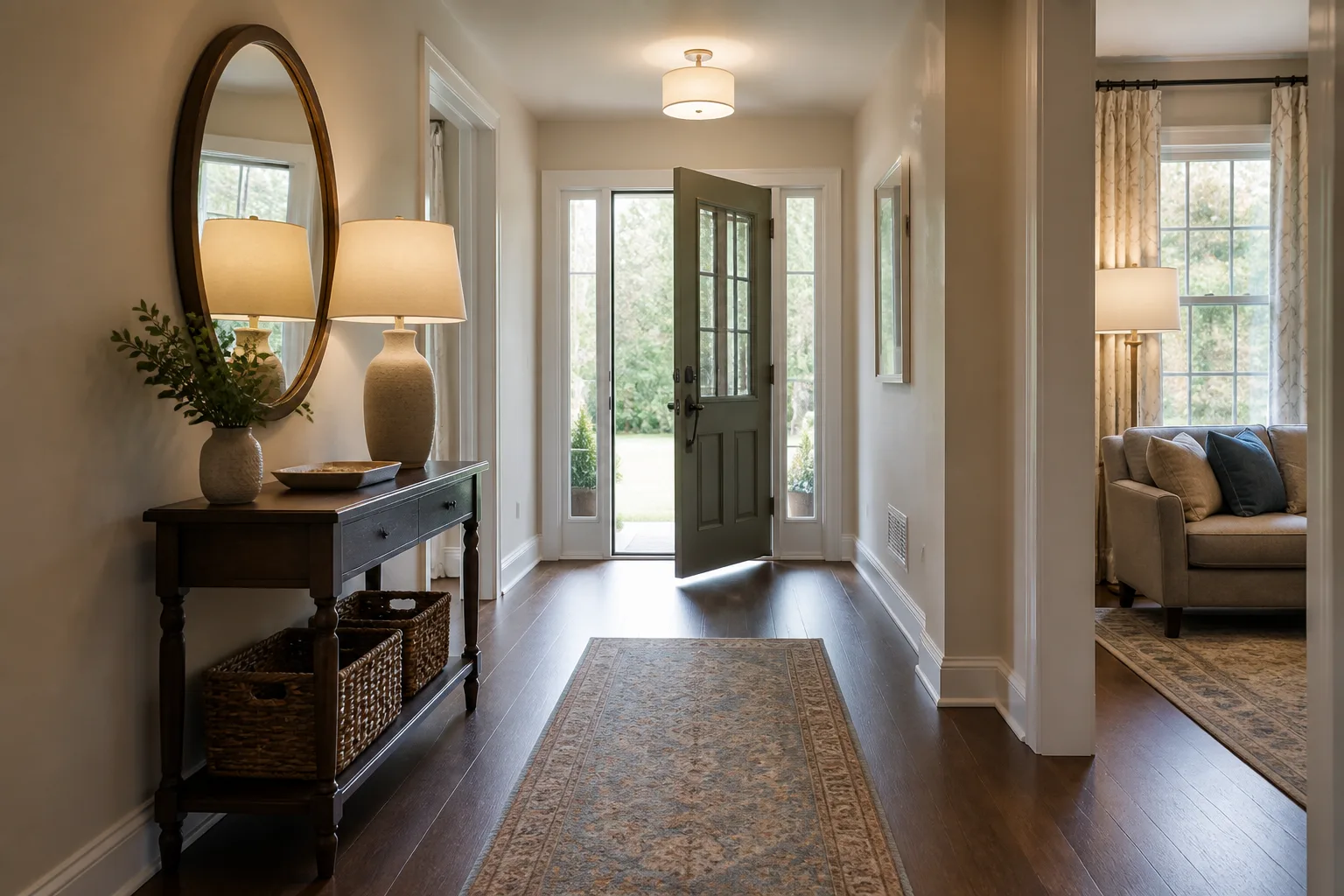
A rental constrains the surfaces, not the room: paint, floors, kitchens and bathrooms belong to the landlord, and everything else is negotiable. The renters who get magazine-looking rooms concentrate their effort in the movable layer — rugs, curtains, lighting, big freestanding pieces — and treat every purchase as one that must survive the next flat. The trap is the opposite instinct: living for years with the letting-agent bulb and bare windows because "it’s not ours", which wastes the one thing the tenancy actually gave you: the room. None of that changes what the room is for: the entry is hired twice over: it is the house’s handshake — the first surface, smell and light every arrival reads — and it is a transit interchange where keys, mail, shoes and bags must land somewhere designed, or they will land somewhere anyway. The formula is a landing surface at hip height, a seat if shoes come off, storage matched to what actually arrives (audit a week of it), and one moment of deliberate beauty — mirror, art, a lamp on a timer — so the eight seconds say what you want them to.
The layout that gets both jobs done
Hold the entryway's own numbers first — the door’s full swing plus a standing human: 120cm of clear depth beyond the arc. Then let the constraint pick the arrangement: a large rug as the room’s de facto floor — it covers the worst surface and moves out with you; your own curtains on the existing track, and your own bulbs and shades everywhere; plug-in wall lights and picture-rail hanging, doing the work of hard-wired fittings and nails.
Furniture that earns its floor here
The pieces a entryway cannot do without are a slim console or ledge with a tray for the pocket-dump, a mirror doubling light and allowing the final check, hooks or a rail for the coats of now (the archive lives elsewhere). Under the rental condition, each of them is auditioned against the same test: a large rug as the room’s de facto floor — it covers the worst surface and moves out with you.
What to rule out on day one
The rental version of this room punishes spending on surfaces you leave behind while sitting on furniture you hate; twenty removable-hook workarounds doing the job one honest conversation would. And the entryway's own classic error still applies: no landing surface, so the nearest kitchen counter becomes the mail room.
Lighting it
Assume you cannot rewire: the entire scheme has to come from plugs. Three plug-in sources beat the centre pendant on its own — put the pendant on the dimmest bulb in the room and let the lamps carry it. Warm and immediate: one ambient source that greets, plus the timer lamp. The entry is the one room where the light being ON before you reach it is the design — nobody’s homecoming should start in the dark patting a wall.
The move to make this weekend
Swap every bulb in the room to warm white (2700K) and add one floor lamp. It is the cheapest full-room transformation that exists, it takes ten minutes, and every landlord in the world permits it. In a entryway that lands next to the fixed rule of the room: the route onward stays 90cm wide — the entry is a lobby, not a room to furnish full.
Dimensions to hold onto
However the finishes go, the geometry stays: A console at 80–90cm high and as little as 25cm deep does the landing-strip job. A shoe-off household needs a seat edge at 45cm within 1.5m of the door.
Questions
- Is a rental entryway worth designing around?
- Yes — not your walls, not your floor, not forever. Design what moves and borrow what doesn’t. The pages here treat the rental condition as the starting brief, not a defect to apologise for.
- Which single change helps a rental entryway most?
- Swap every bulb in the room to warm white (2700K) and add one floor lamp. It is the cheapest full-room transformation that exists, it takes ten minutes, and every landlord in the world permits it.
- How do I light a rental entryway?
- Assume you cannot rewire: the entire scheme has to come from plugs. Three plug-in sources beat the centre pendant on its own — put the pendant on the dimmest bulb in the room and let the lamps carry it.
- What gets bought and regretted most in this room?
- No landing surface, so the nearest kitchen counter becomes the mail room. Under the rental condition, add: spending on surfaces you leave behind while sitting on furniture you hate.
- Can I try these ideas on a photo of my own entryway?
- That is what the Studio is for: upload a photo of the actual room and redesign it with the rental playbook applied. A new account starts with 4 free credits and a Standard render costs 4, so the first look is free.