small bedroom
The room is fine. The furniture catalogue was written for a different one. Here is how that plays out in a bedroom: the layout that survives it, the furniture worth keeping, the lighting plan, and a way to preview it all on a photo of your own room.
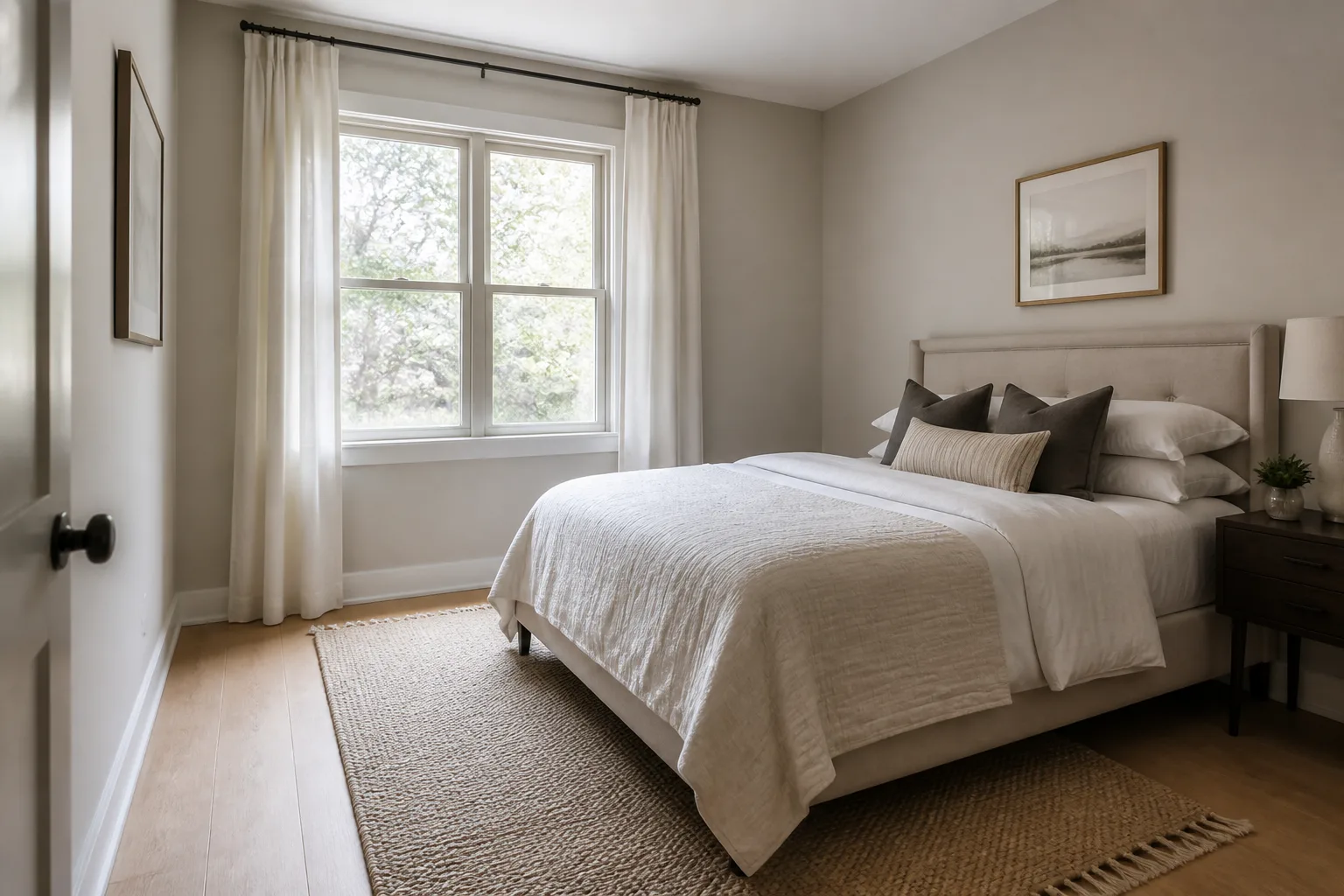
What a small bedroom is really dealing with
A small room fails at the edges: every piece that almost fits steals the walking line, and three almost-fits make the room unusable. The floor you can still see matters more than the floor you cover — a small room with 60% of its floor visible reads calm, and the same room at 30% reads full, whatever the style. Scale is the whole game; colour and pattern are tiebreakers. None of that changes what the room is for: a bedroom is hired for sleep, and its design quality is measurable in how fast the room winds you down. The bed gets the commanding position — headboard on a solid wall, door visible, window light not hitting the pillow — and everything added after that is audited against the one job: a chair that collects clothes is storage failing, a desk facing the bed is tomorrow staring at tonight, a screen is a decision about what the room is for.
The layout that gets both jobs done
Hold the bedroom's own numbers first — walk both sides of a shared bed: 60cm minimum per side, 75cm to open a drawer while standing there. Then let the constraint pick the arrangement: one properly sized anchor piece instead of three apologetic ones; furniture with visible legs, so the floor runs underneath and the room keeps its edges; wall-mounted lighting and shelving — the floor is too valuable to spend on stands.
Furniture that earns its floor here
The pieces a bedroom cannot do without are the bed, largest the walls honestly allow, two reachable bedside surfaces with two reachable lights, one wardrobe run that closes completely. Under the small condition, each of them is auditioned against the same test: one properly sized anchor piece instead of three apologetic ones.
What to rule out on day one
The small version of this room punishes pairs of things — two armchairs, two side tables — in a room with space for one; sofas with rolled arms and skirts that sit visually on the floor. And the bedroom's own classic error still applies: the bed under the window because the walls "didn’t work" — light on the pillow, a cold draft at the head, and curtains that can never be generous.
Lighting it
One ceiling light flattens a small room into a box. Two or three low-wattage sources at different heights — a wall light, a table lamp, something behind the seating — give it the depth the floor plan cannot. Three circuits: a warm general layer you can dim to candle-level, bedside lights operable without sitting up, and no cool-white anywhere. If one light must be bright for cleaning and packing, put it on its own switch you never touch after 8pm.
The move to make this weekend
Take one piece of furniture out entirely — the piece you route around when you cross the room. The room gets bigger for free, and you learn which of the remaining pieces is next. In a bedroom that lands next to the fixed rule of the room: wardrobe doors and drawers need their full arc plus a standing human: 110cm in front of a hinged run.
Dimensions to hold onto
However the finishes go, the geometry stays: The bed end wants 90cm to the wall or wardrobe — less, and dressing happens in the hall. Bedside surfaces land level with the mattress top, ±5cm.
Questions
- Is a small bedroom worth designing around?
- Yes — the room is fine. The furniture catalogue was written for a different one. The pages here treat the small condition as the starting brief, not a defect to apologise for.
- Which single change helps a small bedroom most?
- Take one piece of furniture out entirely — the piece you route around when you cross the room. The room gets bigger for free, and you learn which of the remaining pieces is next.
- How do I light a small bedroom?
- One ceiling light flattens a small room into a box. Two or three low-wattage sources at different heights — a wall light, a table lamp, something behind the seating — give it the depth the floor plan cannot.
- What gets bought and regretted most in this room?
- The bed under the window because the walls "didn’t work" — light on the pillow, a cold draft at the head, and curtains that can never be generous. Under the small condition, add: pairs of things — two armchairs, two side tables — in a room with space for one.
- Can I try these ideas on a photo of my own bedroom?
- That is what the Studio is for: upload a photo of the actual room and redesign it with the small playbook applied. A new account starts with 4 free credits and a Standard render costs 4, so the first look is free.