small media room
The room is fine. The furniture catalogue was written for a different one. Here is how that plays out in a media room: the layout that survives it, the furniture worth keeping, the lighting plan, and a way to preview it all on a photo of your own room.
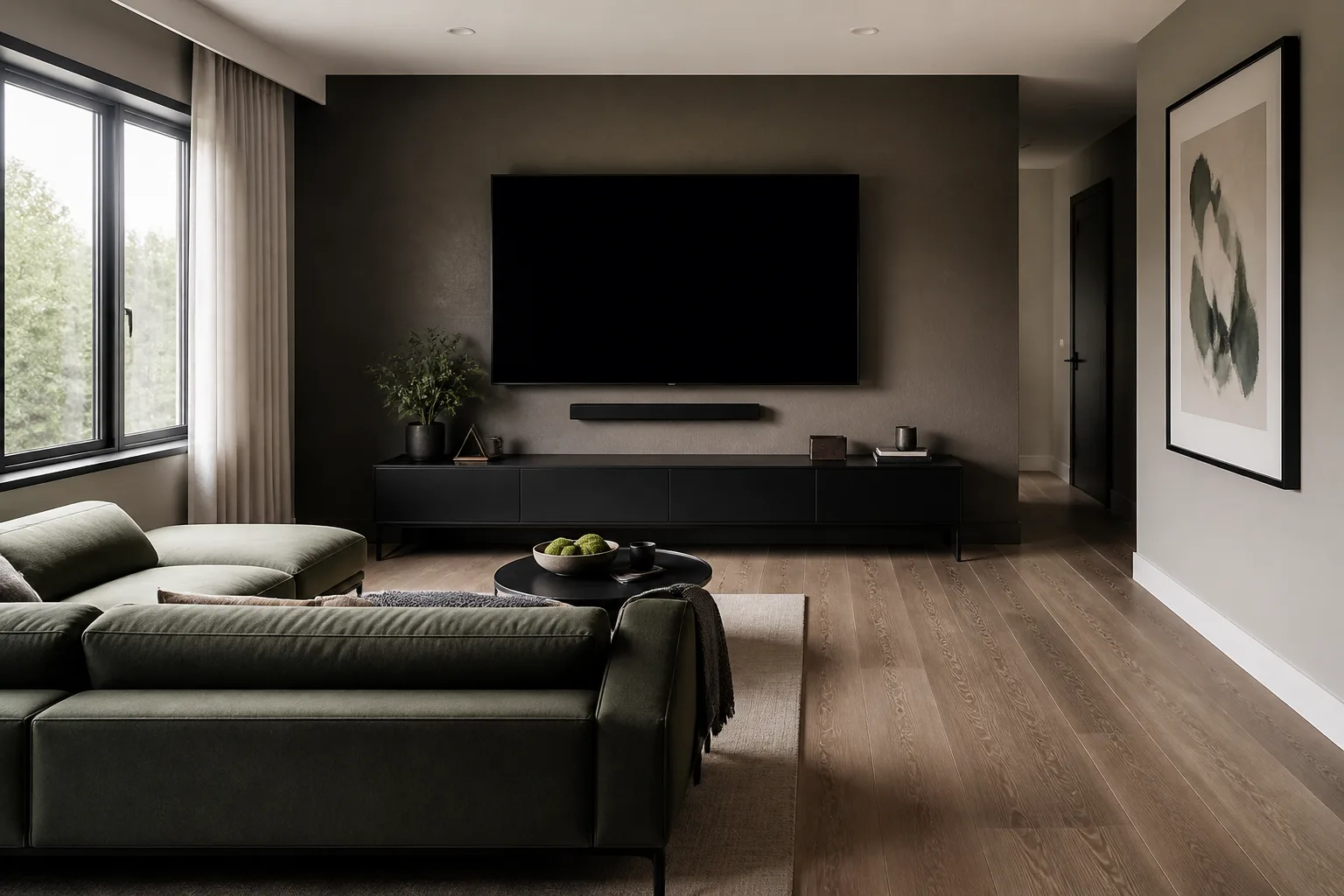
What a small media room is really dealing with
A small room fails at the edges: every piece that almost fits steals the walking line, and three almost-fits make the room unusable. The floor you can still see matters more than the floor you cover — a small room with 60% of its floor visible reads calm, and the same room at 30% reads full, whatever the style. Scale is the whole game; colour and pattern are tiebreakers. None of that changes what the room is for: everywhere else the television negotiates; here it presides. The room is hired for picture and sound, which sets the plan: seating at the right distance and height, the screen on the windowless wall, surfaces soft enough to stop echo, and light that can go to almost-black without anyone tripping. Everything else — snack tables, shelf glow, a second row on a platform — is set dressing around those four calls.
The layout that gets both jobs done
Hold the media room's own numbers first — seating distance: 1.2–1.6× the diagonal for cinematic immersion, further for casual viewing. Then let the constraint pick the arrangement: one properly sized anchor piece instead of three apologetic ones; furniture with visible legs, so the floor runs underneath and the room keeps its edges; wall-mounted lighting and shelving — the floor is too valuable to spend on stands.
Furniture that earns its floor here
The pieces a media room cannot do without are the biggest screen the wall honestly takes, recliners or a deep sofa with headrest support, blackout on every window. Under the small condition, each of them is auditioned against the same test: one properly sized anchor piece instead of three apologetic ones.
What to rule out on day one
The small version of this room punishes pairs of things — two armchairs, two side tables — in a room with space for one; sofas with rolled arms and skirts that sit visually on the floor. And the media room's own classic error still applies: the screen above a fireplace, 40cm too high, forever.
Lighting it
One ceiling light flattens a small room into a box. Two or three low-wattage sources at different heights — a wall light, a table lamp, something behind the seating — give it the depth the floor plan cannot. Three scenes on one control: full bright for cleaning, half warm for gathering, and viewing — bias light glowing softly BEHIND the screen (which spares the eyes and deepens the blacks), floor-level path lights, everything else off.
The move to make this weekend
Take one piece of furniture out entirely — the piece you route around when you cross the room. The room gets bigger for free, and you learn which of the remaining pieces is next. In a media room that lands next to the fixed rule of the room: any second row needs a 25–30cm platform to see over the first.
Dimensions to hold onto
However the finishes go, the geometry stays: Screen centre lands at seated eye height — 95–105cm — not gallery height. Leave 50cm behind a reclined recliner; they travel further than anyone plans for.
Questions
- Is a small media room worth designing around?
- Yes — the room is fine. The furniture catalogue was written for a different one. The pages here treat the small condition as the starting brief, not a defect to apologise for.
- Which single change helps a small media room most?
- Take one piece of furniture out entirely — the piece you route around when you cross the room. The room gets bigger for free, and you learn which of the remaining pieces is next.
- How do I light a small media room?
- One ceiling light flattens a small room into a box. Two or three low-wattage sources at different heights — a wall light, a table lamp, something behind the seating — give it the depth the floor plan cannot.
- What gets bought and regretted most in this room?
- The screen above a fireplace, 40cm too high, forever. Under the small condition, add: pairs of things — two armchairs, two side tables — in a room with space for one.
- Can I try these ideas on a photo of my own media room?
- That is what the Studio is for: upload a photo of the actual room and redesign it with the small playbook applied. A new account starts with 4 free credits and a Standard render costs 4, so the first look is free.