How to Lay Out a Study
Where everything goes in a study, and the clearances that decide it before taste gets a vote. The office’s older, quieter sibling: books, a desk, and no video calls.
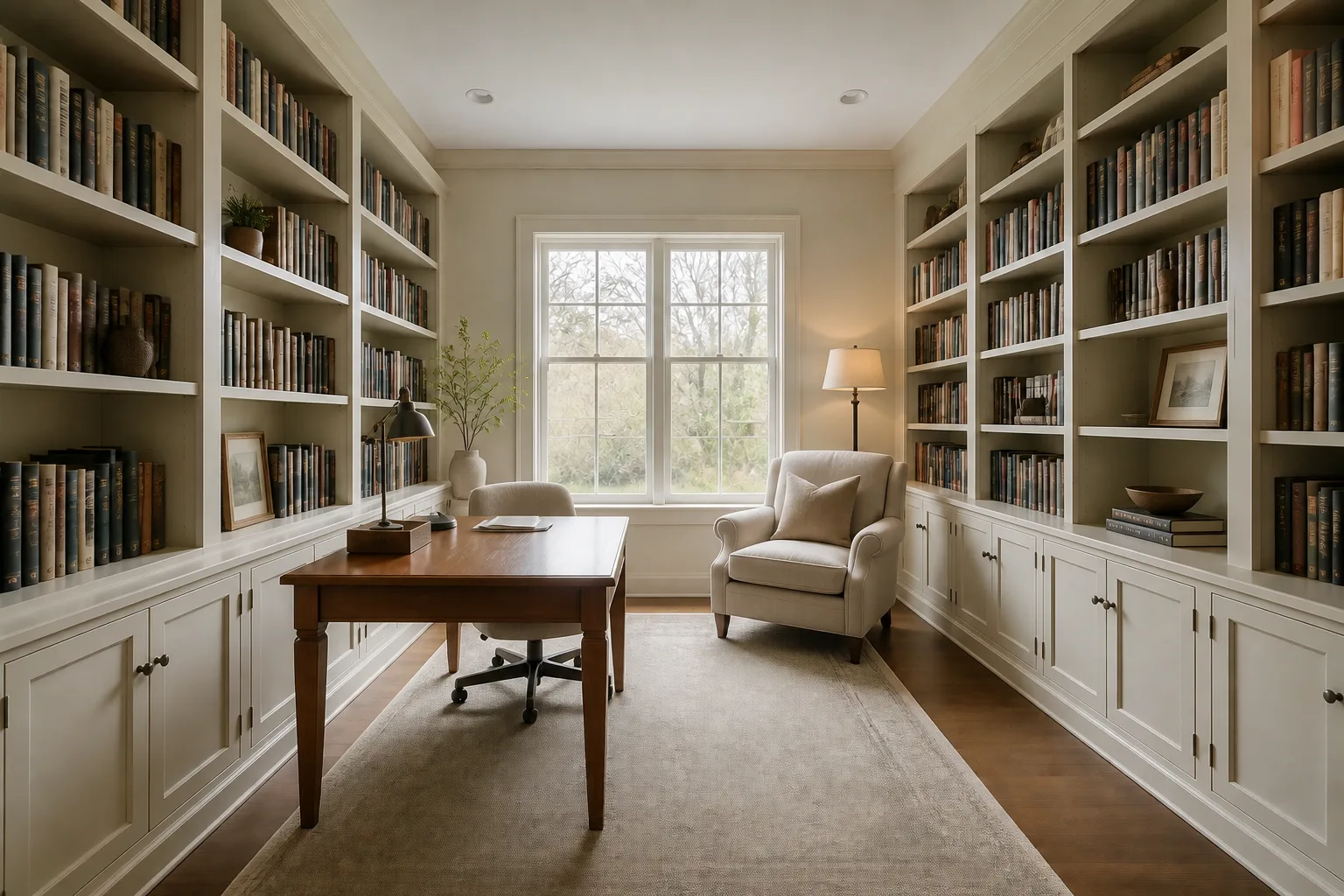 BeforeAfter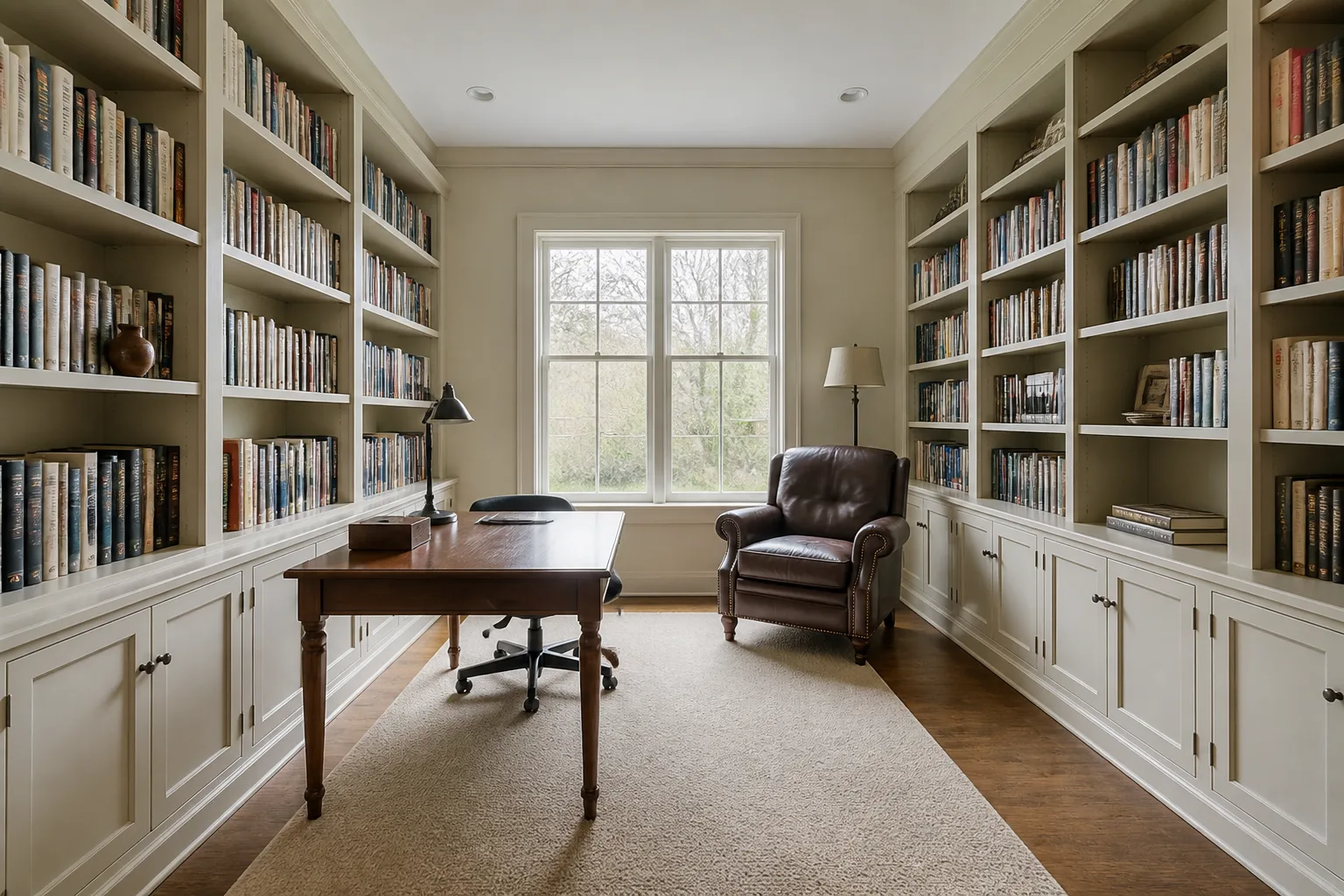
- 1
Start from the job, not the furniture
A study is hired for depth — reading, writing, thinking — where the home office is hired for throughput. That difference licenses everything the office forbids: darker colour, heavier furniture, books as the primary wall material, a chair for reading that competes with the desk for the room’s best corner. The study’s enemy is not distraction but interruption; it wants a door, mass, and an atmosphere that makes speaking loudly feel like a category error.
- 2
The clearances that are not negotiable
Desk rules carry over: 120×60cm, chair zone 75cm, side-on window light. Bookshelves at 28–32cm depth handle almost everything; keep one 40cm run for the oversized shelf. A reading chair with 70cm legroom, a table within a forearm’s reach, and light over the shoulder, not the ceiling. Ladder or step access once shelving passes 2.1m — planned, not improvised.
- 3
Place the anchors in order
The pieces that earn their floor in a study: floor-to-ceiling books on at least one wall; a desk with drawers — the study keeps its tools close; the reading chair, given the corner a lesser room would waste; a rug dense enough to quiet footsteps; one green thing alive in the window. Position the first before the second exists — each anchor constrains the next, and reversing the order is how rooms end up designed around their least important piece.
- 4
Then check it against the failure list
Shelving too shallow for real books, styled with objects where the books should be. The desk claiming the reading corner AND the window, leaving the chair a leftover. Colour cowardice: the study is the room the dark-green instinct was made for. A room so styled it repels actual work — leather blotter, no laptop socket.
Questions
- What matters most in a study?
- A study is hired for depth — reading, writing, thinking — where the home office is hired for throughput. That difference licenses everything the office forbids: darker colour, heavier furniture, books as the primary wall material, a chair for reading that competes with the desk for the room’s best corner. The study’s enemy is not distraction but interruption; it wants a door, mass, and an atmosphere that makes speaking loudly feel like a category error.
- Which numbers should I check before buying anything?
- Desk rules carry over: 120×60cm, chair zone 75cm, side-on window light.
- Can I preview this on my own study?
- Upload a photo in the Studio and run the ideas on the real room. New accounts start with 4 credits and a Standard render costs 4, so the first experiment is free.