Refreshing a Study Without Moving Walls
The changes that transform a study inside its existing shell — surfaces, anchors, light and edit. The office’s older, quieter sibling: books, a desk, and no video calls.
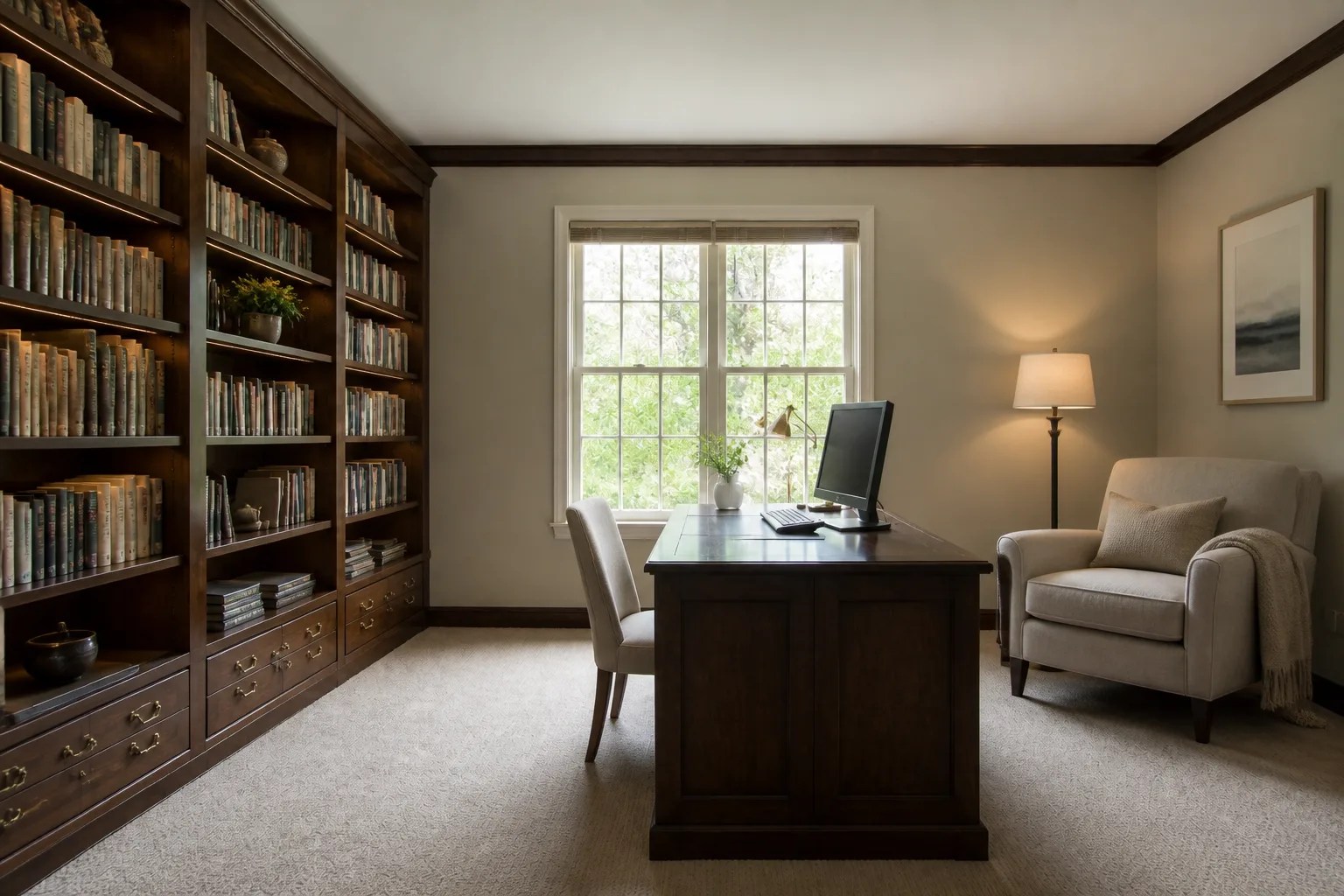 BeforeAfter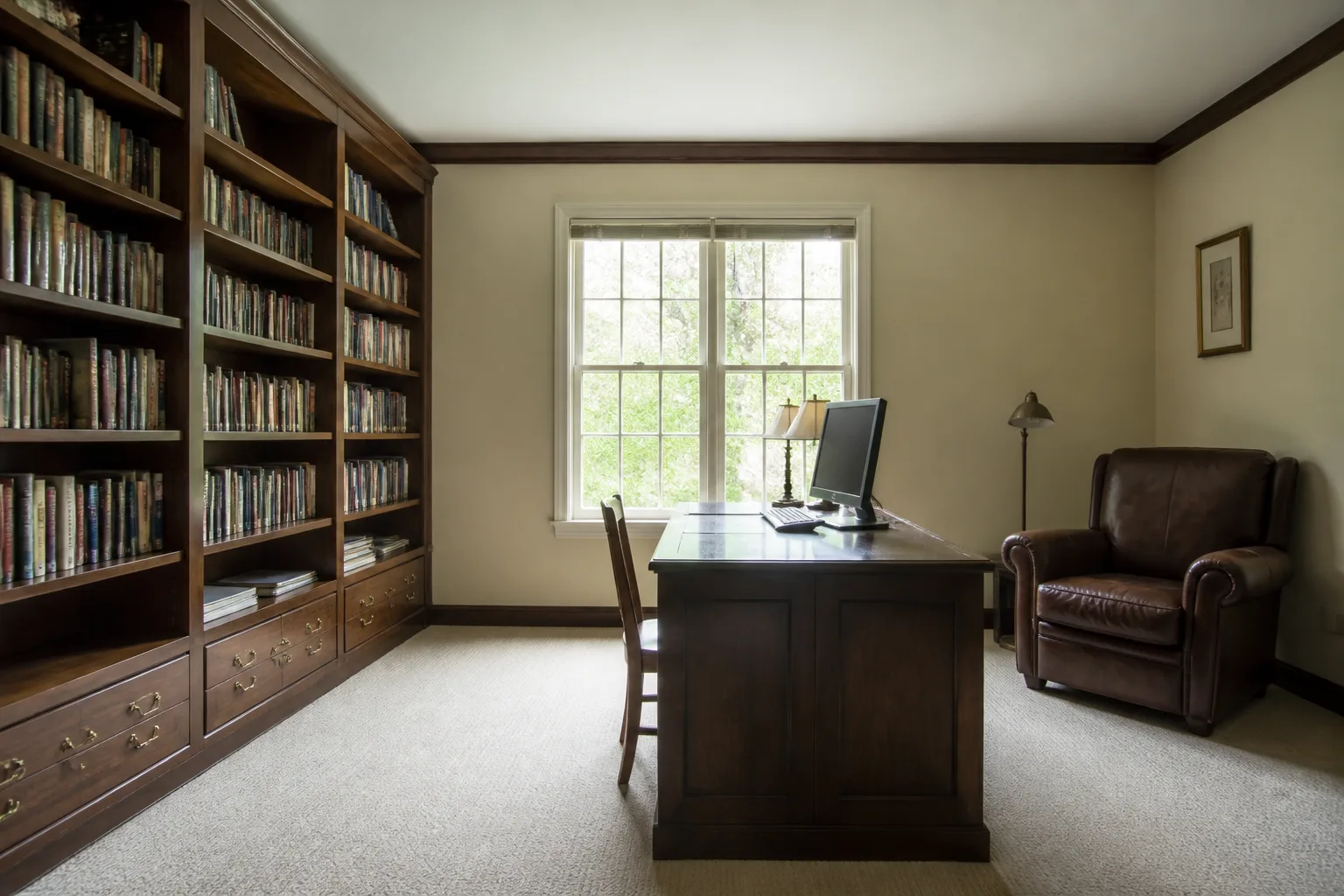
- 1
What a no-construction refresh can reach
Everything that decides how a study feels is on the changeable layer: the surfaces, the anchor pieces, the lighting and the edit. The structure — walls, openings, ceiling — sets the stage but rarely the mood.
- 2
Spend the effort where this room shows it
The anchors carry a study: floor-to-ceiling books on at least one wall; a desk with drawers — the study keeps its tools close; the reading chair, given the corner a lesser room would waste. Renewing one anchor changes the room more than five accessories, and the room will tell you which anchor is tired.
- 3
Light is the cheapest transformation
Pools, deliberately unequal: desk task light, a reading lamp at the chair, shelf lighting if the books deserve it, and the general layer kept low and warm. A study lit evenly is an office with a costume on.
- 4
And when it is small
A small study picks one master: desk-first with a reading chair squeezed in, or chair-first with a writing shelf on the wall. Both work; the failure is the 50/50 split where neither the desk nor the chair gets the corner it needed.
Questions
- What matters most in a study?
- A study is hired for depth — reading, writing, thinking — where the home office is hired for throughput. That difference licenses everything the office forbids: darker colour, heavier furniture, books as the primary wall material, a chair for reading that competes with the desk for the room’s best corner. The study’s enemy is not distraction but interruption; it wants a door, mass, and an atmosphere that makes speaking loudly feel like a category error.
- Which numbers should I check before buying anything?
- Desk rules carry over: 120×60cm, chair zone 75cm, side-on window light.
- Can I preview this on my own study?
- Upload a photo in the Studio and run the ideas on the real room. New accounts start with 4 credits and a Standard render costs 4, so the first experiment is free.