How to Light a Dorm Room
A working lighting plan for a dorm room — layers, heights and switches, not just a brighter bulb. Twelve square metres, zero permanent changes, one academic year. Go.
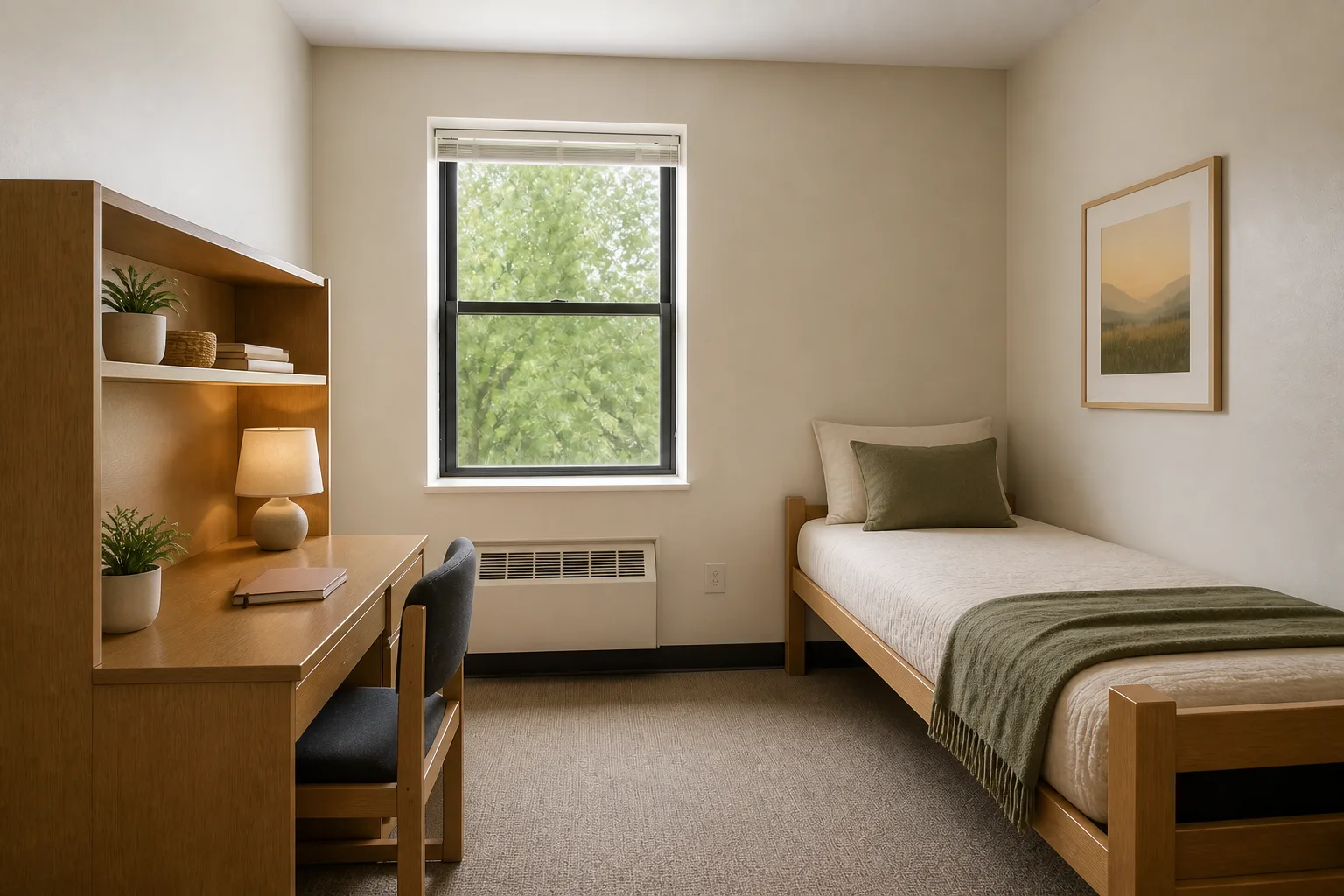 BeforeAfter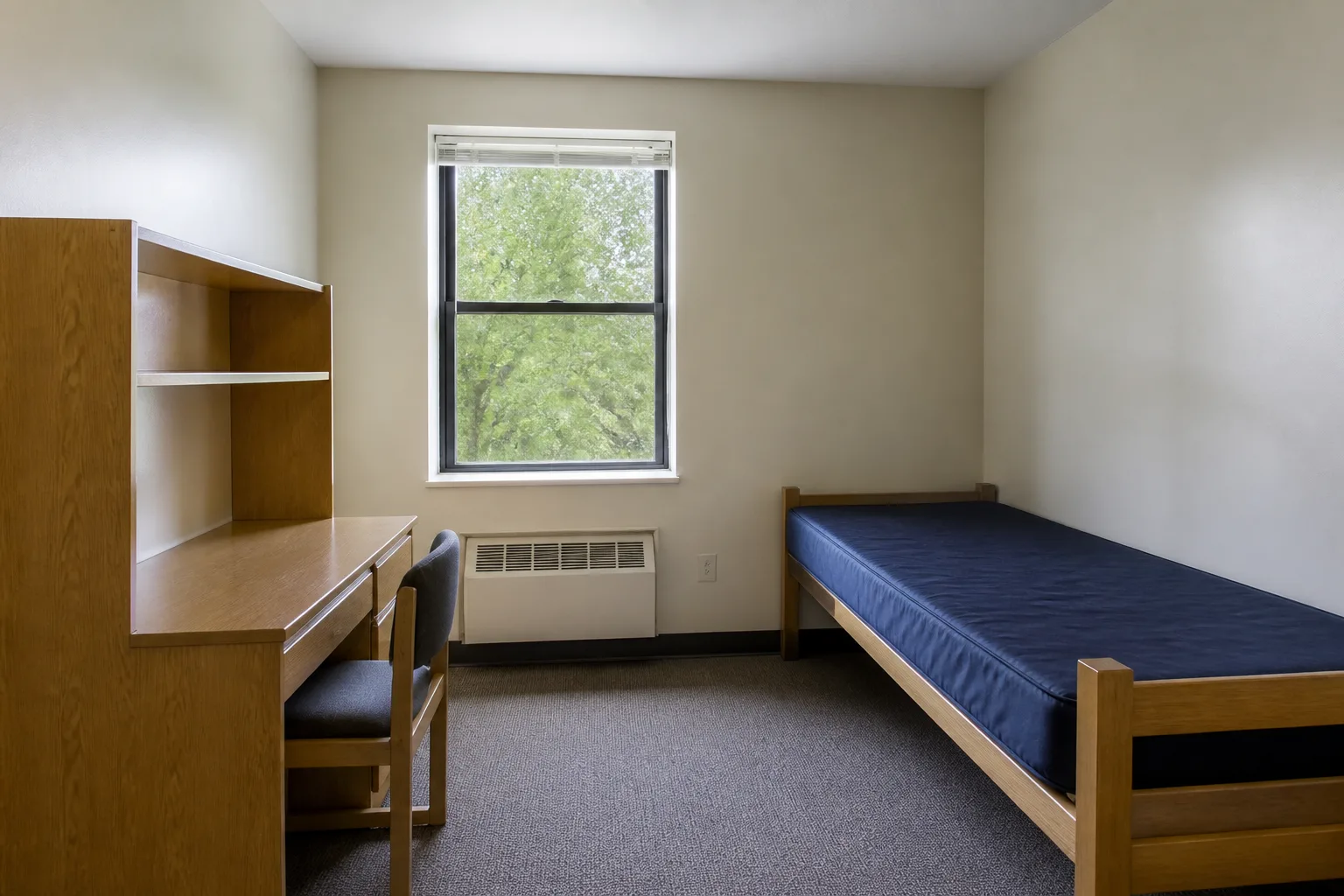
- 1
The plan
The overhead fluorescent is the enemy: a desk task light, a warm string layer and a clip light at the bed replace it entirely. Light temperature is the cheapest way to make institutional space feel inhabited.
- 2
Why the single ceiling light keeps failing
One central source flattens a dorm room into an evenly lit box: no depth, no zones, and a shadow wherever you stand. Every working scheme for this room is plural — sources at more than one height, switched in more than one group, so the room can change register through the day.
- 3
Match the light to the room’s hours
A dorm room is the rental constraint at maximum intensity: institutional furniture you cannot remove, walls you cannot mark, one room that is bedroom, study, kitchen-adjacent and social club on a nine-month lease. The plan: loft or raise the bed if permitted (the single biggest space unlock in dorm life), zone the room into sleep/study/social with rugs and light rather than furniture, and put the budget into the three things touched daily — mattress topper, desk light, one good chair or cushion stack. The lighting follows those hours: bright and even when the room is working, warm and low when it is winding down — and the switch layout is what lets one room do both.
- 4
The mistakes to skip
Blocking the room’s one window with the wardrobe because the layout "worked better". And in every room: bulbs of mixed colour temperature in one view, which reads as a fault even when nobody can say why.
Questions
- What matters most in a dorm room?
- A dorm room is the rental constraint at maximum intensity: institutional furniture you cannot remove, walls you cannot mark, one room that is bedroom, study, kitchen-adjacent and social club on a nine-month lease. The plan: loft or raise the bed if permitted (the single biggest space unlock in dorm life), zone the room into sleep/study/social with rugs and light rather than furniture, and put the budget into the three things touched daily — mattress topper, desk light, one good chair or cushion stack.
- Which numbers should I check before buying anything?
- Under a lofted bed: 130cm clears a desk and chair; 90cm clears a sofa-cushion den.
- Can I preview this on my own dorm room?
- Upload a photo in the Studio and run the ideas on the real room. New accounts start with 4 credits and a Standard render costs 4, so the first experiment is free.