Refreshing a Kitchen Without Moving Walls
The changes that transform a kitchen inside its existing shell — surfaces, anchors, light and edit. A workroom with guests. The triangle still rules; everything else negotiates.
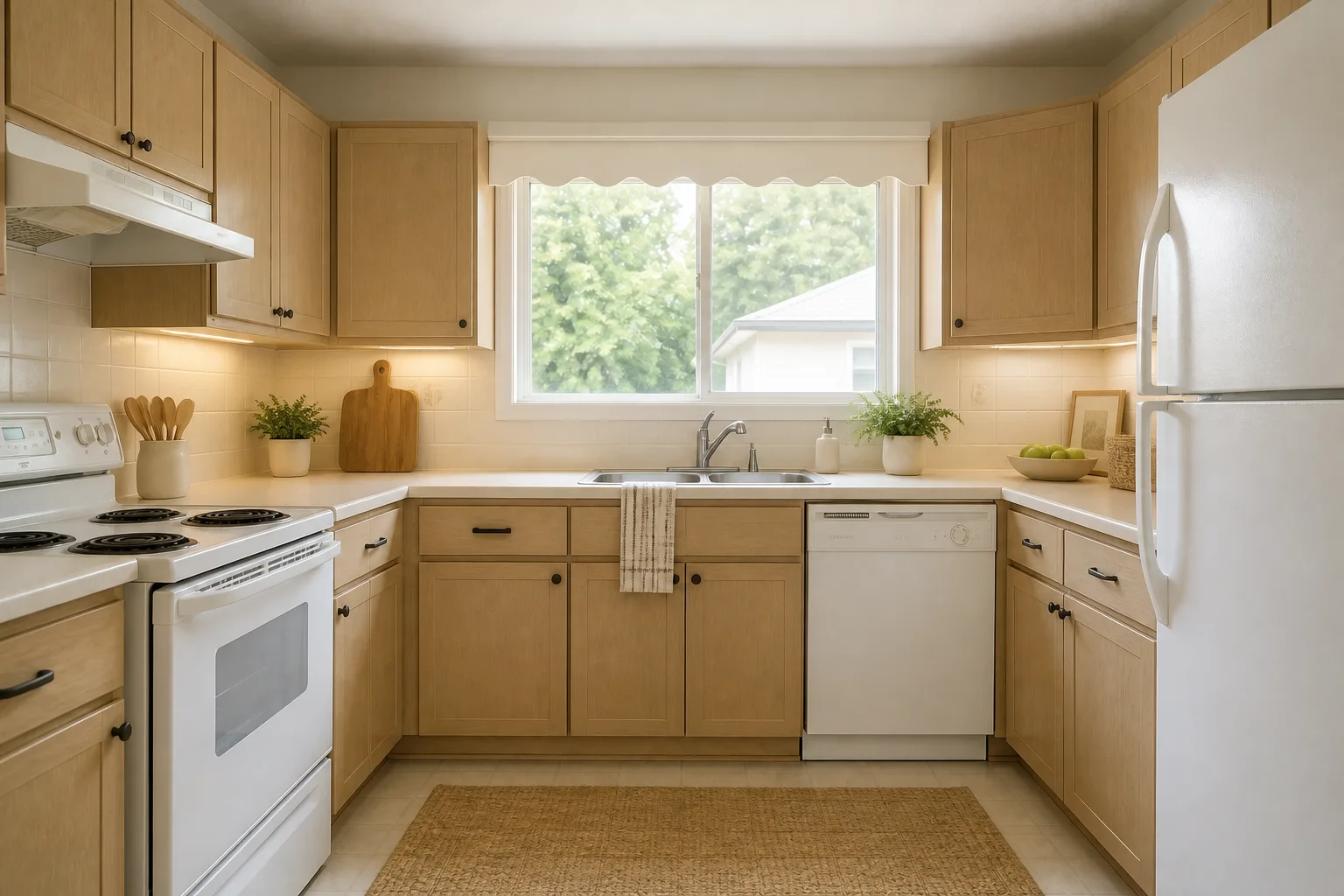 BeforeAfter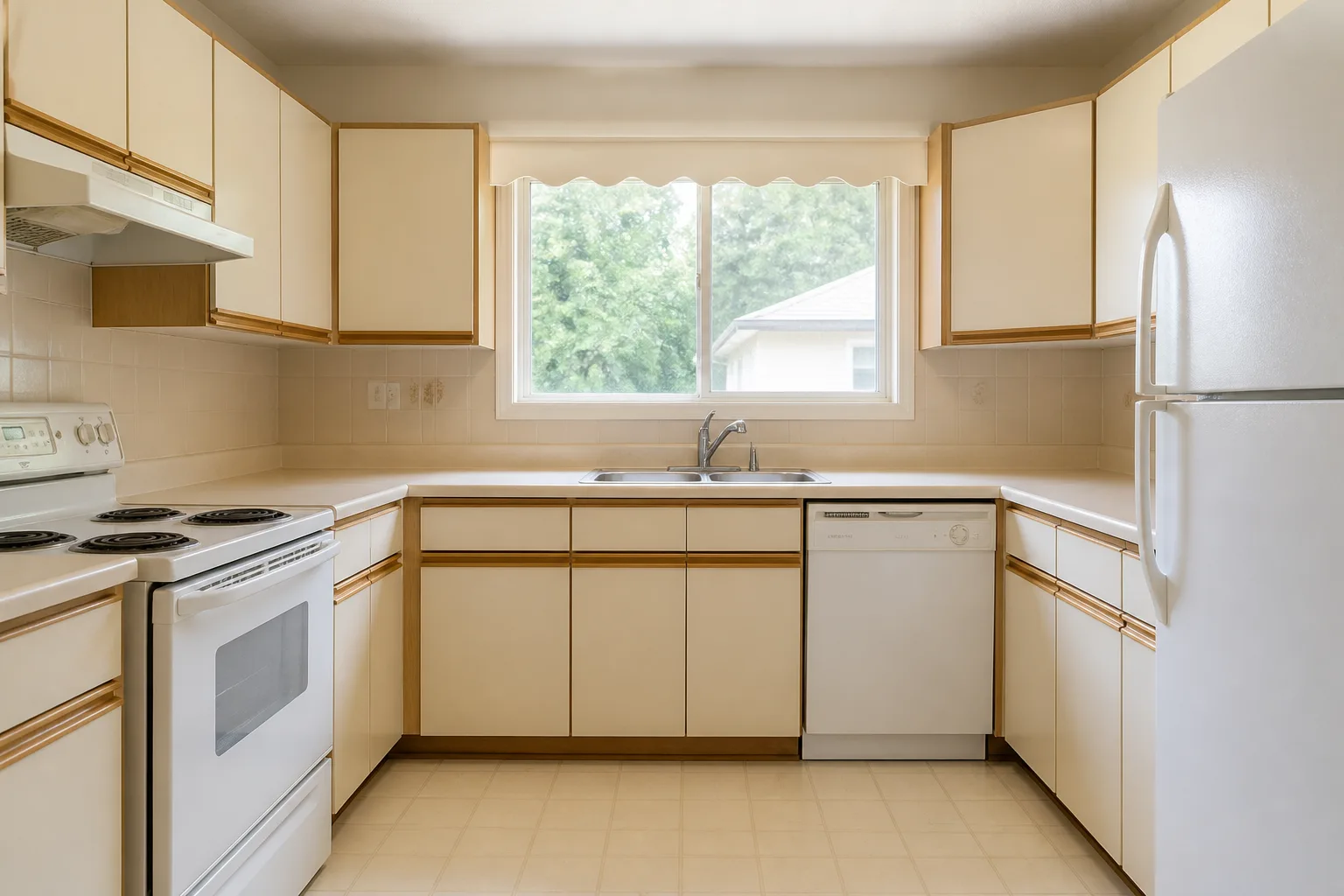
- 1
What a no-construction refresh can reach
Everything that decides how a kitchen feels is on the changeable layer: the surfaces, the anchor pieces, the lighting and the edit. The structure — walls, openings, ceiling — sets the stage but rarely the mood.
- 2
Spend the effort where this room shows it
The anchors carry a kitchen: the triangle, drawn before any cabinet is chosen; one continuous prep run; task lighting under every wall unit. Renewing one anchor changes the room more than five accessories, and the room will tell you which anchor is tired.
- 3
Light is the cheapest transformation
Task first: continuous under-cabinet light over every worktop, a strong source over the sink and hob. Then the social layer — pendants over island or table, dimmable — so the room can go from surgery-bright at 6pm to dinner-warm at 8.
- 4
And when it is small
Small kitchens beat big ones at the actual job — everything is a step away. Protect the 90cm prep run, hang what can hang, go full-height with wall units, and resist the island: a small kitchen with a clear aisle cooks better than a big one furnished into detours.
Questions
- What matters most in a kitchen?
- A kitchen is hired for cooking, and cooking is a path: fridge to sink to hob, walked hundreds of times a week. Keep that triangle tight (each leg 1.2–2.7m), keep landing space beside each station, and keep through-traffic out of it, and almost any style succeeds on top. The modern complication is audience — kitchens are now rooms people sit in — which adds a second rule: the cook faces the room somewhere in the plan, or the kitchen’s social ambitions stay theoretical.
- Which numbers should I check before buying anything?
- Work triangle legs 1.2–2.7m; total circuit under 8m.
- Can I preview this on my own kitchen?
- Upload a photo in the Studio and run the ideas on the real room. New accounts start with 4 credits and a Standard render costs 4, so the first experiment is free.