Refreshing a Media Room Without Moving Walls
The changes that transform a media room inside its existing shell — surfaces, anchors, light and edit. A room built around a screen without apologising for it.
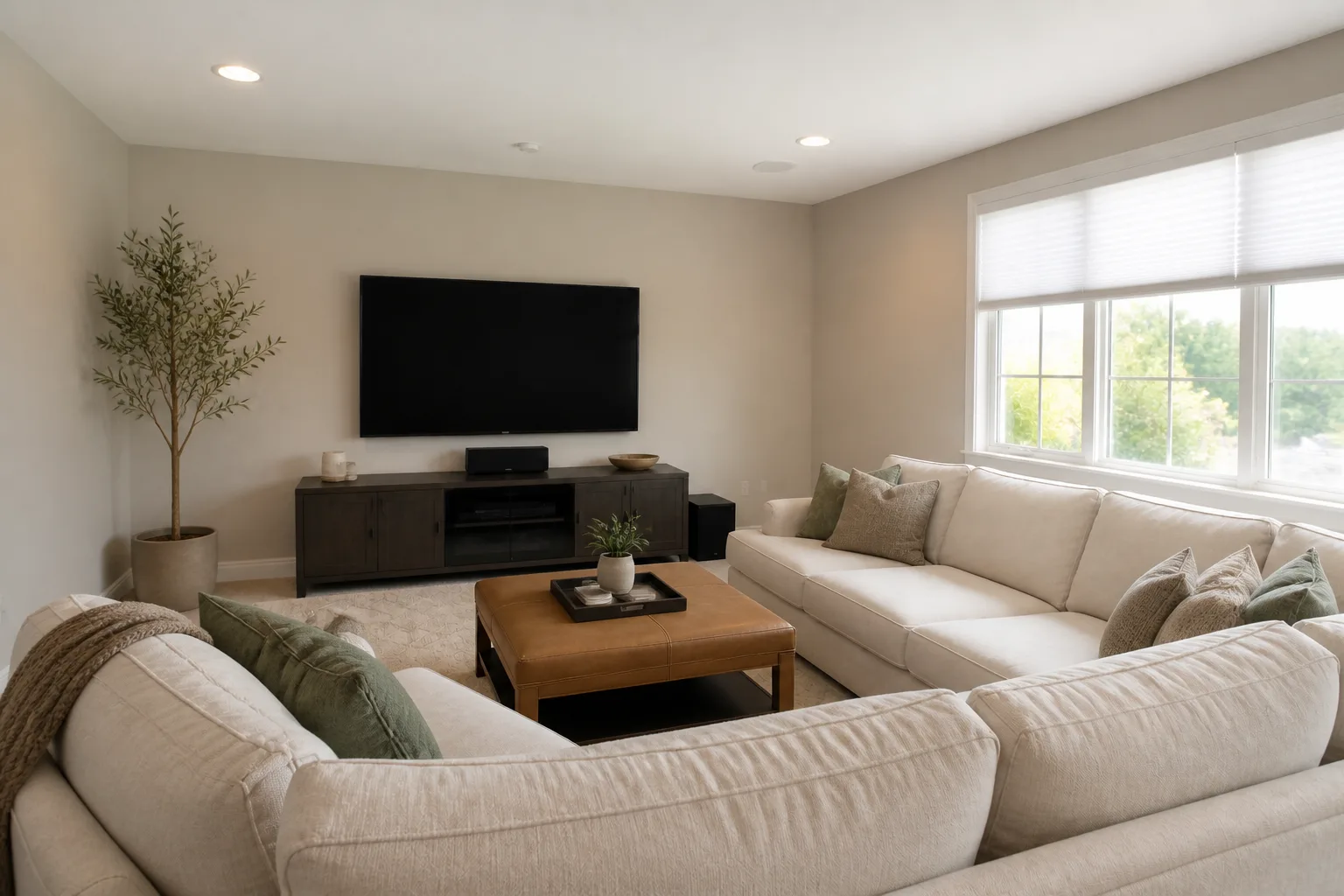 BeforeAfter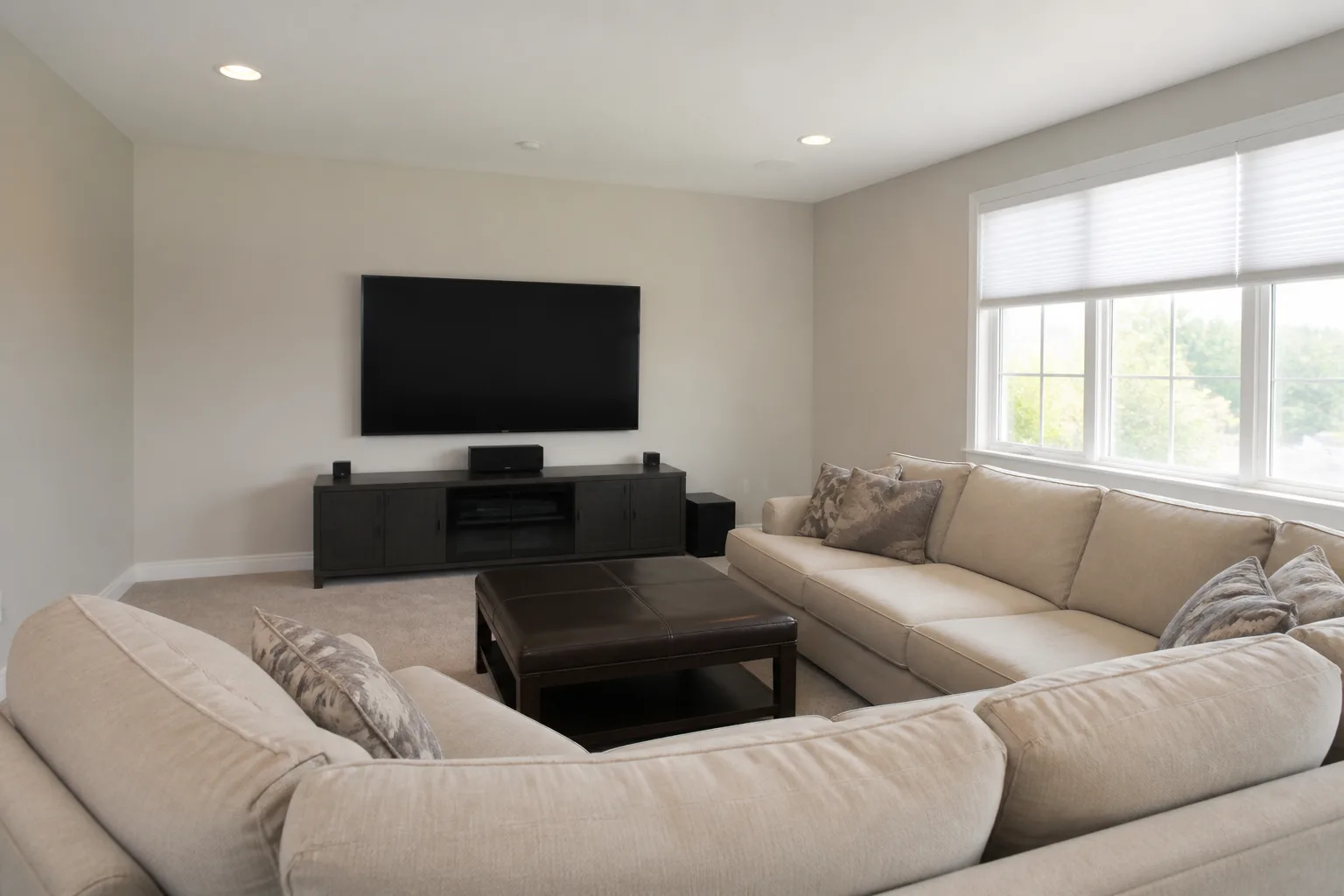
- 1
What a no-construction refresh can reach
Everything that decides how a media room feels is on the changeable layer: the surfaces, the anchor pieces, the lighting and the edit. The structure — walls, openings, ceiling — sets the stage but rarely the mood.
- 2
Spend the effort where this room shows it
The anchors carry a media room: the biggest screen the wall honestly takes; recliners or a deep sofa with headrest support; blackout on every window. Renewing one anchor changes the room more than five accessories, and the room will tell you which anchor is tired.
- 3
Light is the cheapest transformation
Three scenes on one control: full bright for cleaning, half warm for gathering, and viewing — bias light glowing softly BEHIND the screen (which spares the eyes and deepens the blacks), floor-level path lights, everything else off.
- 4
And when it is small
A small media room beats a big compromised one: pull the sofa closer than feels polite, mount the screen low, go full blackout, and 9 square metres outperforms most living rooms at the one job this room has.
Questions
- What matters most in a media room?
- Everywhere else the television negotiates; here it presides. The room is hired for picture and sound, which sets the plan: seating at the right distance and height, the screen on the windowless wall, surfaces soft enough to stop echo, and light that can go to almost-black without anyone tripping. Everything else — snack tables, shelf glow, a second row on a platform — is set dressing around those four calls.
- Which numbers should I check before buying anything?
- Seating distance: 1.2–1.6× the diagonal for cinematic immersion, further for casual viewing.
- Can I preview this on my own media room?
- Upload a photo in the Studio and run the ideas on the real room. New accounts start with 4 credits and a Standard render costs 4, so the first experiment is free.