bay-window dining room
The best light and the best floor in the room, usually wasted on the back of a sofa. Here is how that plays out in a dining room: the layout that survives it, the furniture worth keeping, the lighting plan, and a way to preview it all on a photo of your own room.
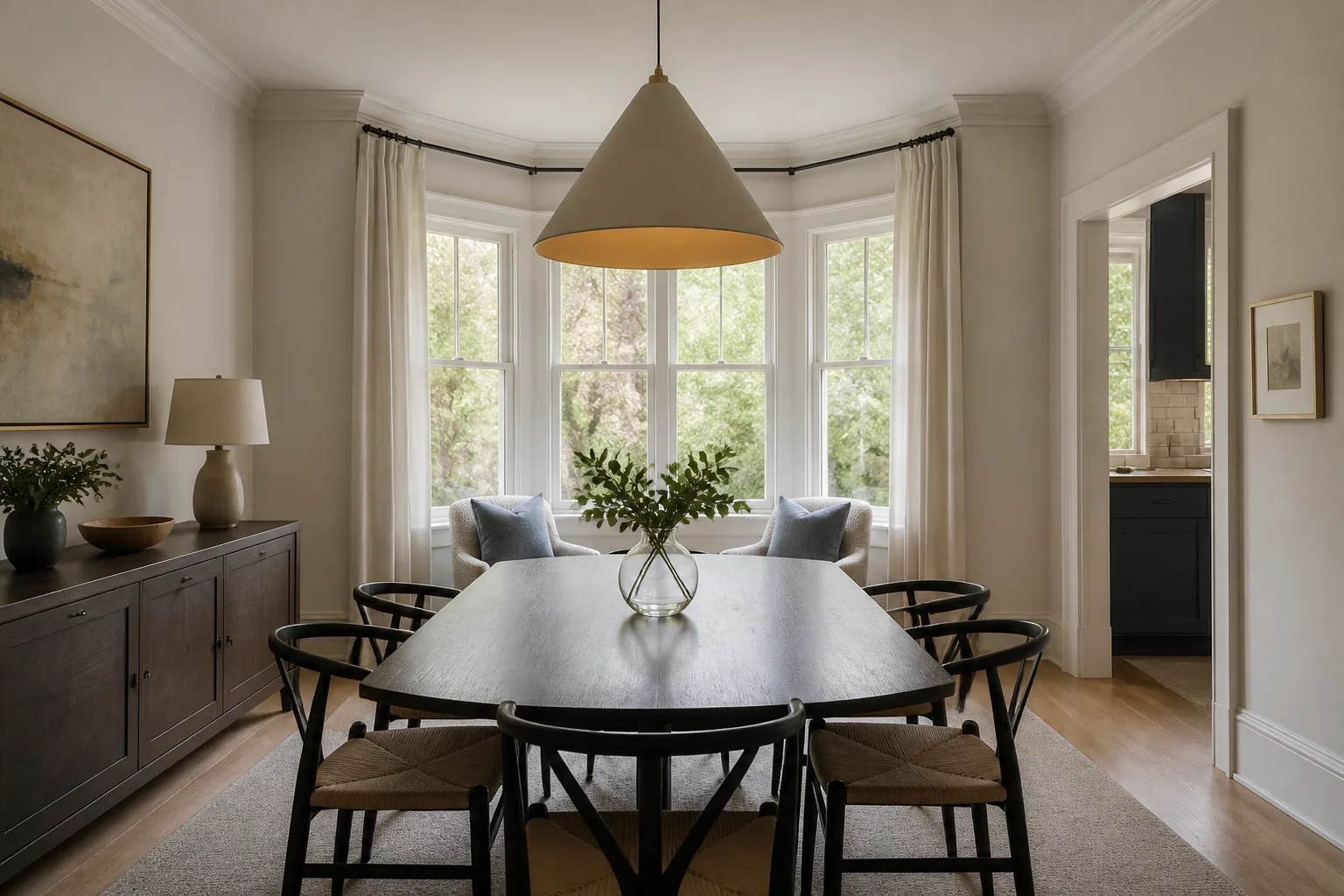
What a bay-window dining room is really dealing with
A bay is the room’s natural destination — extra floor, wraparound light, a view in three directions — and the default furnishing crime is to blockade it: sofa across the mouth, curtains cutting the recess off, radiator ignored. A bay wants either a destination (window seat, reading chair, breakfast table) or a frame (curtains hung outside the recess, the floor run through, a piece placed IN it facing the room). What it never wants is to be the bright bit behind the furniture. None of that changes what the room is for: a dining room is hired for the table, and the table’s geometry writes the room: 60cm of width per diner, 75cm from table edge to anything behind a chair, and a light source centred on the surface rather than the ceiling rose the builder happened to leave. Because it is used in the evening more than any other room, the dining room is the house’s one legitimate theatre — the place where dark walls, real candles and a slightly-too-good chandelier all pay their way.
The layout that gets both jobs done
Hold the dining room's own numbers first — place settings: 60cm width per person, 40cm depth to the centreline. Then let the constraint pick the arrangement: a window seat with drawers below — the single highest-value build in a bay-fronted room; a small table and two chairs in the bay of a living or dining room; curtains on a shaped track inside the bay, or hung fully outside it — never straight across the mouth.
Furniture that earns its floor here
The pieces a dining room cannot do without are the table the room deserves — the one piece worth over-spending on in this room, chairs comfortable at hour two, not just minute five, a pendant or chandelier centred on the table, not the room. Under the bay-window condition, each of them is auditioned against the same test: a window seat with drawers below — the single highest-value build in a bay-fronted room.
What to rule out on day one
The bay-window version of this room punishes a sofa across the mouth of the bay, fencing off the room’s best light and 2 square metres of floor; a straight curtain rail beheading the recess. And the dining room's own classic error still applies: the pendant centred on the ceiling while the table shifted 40cm to fit the room — the room forever slightly wrong.
Lighting it
The bay needs its own evening identity: a lamp or pendant within the recess keeps it part of the room after dark, instead of a black hole where the day’s best feature used to be. The pendant does the theatre; a pair of lamps or sconces at the sideboard stop the corners dying; everything dims. The test is faces: light that lands on the table lights the people around it from below-centre, which is the most flattering light there is — as candles have always known.
The move to make this weekend
Pull whatever blockades the bay out of its mouth and put one chair inside it, facing the room. Sit there once and the bay’s real use will announce itself — seat, desk spot, or breakfast table — before the week is out. In a dining room that lands next to the fixed rule of the room: a sideboard needs 50cm of standing room in front, plus its drawer arcs.
Dimensions to hold onto
However the finishes go, the geometry stays: Chair push-back: 75cm to sit; 100cm if anyone walks behind seated diners; 120cm on the serving route. The pendant hangs 75–85cm above the table surface, sized about half the table’s width.
Questions
- Is a bay-window dining room worth designing around?
- Yes — the best light and the best floor in the room, usually wasted on the back of a sofa. The pages here treat the bay-window condition as the starting brief, not a defect to apologise for.
- Which single change helps a bay-window dining room most?
- Pull whatever blockades the bay out of its mouth and put one chair inside it, facing the room. Sit there once and the bay’s real use will announce itself — seat, desk spot, or breakfast table — before the week is out.
- How do I light a bay-window dining room?
- The bay needs its own evening identity: a lamp or pendant within the recess keeps it part of the room after dark, instead of a black hole where the day’s best feature used to be.
- What gets bought and regretted most in this room?
- The pendant centred on the ceiling while the table shifted 40cm to fit the room — the room forever slightly wrong. Under the bay-window condition, add: a sofa across the mouth of the bay, fencing off the room’s best light and 2 square metres of floor.
- Can I try these ideas on a photo of my own dining room?
- That is what the Studio is for: upload a photo of the actual room and redesign it with the bay-window playbook applied. A new account starts with 4 free credits and a Standard render costs 4, so the first look is free.