bay-window kids’ bedroom
The best light and the best floor in the room, usually wasted on the back of a sofa. Here is how that plays out in a kids’ bedroom: the layout that survives it, the furniture worth keeping, the lighting plan, and a way to preview it all on a photo of your own room.
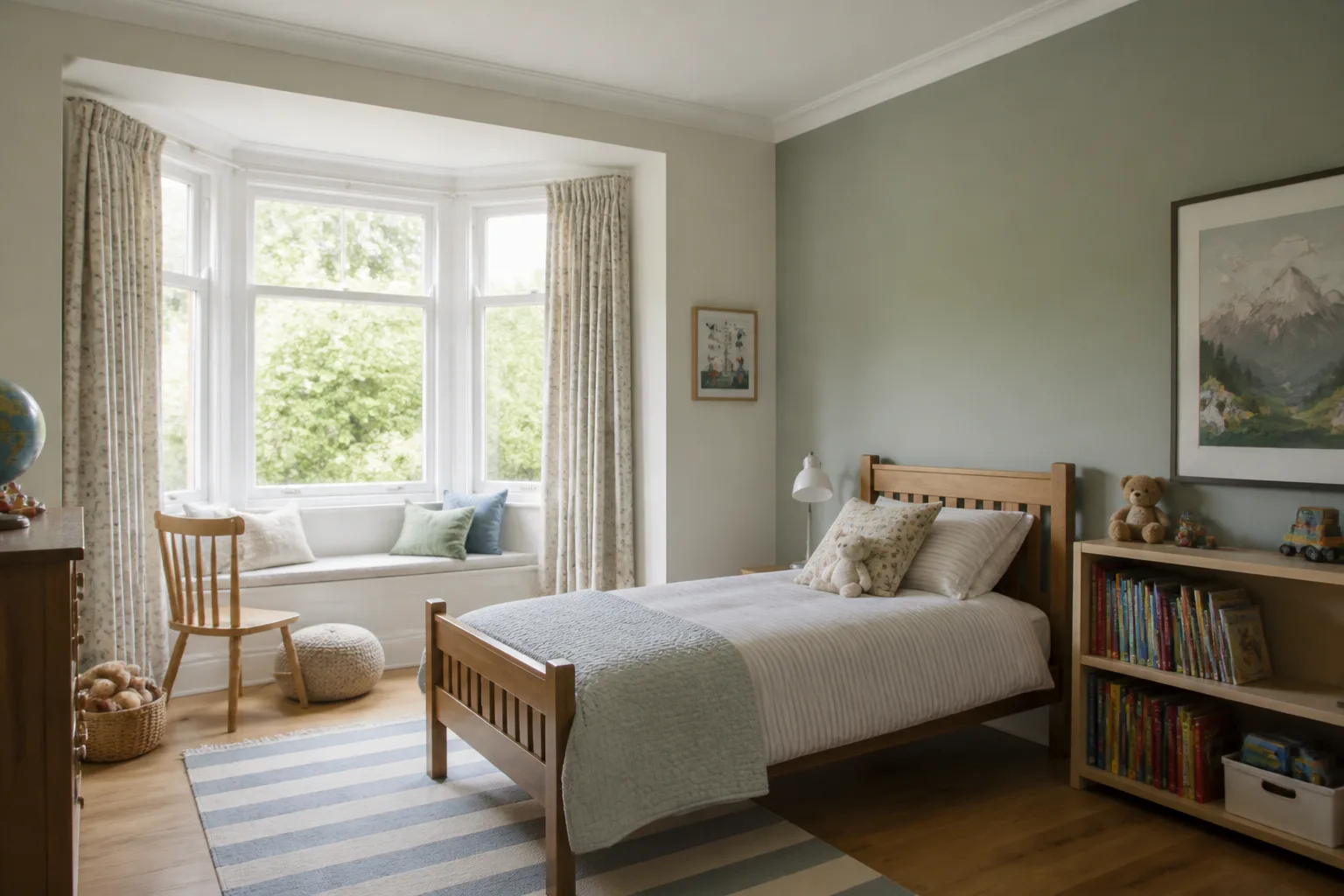
What a bay-window kids’ bedroom is really dealing with
A bay is the room’s natural destination — extra floor, wraparound light, a view in three directions — and the default furnishing crime is to blockade it: sofa across the mouth, curtains cutting the recess off, radiator ignored. A bay wants either a destination (window seat, reading chair, breakfast table) or a frame (curtains hung outside the recess, the floor run through, a piece placed IN it facing the room). What it never wants is to be the bright bit behind the furniture. None of that changes what the room is for: a child’s room is three rooms on a rotation: sleep space now, play space daily, and a different room entirely in three years. The layout holds if the expensive fixed layer stays age-neutral — walls, flooring, wardrobe, bed position by the rules of any bedroom — while the identity lives in swappable goods: bedding, posters, a lampshade, one paint colour with a weekend’s repaint cost. Rooms themed to the current obsession bill the redesign to the fixed layer, three times before secondary school.
The layout that gets both jobs done
Hold the kids’ bedroom's own numbers first — the same open-floor rule as the playroom: a continuous 1.5×1.5m patch minimum, defended from furniture. Then let the constraint pick the arrangement: a window seat with drawers below — the single highest-value build in a bay-fronted room; a small table and two chairs in the bay of a living or dining room; curtains on a shaped track inside the bay, or hung fully outside it — never straight across the mouth.
Furniture that earns its floor here
The pieces a kids’ bedroom cannot do without are a bed that will fit the twelve-year-old, not just the four-year-old, a low open bookcase, front-facing if they are pre-readers, a rail or wardrobe with a child-height section. Under the bay-window condition, each of them is auditioned against the same test: a window seat with drawers below — the single highest-value build in a bay-fronted room.
What to rule out on day one
The bay-window version of this room punishes a sofa across the mouth of the bay, fencing off the room’s best light and 2 square metres of floor; a straight curtain rail beheading the recess. And the kids’ bedroom's own classic error still applies: a full theme build — mural, novelty bed, licensed everything — priced like it is permanent, obsolete like it is milk.
Lighting it
The bay needs its own evening identity: a lamp or pendant within the recess keeps it part of the room after dark, instead of a black hole where the day’s best feature used to be. Three levels: bright for play and tidying, a warm lamp for wind-down, and a nightlight below knee height that does not wash the ceiling. The wind-down light does bedtime; the big light going off is the treaty signature.
The move to make this weekend
Pull whatever blockades the bay out of its mouth and put one chair inside it, facing the room. Sit there once and the bay’s real use will announce itself — seat, desk spot, or breakfast table — before the week is out. In a kids’ bedroom that lands next to the fixed rule of the room: bookshelf and dresser anchored to the wall, every time, no exceptions.
Dimensions to hold onto
However the finishes go, the geometry stays: Bed accessible from one long side at 60cm; bunks need 30cm of headroom over the sitting child on top. Daily clothes reachable by the child: a rail at 100–120cm beats a full-height wardrobe they cannot use.
Questions
- Is a bay-window kids’ bedroom worth designing around?
- Yes — the best light and the best floor in the room, usually wasted on the back of a sofa. The pages here treat the bay-window condition as the starting brief, not a defect to apologise for.
- Which single change helps a bay-window kids’ bedroom most?
- Pull whatever blockades the bay out of its mouth and put one chair inside it, facing the room. Sit there once and the bay’s real use will announce itself — seat, desk spot, or breakfast table — before the week is out.
- How do I light a bay-window kids’ bedroom?
- The bay needs its own evening identity: a lamp or pendant within the recess keeps it part of the room after dark, instead of a black hole where the day’s best feature used to be.
- What gets bought and regretted most in this room?
- A full theme build — mural, novelty bed, licensed everything — priced like it is permanent, obsolete like it is milk. Under the bay-window condition, add: a sofa across the mouth of the bay, fencing off the room’s best light and 2 square metres of floor.
- Can I try these ideas on a photo of my own kids’ bedroom?
- That is what the Studio is for: upload a photo of the actual room and redesign it with the bay-window playbook applied. A new account starts with 4 free credits and a Standard render costs 4, so the first look is free.