L-shaped sunroom
Two rooms sharing a corner. Stop furnishing the letter and furnish them. Here is how that plays out in a sunroom: the layout that survives it, the furniture worth keeping, the lighting plan, and a way to preview it all on a photo of your own room.
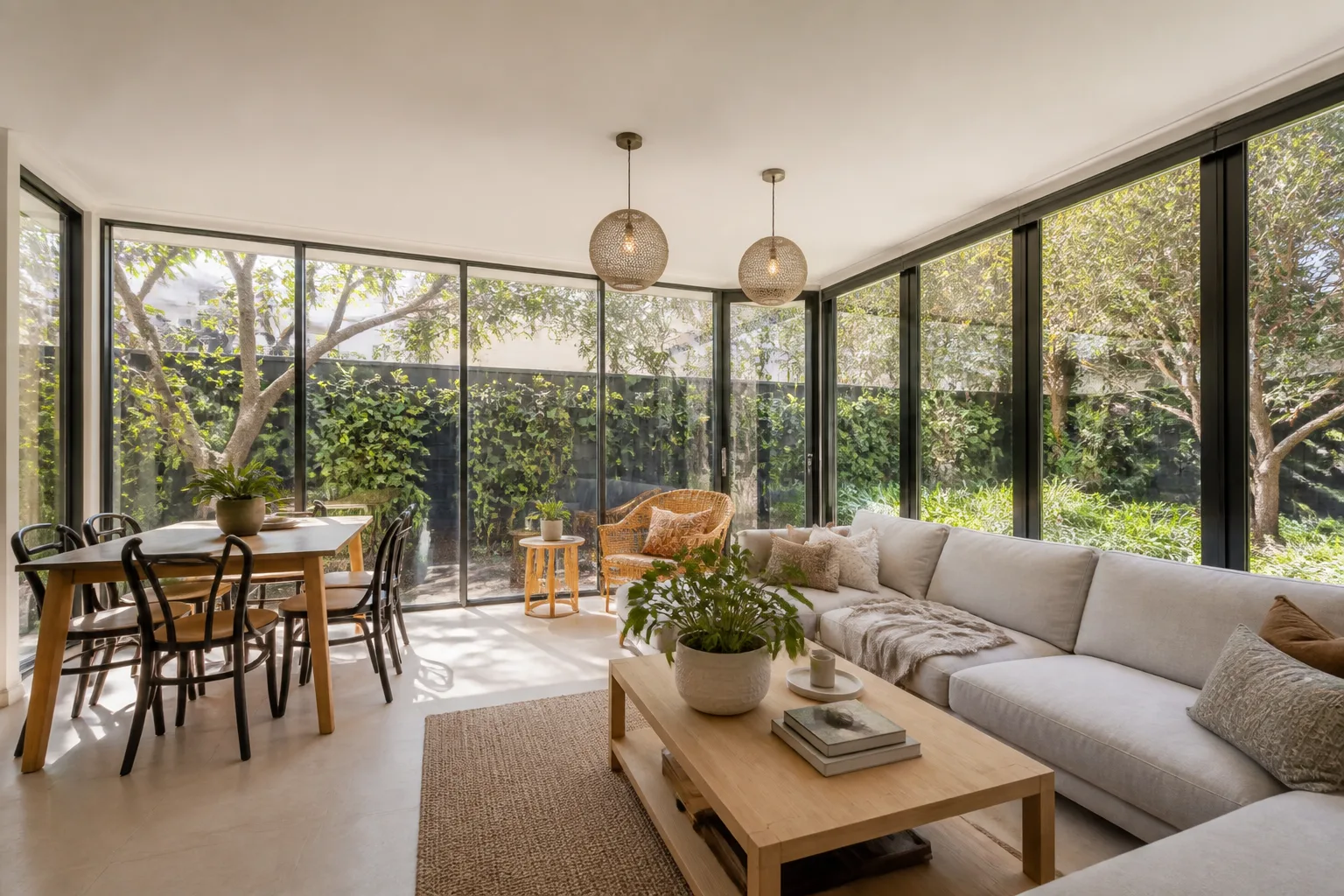
What a L-shaped sunroom is really dealing with
An L-shaped room is two rectangles that cannot see each other, joined at a corner both of them want. Treat it as one room and the short leg becomes a dumping ground the sofa turns its back on. Treat it as two — each leg with its own job, centre and light — and the corner becomes a hinge rather than a leftover: the one spot in the room that belongs to both zones and holds whatever they share. None of that changes what the room is for: a sunroom is hired for the light and the garden view, and everything in it must survive both. That means fade-proof fabrics, plants promoted to furniture rank, and a layout that faces outward — chairs angled to the view, low backs that never block glass, nothing tall except in the room’s one solid corner. It also means taking the climate seriously: shade for July, texture and throws for January, because a glass room amplifies every season it touches.
The layout that gets both jobs done
Hold the sunroom's own numbers first — keep 60cm clear along the glass line — furniture jammed to the glazing reads as storage from the garden. Then let the constraint pick the arrangement: a distinct job per leg: living + dining, sleeping + dressing, desk + reading; the hinge corner given something both legs use — shared storage, a plant, a lamp; sightline discipline: from each leg’s seat, the view into the other leg is composed.
Furniture that earns its floor here
The pieces a sunroom cannot do without are rattan, cane or metal seating that shrugs off sun, one serious daybed or lounger, plants at three heights, including one tree-sized. Under the L-shaped condition, each of them is auditioned against the same test: a distinct job per leg: living + dining, sleeping + dressing, desk + reading.
What to rule out on day one
The L-shaped version of this room punishes one big arrangement trying to span the corner — something always ends up unreachable; the short leg as informal storage, visible from every seat in the long one. And the sunroom's own classic error still applies: precious hardwood furniture and saturated fabrics set out to fade in the world’s brightest room.
Lighting it
Each leg gets its own scheme and switch; the hinge corner gets one shared source. Lighting the whole L from the long leg leaves the short one as a cave that nobody walks into after dark. By day the room lights itself. Evenings want festoon or wall sources kept off the glass sightline, everything warm and low — a glass room at night becomes a lantern seen from the garden, and harsh light makes it an office aquarium.
The move to make this weekend
Name each leg’s job out loud and move everything that does not serve that job out of that leg. The L stops being a difficult room and becomes two easy ones the moment the jobs stop leaking. In a sunroom that lands next to the fixed rule of the room: door swings to the garden need a full 1m kept permanently clear.
Dimensions to hold onto
However the finishes go, the geometry stays: Seat backs stay under 80cm so the view runs over them. Plants need their zone: a 60cm-deep band along one glass edge beats pots scattered underfoot.
Questions
- Is a L-shaped sunroom worth designing around?
- Yes — two rooms sharing a corner. Stop furnishing the letter and furnish them. The pages here treat the L-shaped condition as the starting brief, not a defect to apologise for.
- Which single change helps a L-shaped sunroom most?
- Name each leg’s job out loud and move everything that does not serve that job out of that leg. The L stops being a difficult room and becomes two easy ones the moment the jobs stop leaking.
- How do I light a L-shaped sunroom?
- Each leg gets its own scheme and switch; the hinge corner gets one shared source. Lighting the whole L from the long leg leaves the short one as a cave that nobody walks into after dark.
- What gets bought and regretted most in this room?
- Precious hardwood furniture and saturated fabrics set out to fade in the world’s brightest room. Under the L-shaped condition, add: one big arrangement trying to span the corner — something always ends up unreachable.
- Can I try these ideas on a photo of my own sunroom?
- That is what the Studio is for: upload a photo of the actual room and redesign it with the L-shaped playbook applied. A new account starts with 4 free credits and a Standard render costs 4, so the first look is free.