Home Library Mistakes Everyone Makes
The recurring home library errors — and what the room wants instead of each one. Books by the metre, chairs by the hour. The room where walls become furniture.
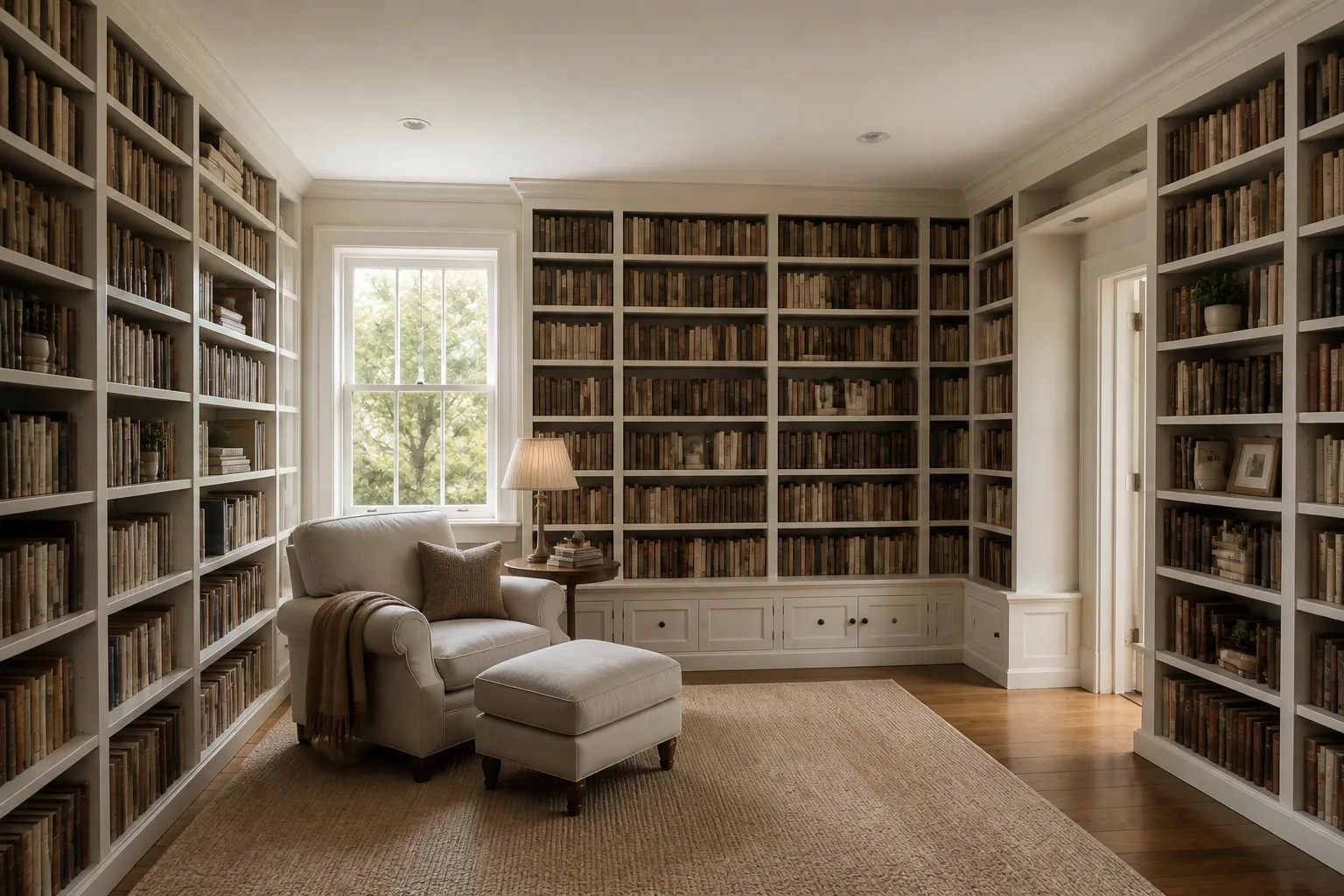 BeforeAfter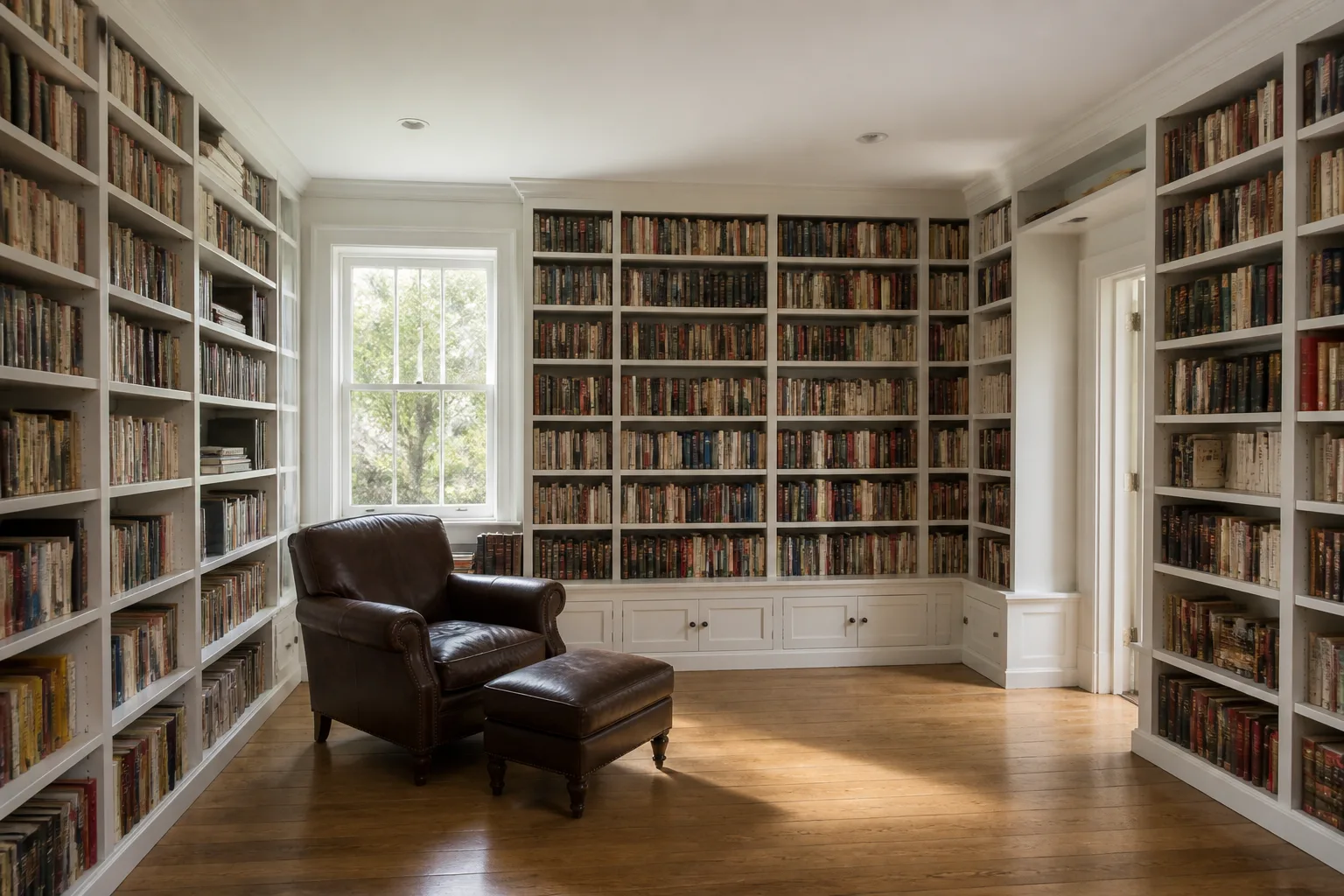
- 1
The classics, in order of damage
Decorative shelving depth (20cm) that fits paperbacks and nothing else. Books arranged by colour by someone who then cannot find anything — the room is for reading, not for the reel. No table, so open books colonise the chair arms and floor. South sun on the good spines, fading a collection by increments.
- 2
Why they keep happening
Each mistake is the room’s job being overruled by habit or by the furniture that happened to be available. The correction is always the same move: restate the job — a library is hired by its shelving: the room is a storage system you sit inside. The design questions are structural before they are decorative — how many linear metres of books exist (measure them; everyone guesses low), whether the floor takes the load (a full wall of books is a grand piano’s weight), and where the reading happens once the walls are working. Get the metres, the weight and the chair right, and the atmosphere arrives by itself; no room styles itself as reliably as one lined with real, read books.
- 3
The numbers that catch mistakes early
Most of these errors are visible with a tape measure before they are felt in use: Count linear metres of books, add 30% for growth: that number sizes the room. Shelves: 28–32cm deep, 30–35cm vertical spacing for most books, one taller run for art books.
- 4
If the room is small, the stakes double
A small library is a corridor of books with a chair at the end — genuinely one of the best rooms a house can have. Shelve to the ceiling, keep the aisle at 75cm, and let one window and one chair do the rest.
Questions
- What matters most in a home library?
- A library is hired by its shelving: the room is a storage system you sit inside. The design questions are structural before they are decorative — how many linear metres of books exist (measure them; everyone guesses low), whether the floor takes the load (a full wall of books is a grand piano’s weight), and where the reading happens once the walls are working. Get the metres, the weight and the chair right, and the atmosphere arrives by itself; no room styles itself as reliably as one lined with real, read books.
- Which numbers should I check before buying anything?
- Count linear metres of books, add 30% for growth: that number sizes the room.
- Can I preview this on my own home library?
- Upload a photo in the Studio and run the ideas on the real room. New accounts start with 4 credits and a Standard render costs 4, so the first experiment is free.