How to Light a Home Library
A working lighting plan for a home library — layers, heights and switches, not just a brighter bulb. Books by the metre, chairs by the hour. The room where walls become furniture.
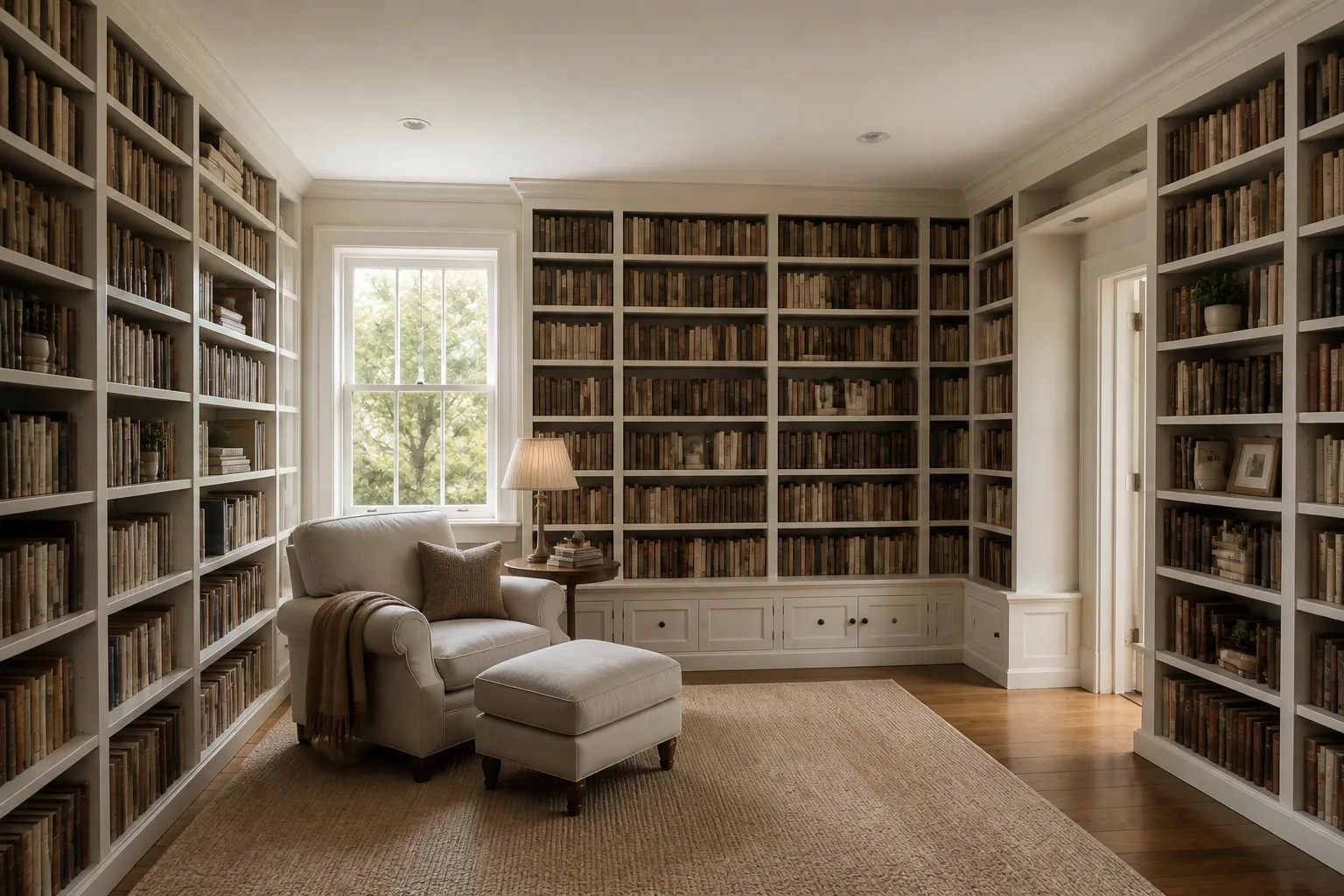 BeforeAfter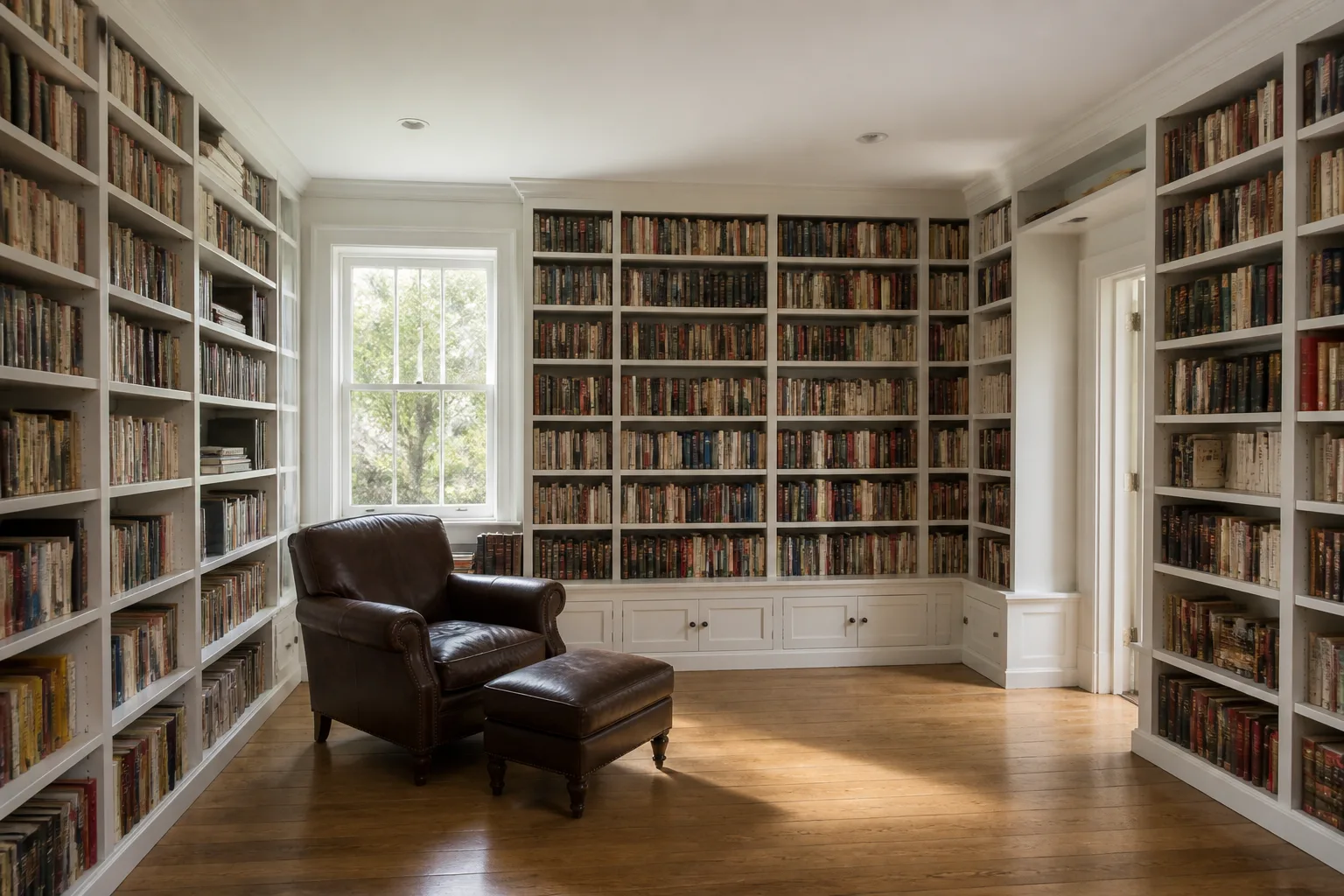
- 1
The plan
Shelf-washing light for the books (vertical surfaces lit make the room), reading lamps at the chairs, and a general layer kept low. The classic mistake is downlights in the aisle: they light the floor between you and the books, and the spines stay dark.
- 2
Why the single ceiling light keeps failing
One central source flattens a home library into an evenly lit box: no depth, no zones, and a shadow wherever you stand. Every working scheme for this room is plural — sources at more than one height, switched in more than one group, so the room can change register through the day.
- 3
Match the light to the room’s hours
A library is hired by its shelving: the room is a storage system you sit inside. The design questions are structural before they are decorative — how many linear metres of books exist (measure them; everyone guesses low), whether the floor takes the load (a full wall of books is a grand piano’s weight), and where the reading happens once the walls are working. Get the metres, the weight and the chair right, and the atmosphere arrives by itself; no room styles itself as reliably as one lined with real, read books. The lighting follows those hours: bright and even when the room is working, warm and low when it is winding down — and the switch layout is what lets one room do both.
- 4
The mistakes to skip
South sun on the good spines, fading a collection by increments. And in every room: bulbs of mixed colour temperature in one view, which reads as a fault even when nobody can say why.
Questions
- What matters most in a home library?
- A library is hired by its shelving: the room is a storage system you sit inside. The design questions are structural before they are decorative — how many linear metres of books exist (measure them; everyone guesses low), whether the floor takes the load (a full wall of books is a grand piano’s weight), and where the reading happens once the walls are working. Get the metres, the weight and the chair right, and the atmosphere arrives by itself; no room styles itself as reliably as one lined with real, read books.
- Which numbers should I check before buying anything?
- Count linear metres of books, add 30% for growth: that number sizes the room.
- Can I preview this on my own home library?
- Upload a photo in the Studio and run the ideas on the real room. New accounts start with 4 credits and a Standard render costs 4, so the first experiment is free.