Refreshing a Home Library Without Moving Walls
The changes that transform a home library inside its existing shell — surfaces, anchors, light and edit. Books by the metre, chairs by the hour. The room where walls become furniture.
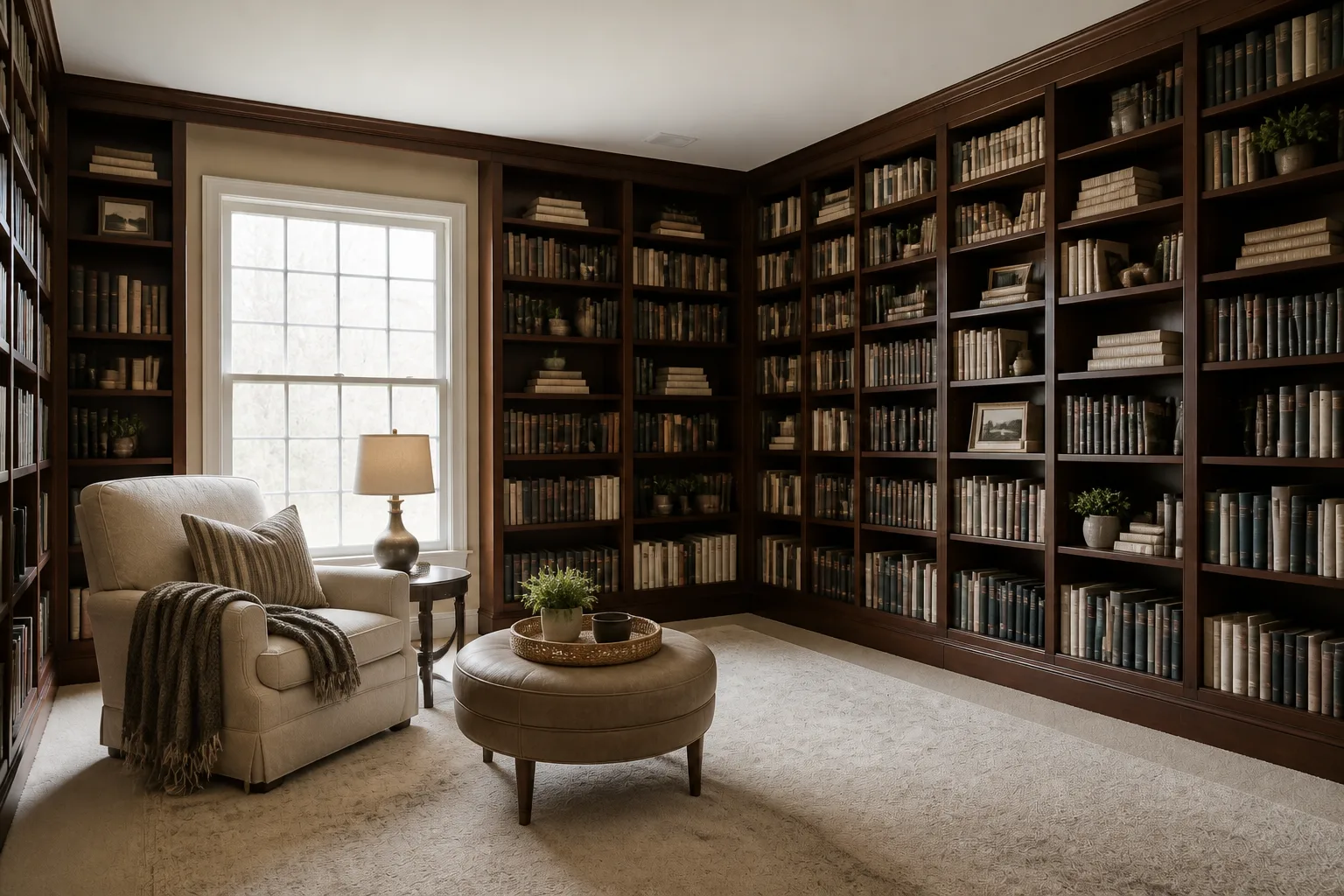 BeforeAfter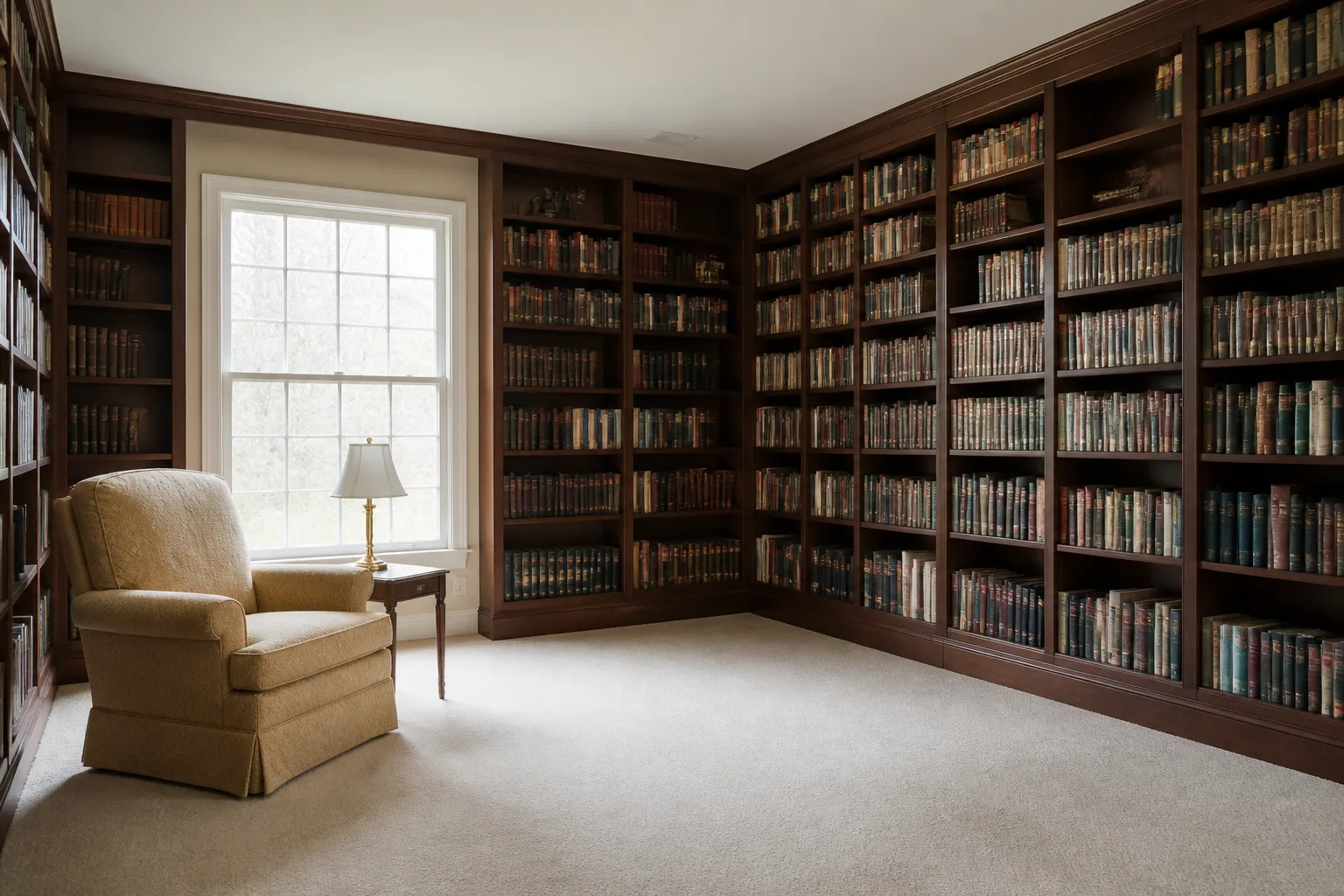
- 1
What a no-construction refresh can reach
Everything that decides how a home library feels is on the changeable layer: the surfaces, the anchor pieces, the lighting and the edit. The structure — walls, openings, ceiling — sets the stage but rarely the mood.
- 2
Spend the effort where this room shows it
The anchors carry a home library: shelving as architecture — to the ceiling, around the door if needed; one serious reading chair per regular reader; a library table or broad ottoman for the open-face pile. Renewing one anchor changes the room more than five accessories, and the room will tell you which anchor is tired.
- 3
Light is the cheapest transformation
Shelf-washing light for the books (vertical surfaces lit make the room), reading lamps at the chairs, and a general layer kept low. The classic mistake is downlights in the aisle: they light the floor between you and the books, and the spines stay dark.
- 4
And when it is small
A small library is a corridor of books with a chair at the end — genuinely one of the best rooms a house can have. Shelve to the ceiling, keep the aisle at 75cm, and let one window and one chair do the rest.
Questions
- What matters most in a home library?
- A library is hired by its shelving: the room is a storage system you sit inside. The design questions are structural before they are decorative — how many linear metres of books exist (measure them; everyone guesses low), whether the floor takes the load (a full wall of books is a grand piano’s weight), and where the reading happens once the walls are working. Get the metres, the weight and the chair right, and the atmosphere arrives by itself; no room styles itself as reliably as one lined with real, read books.
- Which numbers should I check before buying anything?
- Count linear metres of books, add 30% for growth: that number sizes the room.
- Can I preview this on my own home library?
- Upload a photo in the Studio and run the ideas on the real room. New accounts start with 4 credits and a Standard render costs 4, so the first experiment is free.