Refreshing a Hallway Without Moving Walls
The changes that transform a hallway inside its existing shell — surfaces, anchors, light and edit. The room every other room is judged from. Usually decorated last, seen most.
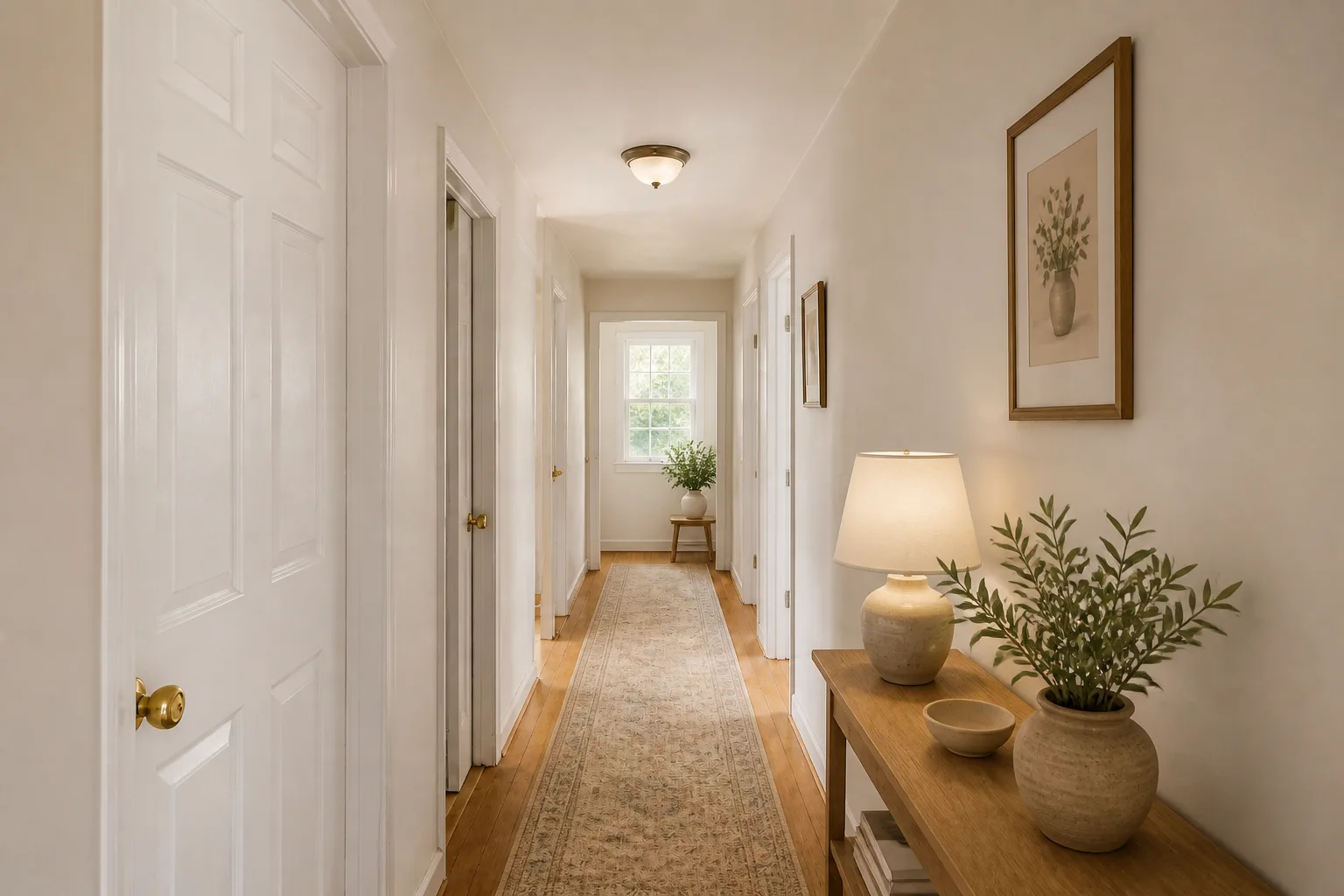 BeforeAfter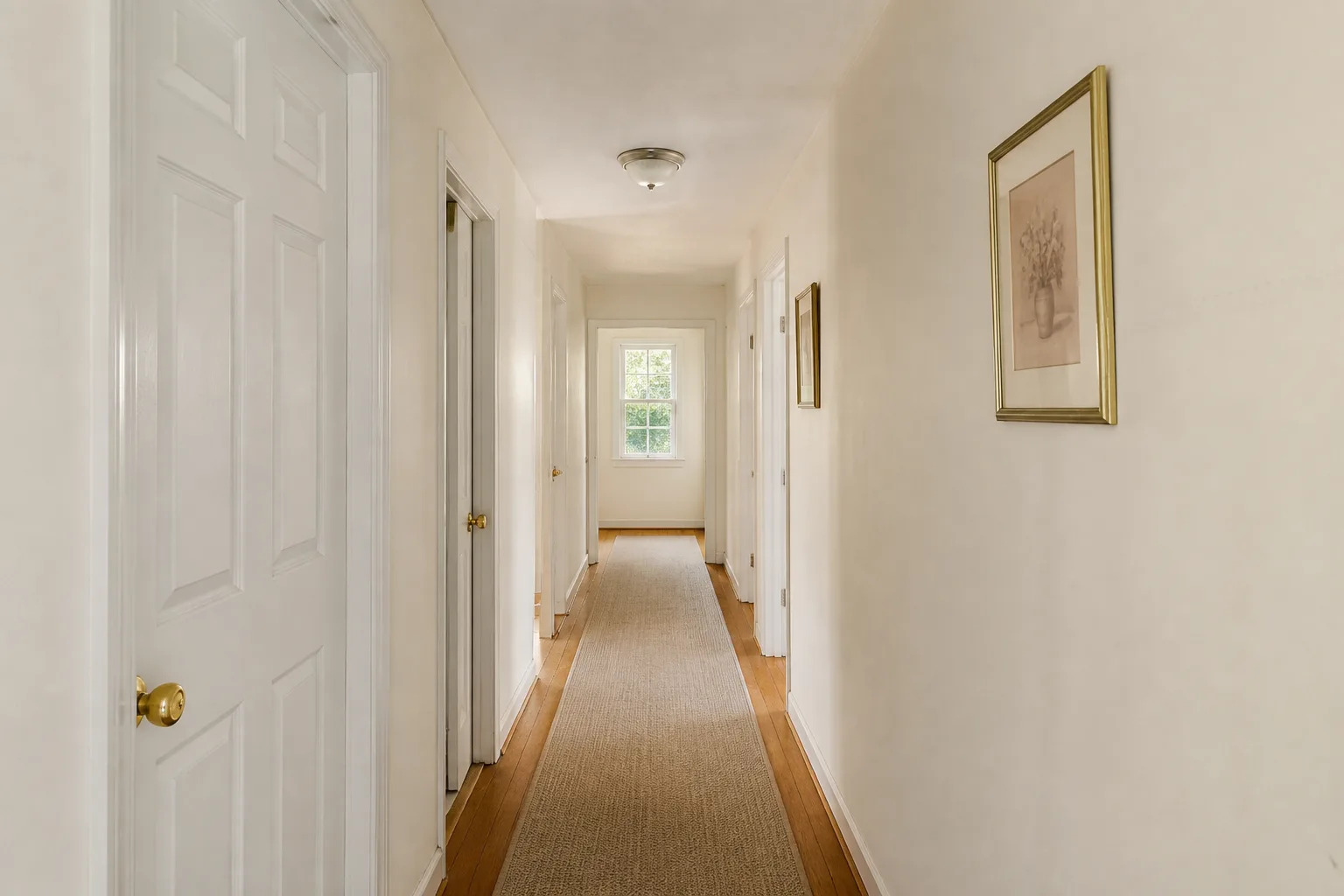
- 1
What a no-construction refresh can reach
Everything that decides how a hallway feels is on the changeable layer: the surfaces, the anchor pieces, the lighting and the edit. The structure — walls, openings, ceiling — sets the stage but rarely the mood.
- 2
Spend the effort where this room shows it
The anchors carry a hallway: a runner that takes the traffic and gives colour back; a gallery run or one long shelf of pictures; a console only if the width is honestly there. Renewing one anchor changes the room more than five accessories, and the room will tell you which anchor is tired.
- 3
Light is the cheapest transformation
Rhythm, not a single blast: sources every 2.5–3m (pendants, flush fittings or wall lights), all warm, ideally on a two-way switch at each end — the hallway is where smart bulbs and motion sensing genuinely earn their keep at night.
- 4
And when it is small
A narrow hallway goes bold, not pale: colour or panelling to dado height, a run of art above, warm light in rhythm — commitment reads as intent, and intent is what makes a corridor feel like part of the home rather than the gap between parts.
Questions
- What matters most in a hallway?
- A hallway is hired for passage, which everyone furnishes for and nobody designs for: the real brief is that every room is entered THROUGH it, so its colour, light and state of repair set the baseline the rest of the house is read against. Design-wise it is a linear gallery with traffic — walls doing the work (art, colour, panelling), floor built for the house’s highest footfall, and furniture rationed to what leaves 90cm of passage. Its curse is the switch: dark, windowless middles lit by one pendant per decade of neglect.
- Which numbers should I check before buying anything?
- Passage width: 90cm absolute working minimum; 100–110cm to pass someone without the shoulder dance.
- Can I preview this on my own hallway?
- Upload a photo in the Studio and run the ideas on the real room. New accounts start with 4 credits and a Standard render costs 4, so the first experiment is free.