Craft Room Mistakes Everyone Makes
The recurring craft room errors — and what the room wants instead of each one. A workshop that happens to be indoors. Surfaces, storage and light — in that order.
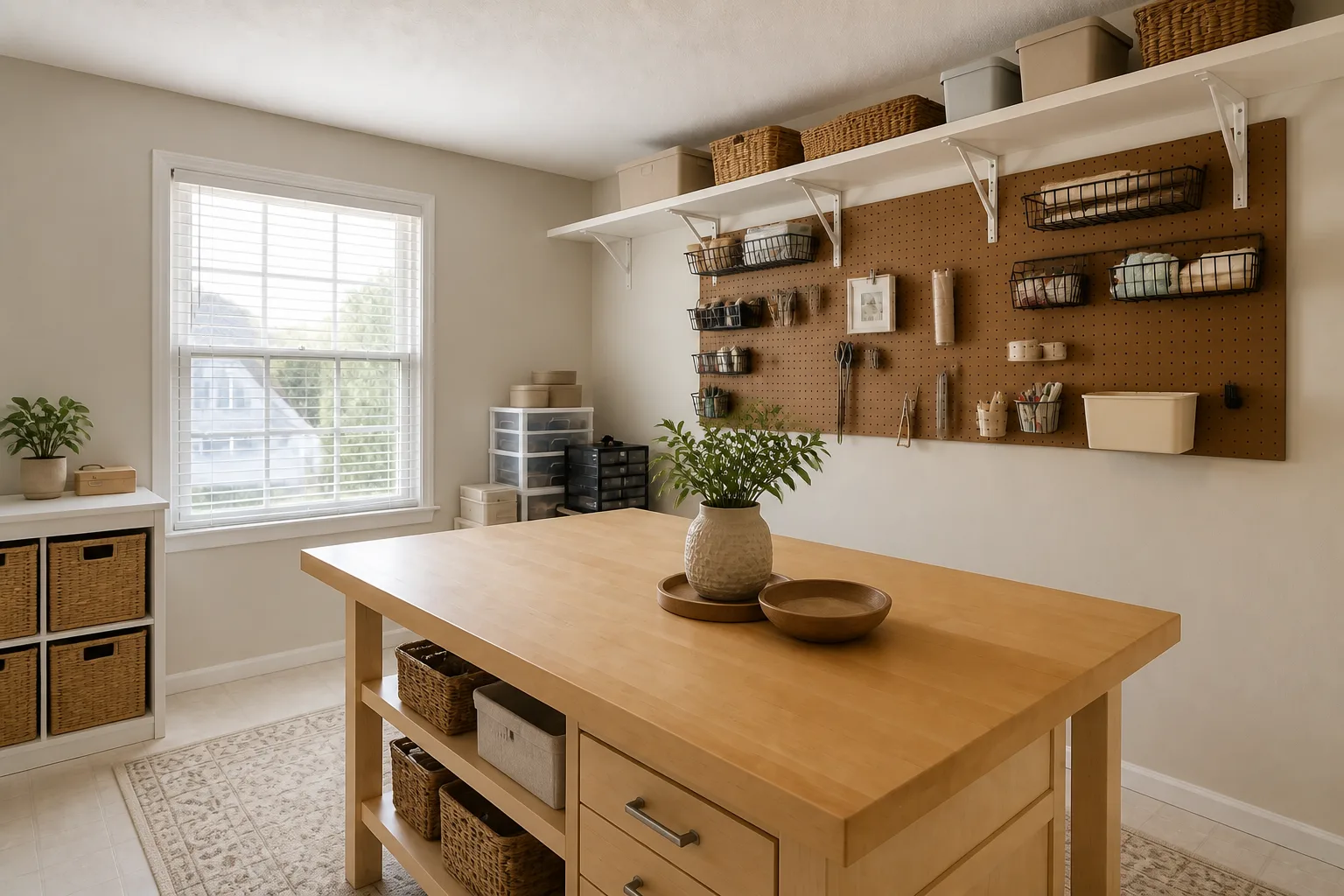 BeforeAfter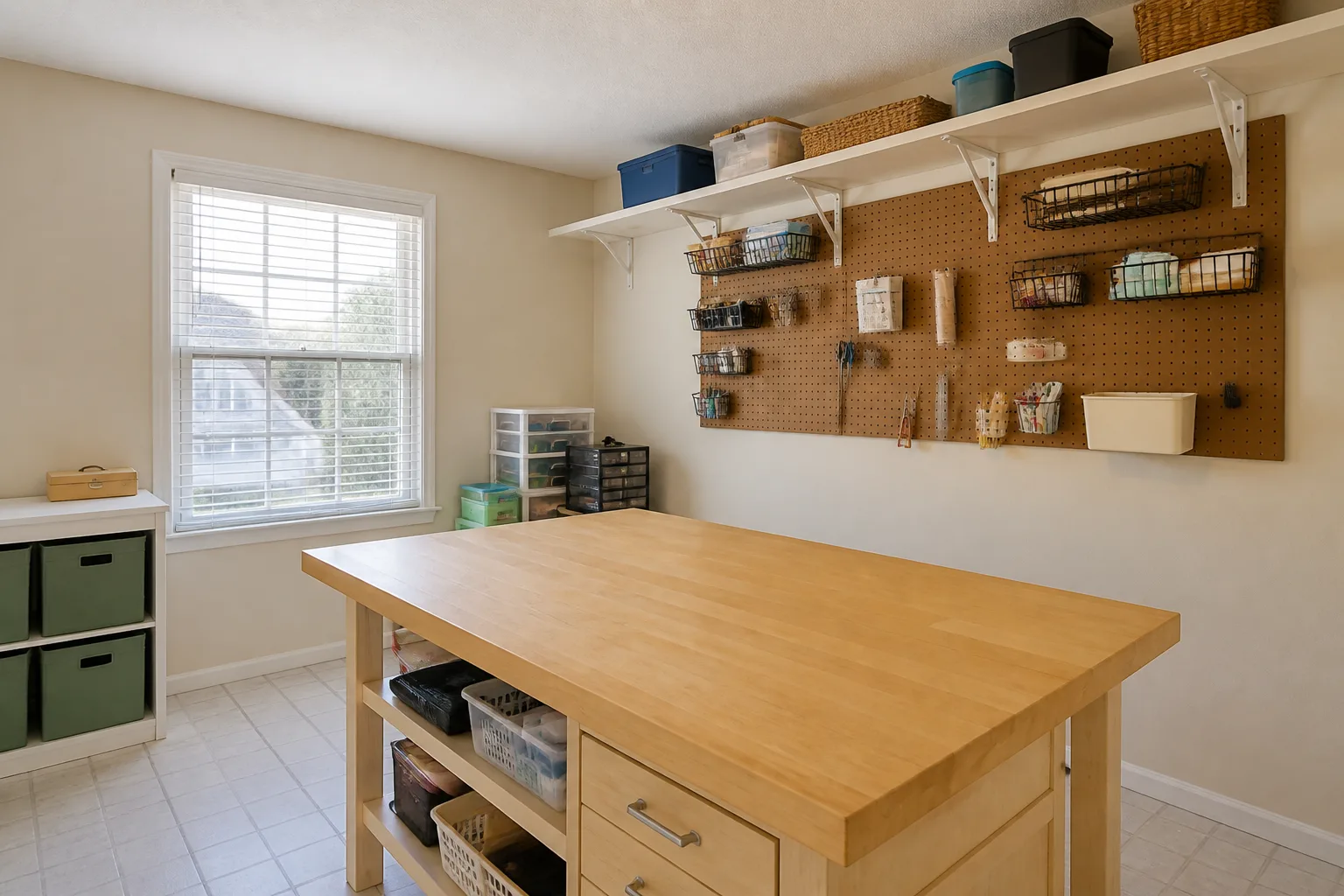
- 1
The classics, in order of damage
Decorative storage — ribbon-tied boxes of chaos — that turns every project into an excavation. One dining-height table doing sewing, cutting and gluing, wrong height for two of the three. Carpet in the room where pins, paint and glitter live. Warm cosy lighting in the one room hired for colour judgement.
- 2
Why they keep happening
Each mistake is the room’s job being overruled by habit or by the furniture that happened to be available. The correction is always the same move: restate the job — a craft room is hired for projects that stay out: the half-finished quilt, the drying print, the sorted beads. That makes it a workshop planning problem — a work surface at the right height for the craft (sewing sits, cutting stands), storage that sorts by project rather than by object, and cleanability designed in from the floor up. The luxury it offers over the kitchen table is persistence: close the door mid-project and nothing has to be put away.
- 3
The numbers that catch mistakes early
Most of these errors are visible with a tape measure before they are felt in use: A seated craft surface lands at 72–76cm; a standing cutting table at 90–95cm. Walk-around access to the main table on at least two sides: 60cm each.
- 4
If the room is small, the stakes double
A small craft room folds: a wall-mounted drop-leaf table, pegboard above, and vertical storage to the ceiling turn 4 square metres into a real workshop. The one thing never to shrink is light — small and bright works; small and dim is a cupboard with ambitions.
Questions
- What matters most in a craft room?
- A craft room is hired for projects that stay out: the half-finished quilt, the drying print, the sorted beads. That makes it a workshop planning problem — a work surface at the right height for the craft (sewing sits, cutting stands), storage that sorts by project rather than by object, and cleanability designed in from the floor up. The luxury it offers over the kitchen table is persistence: close the door mid-project and nothing has to be put away.
- Which numbers should I check before buying anything?
- A seated craft surface lands at 72–76cm; a standing cutting table at 90–95cm.
- Can I preview this on my own craft room?
- Upload a photo in the Studio and run the ideas on the real room. New accounts start with 4 credits and a Standard render costs 4, so the first experiment is free.