Refreshing a Craft Room Without Moving Walls
The changes that transform a craft room inside its existing shell — surfaces, anchors, light and edit. A workshop that happens to be indoors. Surfaces, storage and light — in that order.
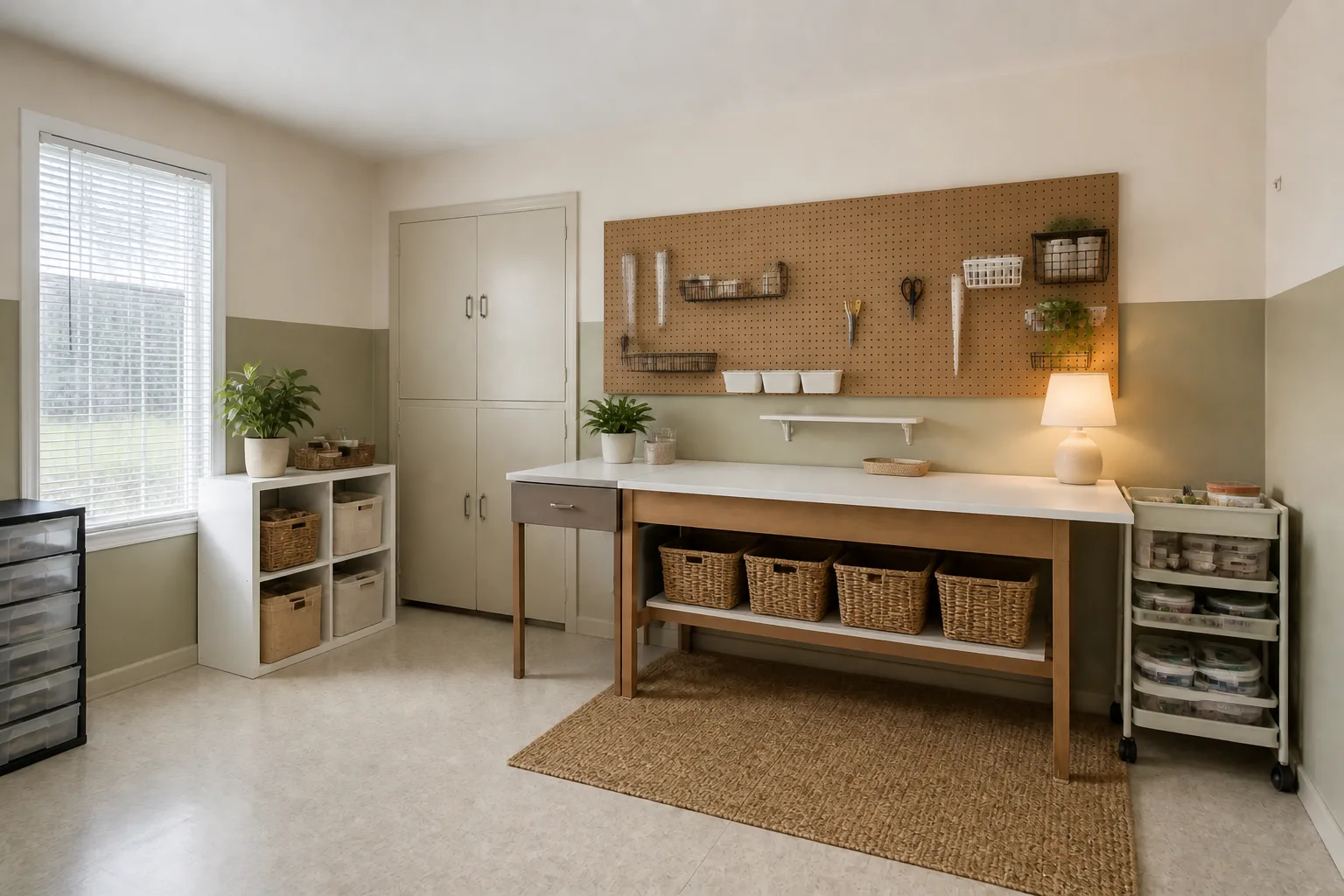 BeforeAfter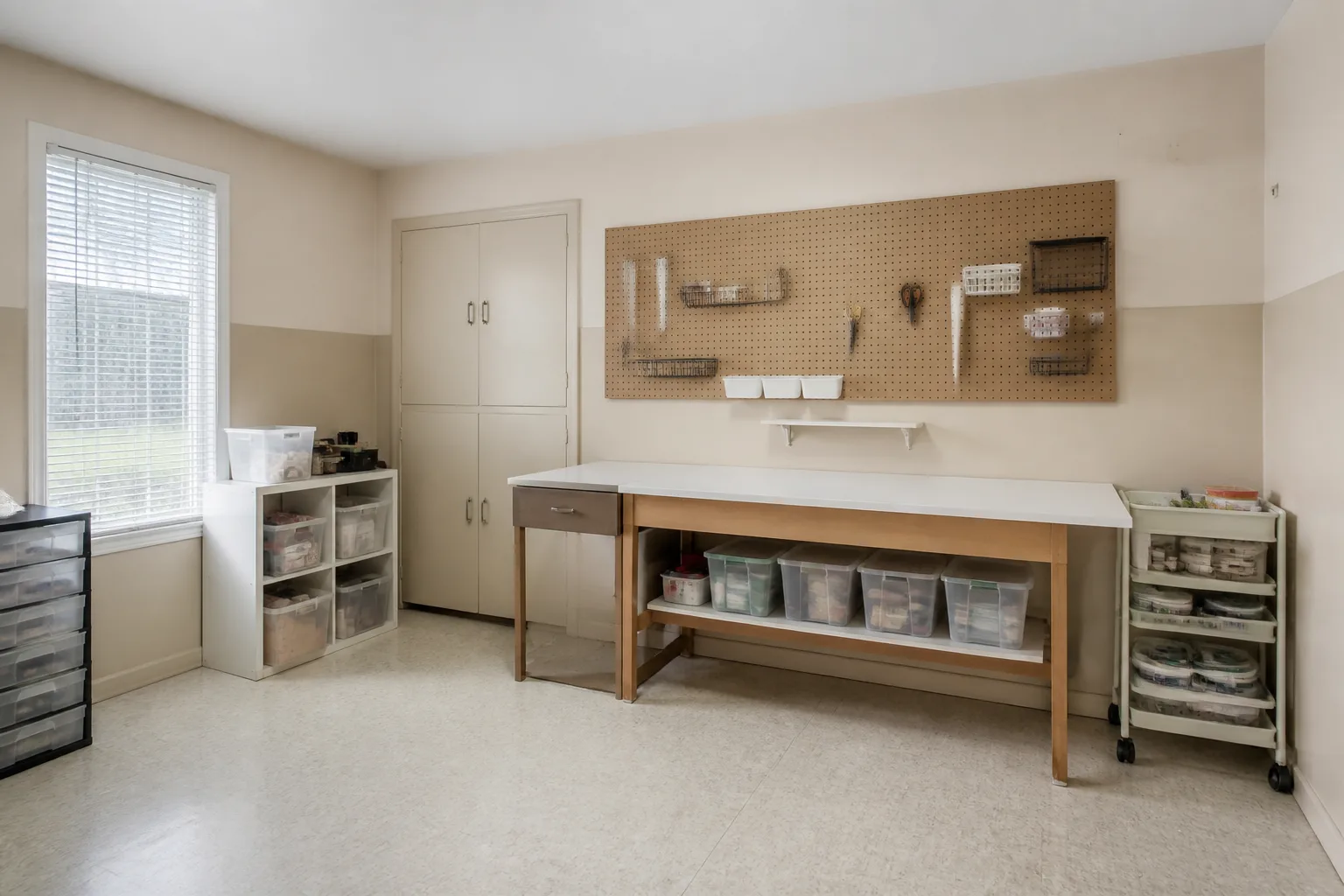
- 1
What a no-construction refresh can reach
Everything that decides how a craft room feels is on the changeable layer: the surfaces, the anchor pieces, the lighting and the edit. The structure — walls, openings, ceiling — sets the stage but rarely the mood.
- 2
Spend the effort where this room shows it
The anchors carry a craft room: the main work table, biggest the room takes; a pegboard or tool wall over it; clear-front storage — labels lie, transparency doesn’t. Renewing one anchor changes the room more than five accessories, and the room will tell you which anchor is tired.
- 3
Light is the cheapest transformation
The house’s brightest room: a strong neutral overhead layer (this is the one room where 4000K everywhere is right), plus a task lamp at the needle or blade. Colour-accurate light matters — thread matched under warm light is a different colour by daylight.
- 4
And when it is small
A small craft room folds: a wall-mounted drop-leaf table, pegboard above, and vertical storage to the ceiling turn 4 square metres into a real workshop. The one thing never to shrink is light — small and bright works; small and dim is a cupboard with ambitions.
Questions
- What matters most in a craft room?
- A craft room is hired for projects that stay out: the half-finished quilt, the drying print, the sorted beads. That makes it a workshop planning problem — a work surface at the right height for the craft (sewing sits, cutting stands), storage that sorts by project rather than by object, and cleanability designed in from the floor up. The luxury it offers over the kitchen table is persistence: close the door mid-project and nothing has to be put away.
- Which numbers should I check before buying anything?
- A seated craft surface lands at 72–76cm; a standing cutting table at 90–95cm.
- Can I preview this on my own craft room?
- Upload a photo in the Studio and run the ideas on the real room. New accounts start with 4 credits and a Standard render costs 4, so the first experiment is free.