How to Lay Out a Craft Room
Where everything goes in a craft room, and the clearances that decide it before taste gets a vote. A workshop that happens to be indoors. Surfaces, storage and light — in that order.
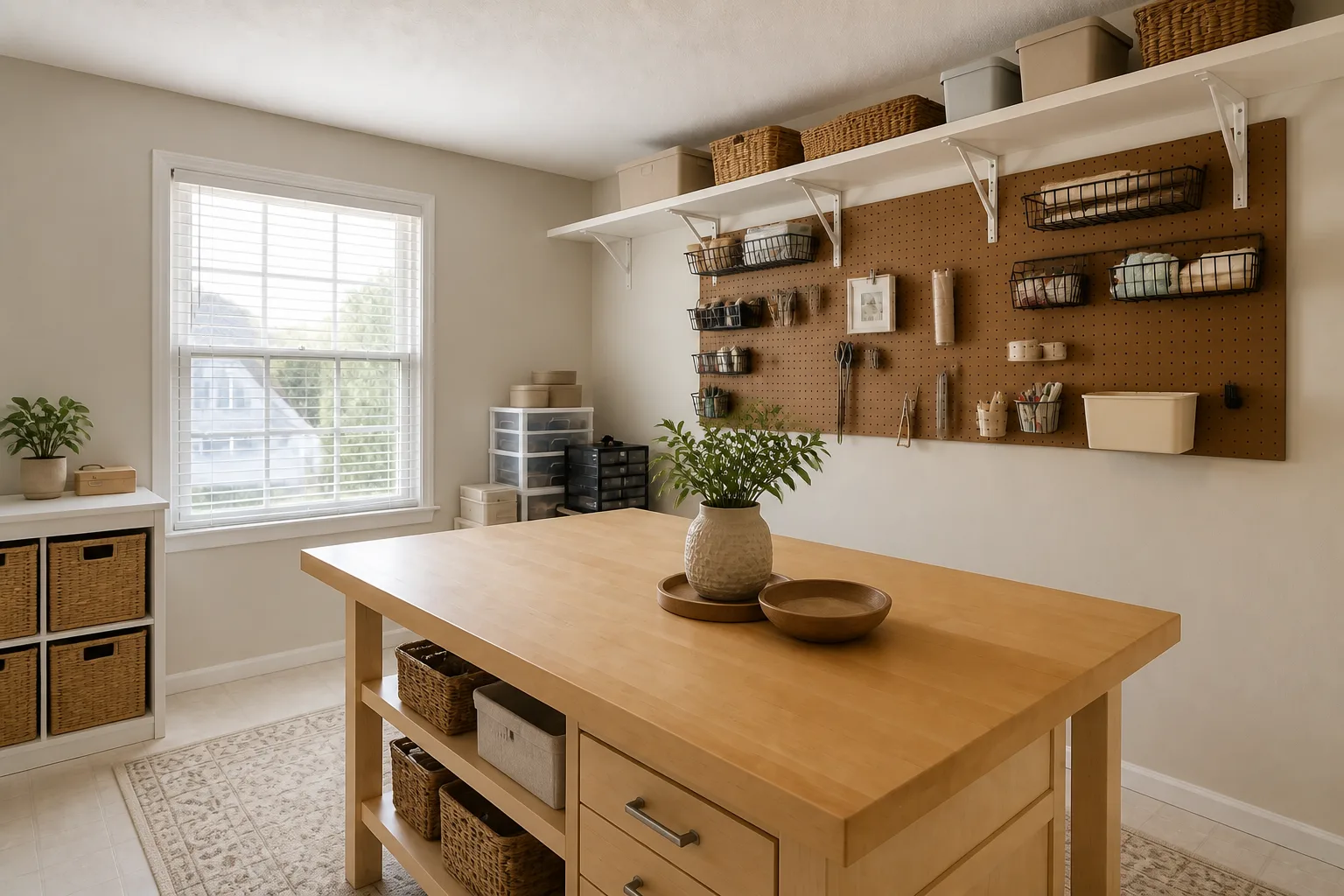 BeforeAfter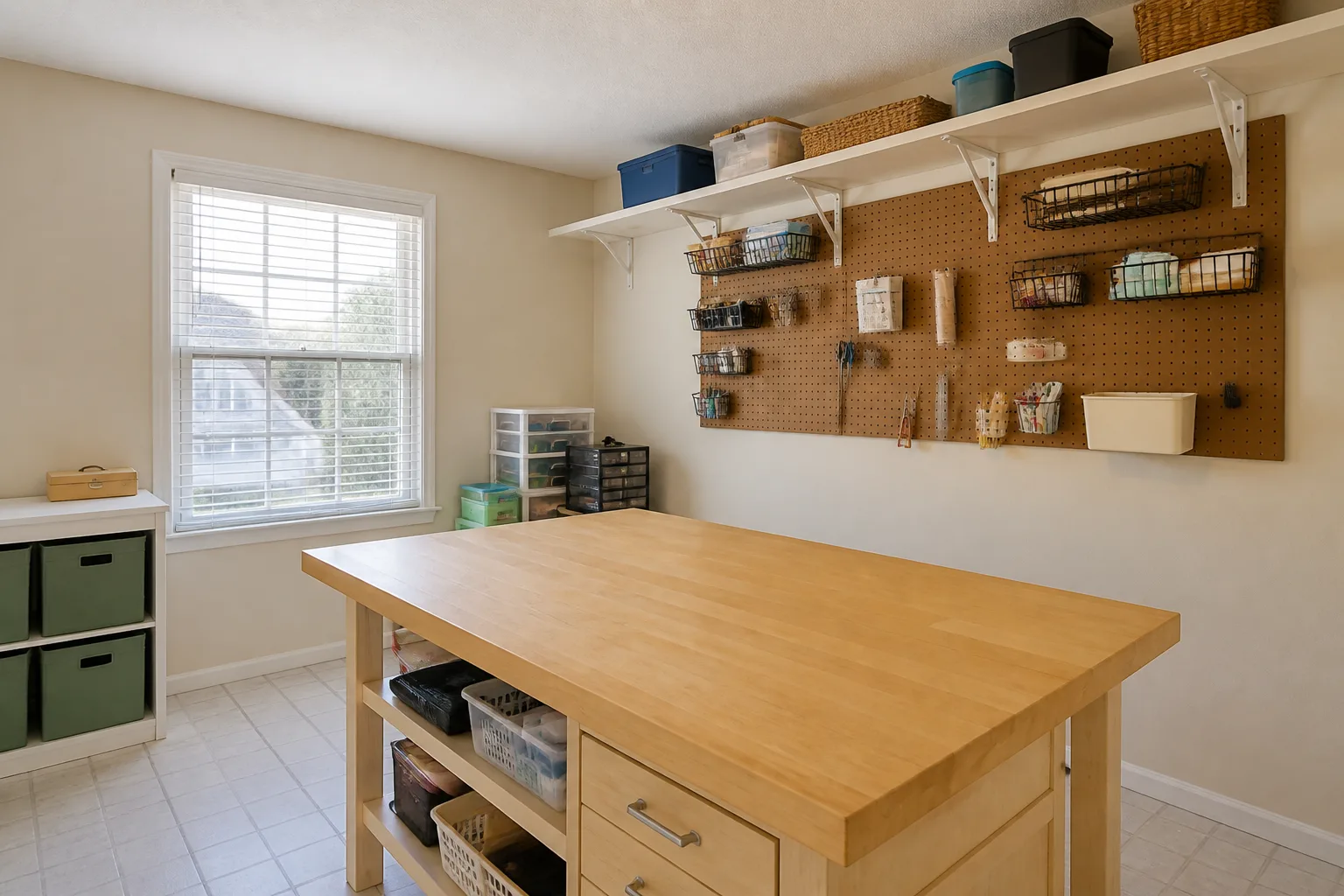
- 1
Start from the job, not the furniture
A craft room is hired for projects that stay out: the half-finished quilt, the drying print, the sorted beads. That makes it a workshop planning problem — a work surface at the right height for the craft (sewing sits, cutting stands), storage that sorts by project rather than by object, and cleanability designed in from the floor up. The luxury it offers over the kitchen table is persistence: close the door mid-project and nothing has to be put away.
- 2
The clearances that are not negotiable
A seated craft surface lands at 72–76cm; a standing cutting table at 90–95cm. Walk-around access to the main table on at least two sides: 60cm each. Frequently used tools within the seated reach arc — 60cm — and pegboard beats drawers for anything used weekly. A finishing zone where things dry or block undisturbed: 60cm of shelf or line, out of the walking path.
- 3
Place the anchors in order
The pieces that earn their floor in a craft room: the main work table, biggest the room takes; a pegboard or tool wall over it; clear-front storage — labels lie, transparency doesn’t; a task chair on casters; a cutting mat and a bin within arm’s reach of both. Position the first before the second exists — each anchor constrains the next, and reversing the order is how rooms end up designed around their least important piece.
- 4
Then check it against the failure list
Decorative storage — ribbon-tied boxes of chaos — that turns every project into an excavation. One dining-height table doing sewing, cutting and gluing, wrong height for two of the three. Carpet in the room where pins, paint and glitter live. Warm cosy lighting in the one room hired for colour judgement.
Questions
- What matters most in a craft room?
- A craft room is hired for projects that stay out: the half-finished quilt, the drying print, the sorted beads. That makes it a workshop planning problem — a work surface at the right height for the craft (sewing sits, cutting stands), storage that sorts by project rather than by object, and cleanability designed in from the floor up. The luxury it offers over the kitchen table is persistence: close the door mid-project and nothing has to be put away.
- Which numbers should I check before buying anything?
- A seated craft surface lands at 72–76cm; a standing cutting table at 90–95cm.
- Can I preview this on my own craft room?
- Upload a photo in the Studio and run the ideas on the real room. New accounts start with 4 credits and a Standard render costs 4, so the first experiment is free.