How to Light a Craft Room
A working lighting plan for a craft room — layers, heights and switches, not just a brighter bulb. A workshop that happens to be indoors. Surfaces, storage and light — in that order.
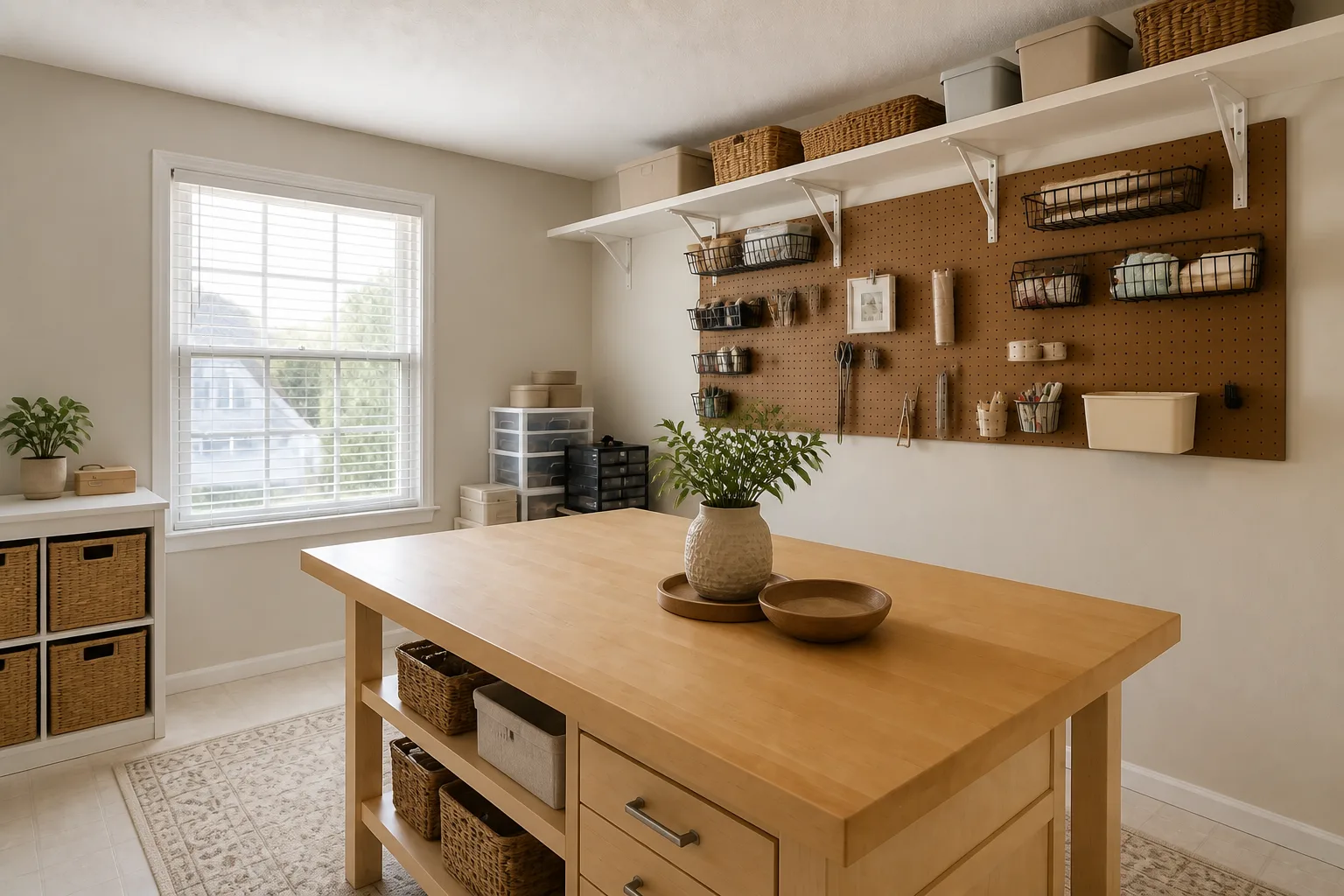 BeforeAfter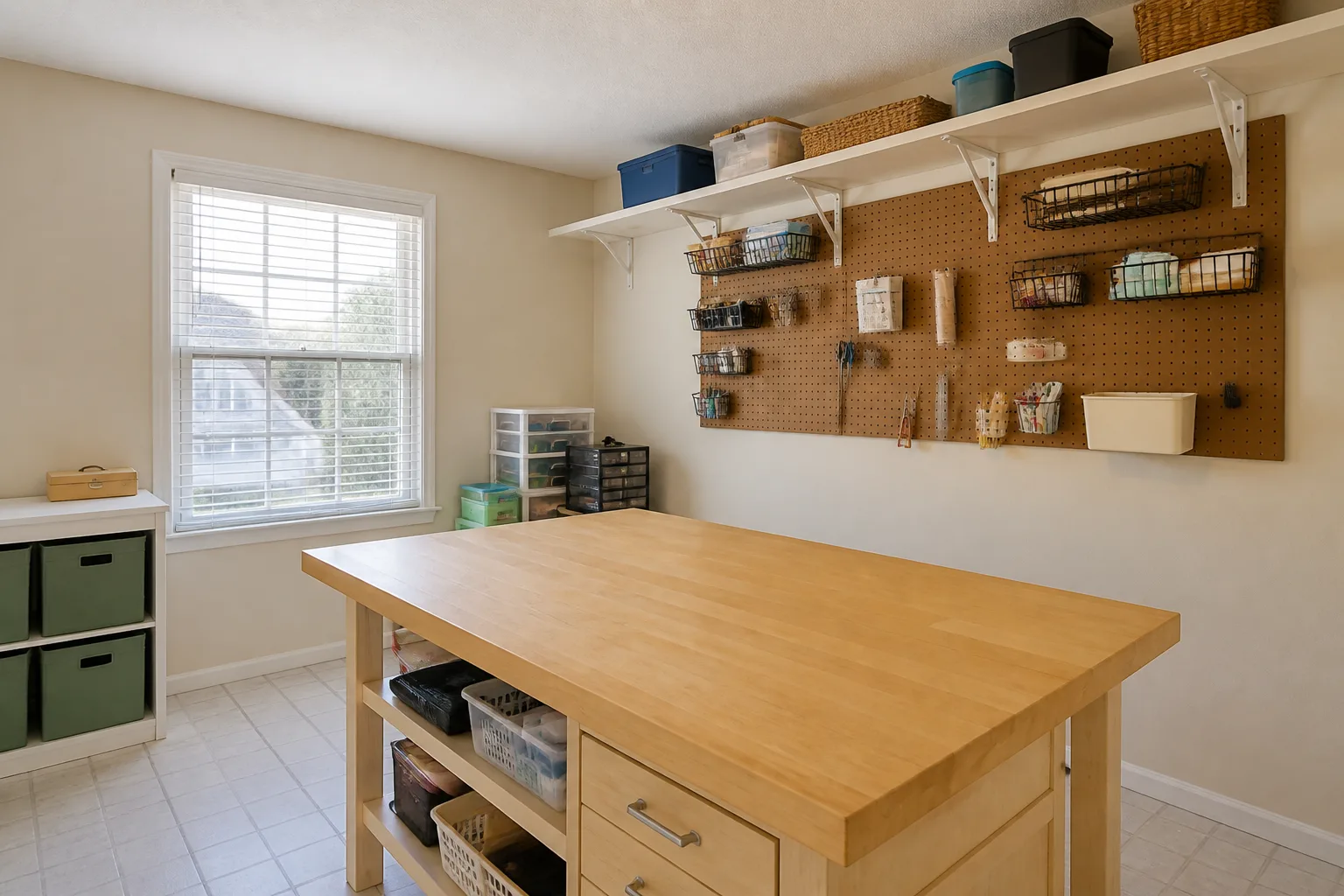
- 1
The plan
The house’s brightest room: a strong neutral overhead layer (this is the one room where 4000K everywhere is right), plus a task lamp at the needle or blade. Colour-accurate light matters — thread matched under warm light is a different colour by daylight.
- 2
Why the single ceiling light keeps failing
One central source flattens a craft room into an evenly lit box: no depth, no zones, and a shadow wherever you stand. Every working scheme for this room is plural — sources at more than one height, switched in more than one group, so the room can change register through the day.
- 3
Match the light to the room’s hours
A craft room is hired for projects that stay out: the half-finished quilt, the drying print, the sorted beads. That makes it a workshop planning problem — a work surface at the right height for the craft (sewing sits, cutting stands), storage that sorts by project rather than by object, and cleanability designed in from the floor up. The luxury it offers over the kitchen table is persistence: close the door mid-project and nothing has to be put away. The lighting follows those hours: bright and even when the room is working, warm and low when it is winding down — and the switch layout is what lets one room do both.
- 4
The mistakes to skip
Warm cosy lighting in the one room hired for colour judgement. And in every room: bulbs of mixed colour temperature in one view, which reads as a fault even when nobody can say why.
Questions
- What matters most in a craft room?
- A craft room is hired for projects that stay out: the half-finished quilt, the drying print, the sorted beads. That makes it a workshop planning problem — a work surface at the right height for the craft (sewing sits, cutting stands), storage that sorts by project rather than by object, and cleanability designed in from the floor up. The luxury it offers over the kitchen table is persistence: close the door mid-project and nothing has to be put away.
- Which numbers should I check before buying anything?
- A seated craft surface lands at 72–76cm; a standing cutting table at 90–95cm.
- Can I preview this on my own craft room?
- Upload a photo in the Studio and run the ideas on the real room. New accounts start with 4 credits and a Standard render costs 4, so the first experiment is free.