L-shaped study
Two rooms sharing a corner. Stop furnishing the letter and furnish them. Here is how that plays out in a study: the layout that survives it, the furniture worth keeping, the lighting plan, and a way to preview it all on a photo of your own room.
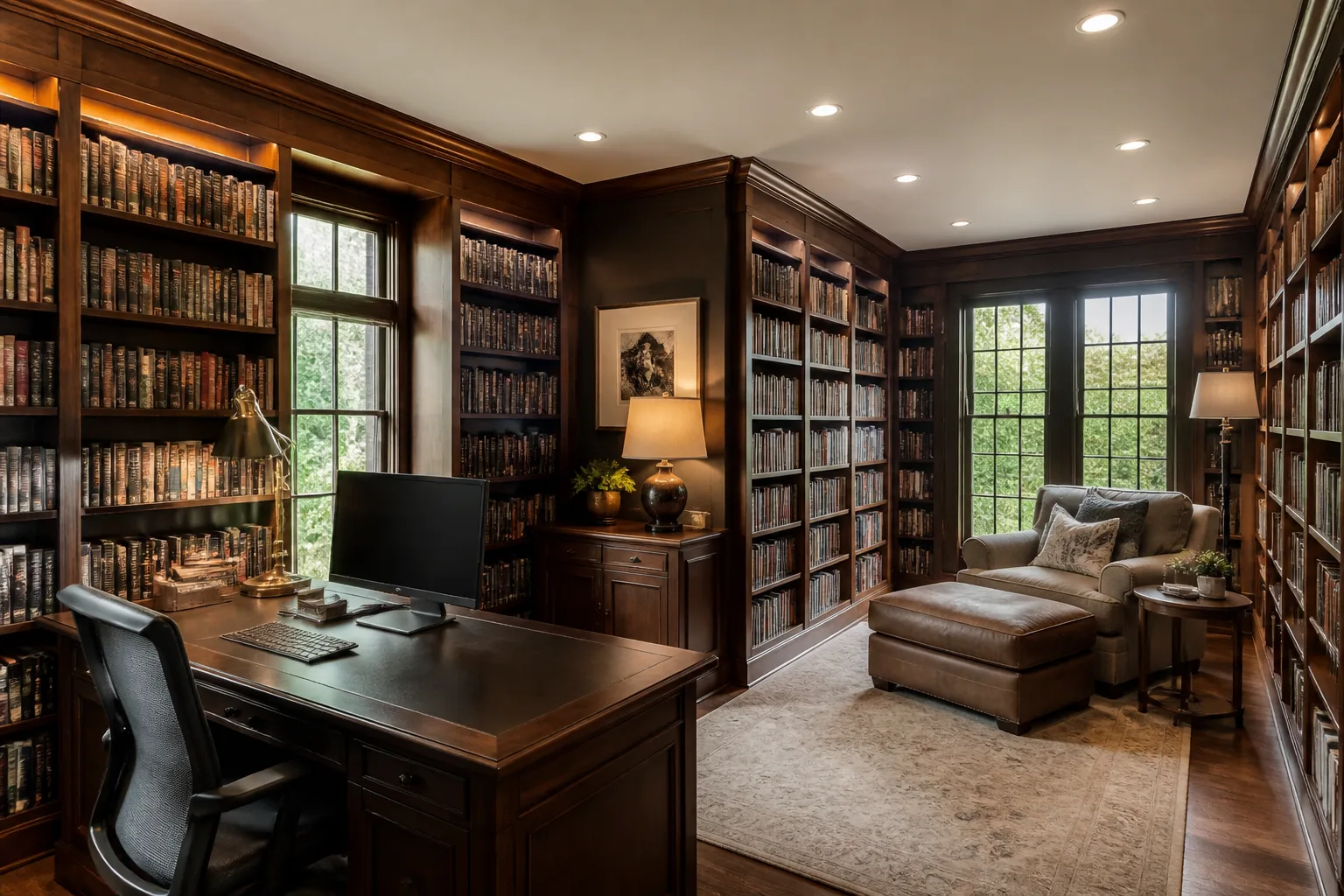
What a L-shaped study is really dealing with
An L-shaped room is two rectangles that cannot see each other, joined at a corner both of them want. Treat it as one room and the short leg becomes a dumping ground the sofa turns its back on. Treat it as two — each leg with its own job, centre and light — and the corner becomes a hinge rather than a leftover: the one spot in the room that belongs to both zones and holds whatever they share. None of that changes what the room is for: a study is hired for depth — reading, writing, thinking — where the home office is hired for throughput. That difference licenses everything the office forbids: darker colour, heavier furniture, books as the primary wall material, a chair for reading that competes with the desk for the room’s best corner. The study’s enemy is not distraction but interruption; it wants a door, mass, and an atmosphere that makes speaking loudly feel like a category error.
The layout that gets both jobs done
Hold the study's own numbers first — desk rules carry over: 120×60cm, chair zone 75cm, side-on window light. Then let the constraint pick the arrangement: a distinct job per leg: living + dining, sleeping + dressing, desk + reading; the hinge corner given something both legs use — shared storage, a plant, a lamp; sightline discipline: from each leg’s seat, the view into the other leg is composed.
Furniture that earns its floor here
The pieces a study cannot do without are floor-to-ceiling books on at least one wall, a desk with drawers — the study keeps its tools close, the reading chair, given the corner a lesser room would waste. Under the L-shaped condition, each of them is auditioned against the same test: a distinct job per leg: living + dining, sleeping + dressing, desk + reading.
What to rule out on day one
The L-shaped version of this room punishes one big arrangement trying to span the corner — something always ends up unreachable; the short leg as informal storage, visible from every seat in the long one. And the study's own classic error still applies: shelving too shallow for real books, styled with objects where the books should be.
Lighting it
Each leg gets its own scheme and switch; the hinge corner gets one shared source. Lighting the whole L from the long leg leaves the short one as a cave that nobody walks into after dark. Pools, deliberately unequal: desk task light, a reading lamp at the chair, shelf lighting if the books deserve it, and the general layer kept low and warm. A study lit evenly is an office with a costume on.
The move to make this weekend
Name each leg’s job out loud and move everything that does not serve that job out of that leg. The L stops being a difficult room and becomes two easy ones the moment the jobs stop leaking. In a study that lands next to the fixed rule of the room: ladder or step access once shelving passes 2.1m — planned, not improvised.
Dimensions to hold onto
However the finishes go, the geometry stays: Bookshelves at 28–32cm depth handle almost everything; keep one 40cm run for the oversized shelf. A reading chair with 70cm legroom, a table within a forearm’s reach, and light over the shoulder, not the ceiling.
Questions
- Is a L-shaped study worth designing around?
- Yes — two rooms sharing a corner. Stop furnishing the letter and furnish them. The pages here treat the L-shaped condition as the starting brief, not a defect to apologise for.
- Which single change helps a L-shaped study most?
- Name each leg’s job out loud and move everything that does not serve that job out of that leg. The L stops being a difficult room and becomes two easy ones the moment the jobs stop leaking.
- How do I light a L-shaped study?
- Each leg gets its own scheme and switch; the hinge corner gets one shared source. Lighting the whole L from the long leg leaves the short one as a cave that nobody walks into after dark.
- What gets bought and regretted most in this room?
- Shelving too shallow for real books, styled with objects where the books should be. Under the L-shaped condition, add: one big arrangement trying to span the corner — something always ends up unreachable.
- Can I try these ideas on a photo of my own study?
- That is what the Studio is for: upload a photo of the actual room and redesign it with the L-shaped playbook applied. A new account starts with 4 free credits and a Standard render costs 4, so the first look is free.