low-ceiling study
You cannot raise it. You can stop reminding everyone where it is. Here is how that plays out in a study: the layout that survives it, the furniture worth keeping, the lighting plan, and a way to preview it all on a photo of your own room.
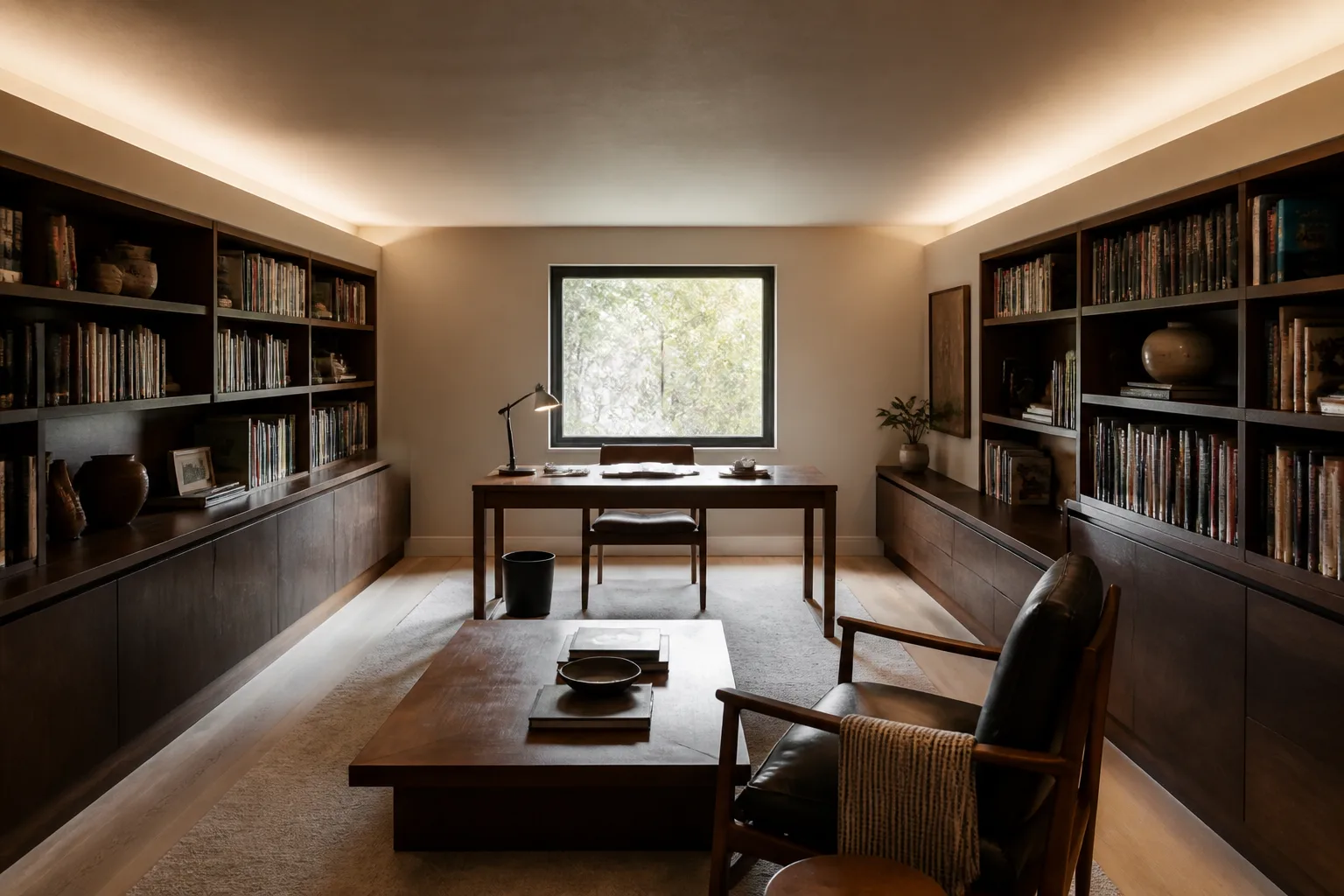
What a low-ceiling study is really dealing with
A ceiling under about 2.4m is only oppressive when the room keeps measuring it: pendant lights that hang into headspace, tall furniture that nearly touches, a ceiling painted a different colour so the eye finds the join. The working strategy is horizontal — low furniture, long lines, light pulled down the walls — so the space between the furniture and the ceiling reads as air rather than as a shortfall. None of that changes what the room is for: a study is hired for depth — reading, writing, thinking — where the home office is hired for throughput. That difference licenses everything the office forbids: darker colour, heavier furniture, books as the primary wall material, a chair for reading that competes with the desk for the room’s best corner. The study’s enemy is not distraction but interruption; it wants a door, mass, and an atmosphere that makes speaking loudly feel like a category error.
The layout that gets both jobs done
Hold the study's own numbers first — desk rules carry over: 120×60cm, chair zone 75cm, side-on window light. Then let the constraint pick the arrangement: low-slung seating and beds, which double the apparent wall height above them; ceiling and walls in the same colour, erasing the line where the room ends; flush or semi-flush ceiling fittings; pendants only over tables, where heads never go.
Furniture that earns its floor here
The pieces a study cannot do without are floor-to-ceiling books on at least one wall, a desk with drawers — the study keeps its tools close, the reading chair, given the corner a lesser room would waste. Under the low-ceiling condition, each of them is auditioned against the same test: low-slung seating and beds, which double the apparent wall height above them.
What to rule out on day one
The low-ceiling version of this room punishes pendants and chandeliers in circulation space; tall wardrobes stopping 20cm short of the ceiling — the gap measures the room. And the study's own classic error still applies: shelving too shallow for real books, styled with objects where the books should be.
Lighting it
Uplight everything you can — wall washers, lamps that throw light upward, LED tape on top of cabinetry. A low ceiling that is bright reads as open; the same ceiling with a shadowed centre reads like a hand pressing down. Pools, deliberately unequal: desk task light, a reading lamp at the chair, shelf lighting if the books deserve it, and the general layer kept low and warm. A study lit evenly is an office with a costume on.
The move to make this weekend
Repaint the ceiling the exact colour of the walls, in the flattest finish available. The join disappears, the eye stops finding the lid, and every other trick starts from a better baseline. In a study that lands next to the fixed rule of the room: ladder or step access once shelving passes 2.1m — planned, not improvised.
Dimensions to hold onto
However the finishes go, the geometry stays: Bookshelves at 28–32cm depth handle almost everything; keep one 40cm run for the oversized shelf. A reading chair with 70cm legroom, a table within a forearm’s reach, and light over the shoulder, not the ceiling.
Questions
- Is a low-ceiling study worth designing around?
- Yes — you cannot raise it. You can stop reminding everyone where it is. The pages here treat the low-ceiling condition as the starting brief, not a defect to apologise for.
- Which single change helps a low-ceiling study most?
- Repaint the ceiling the exact colour of the walls, in the flattest finish available. The join disappears, the eye stops finding the lid, and every other trick starts from a better baseline.
- How do I light a low-ceiling study?
- Uplight everything you can — wall washers, lamps that throw light upward, LED tape on top of cabinetry. A low ceiling that is bright reads as open; the same ceiling with a shadowed centre reads like a hand pressing down.
- What gets bought and regretted most in this room?
- Shelving too shallow for real books, styled with objects where the books should be. Under the low-ceiling condition, add: pendants and chandeliers in circulation space.
- Can I try these ideas on a photo of my own study?
- That is what the Studio is for: upload a photo of the actual room and redesign it with the low-ceiling playbook applied. A new account starts with 4 free credits and a Standard render costs 4, so the first look is free.